Discover the reasons behind white fuzz on your ZZ plant stems and learn effective methods to diagnose, treat, and prevent this common issue easily.
Introduction
Noticing white fuzz on your ZZ plant stems can be quite alarming—your beautiful indoor plant suddenly looks less vibrant, and you're concerned about its health. But don’t worry; this is a common issue that many plant enthusiasts face. With a little knowledge and some simple care adjustments, you can help your ZZ plant recover and thrive once again. This article will guide you through understanding what the white fuzz is, diagnosing its cause accurately, and applying targeted solutions. Whether it’s mold, pests, or environmental factors, you'll find practical advice to restore your plant’s health. Remember, with patience and proper care, your ZZ plant can stay healthy, beautiful, and fuss-free!
Section 1: Understanding the Problem
Visual identification of white fuzz on stems
White fuzz on ZZ plant stems appears as a soft, cottony, or powdery substance covering parts of the stems. It may look like tiny clouds, velvety patches, or powdery residues that can be easily mistaken for mold or pests. The fuzz often appears on the upper or lower sections of stems, especially in humid or damp conditions.
Common causes overview: fungal growth, pests, or environmental issues
The white fuzz is typically caused by one or more of the following:
- Fungal infections, such as powdery mildew or mold, thriving in damp, poorly ventilated environments.
- Pest infestations, especially pests like mealybugs or scale insects, which produce cottony or fuzzy residues as they feed.
- Environmental factors, including excess humidity, overwatering, or poor airflow, creating conditions suitable for mold or mildew growth. Understanding these causes is the first step in addressing the problem effectively.
Section 2: Diagnosing the Exact Cause
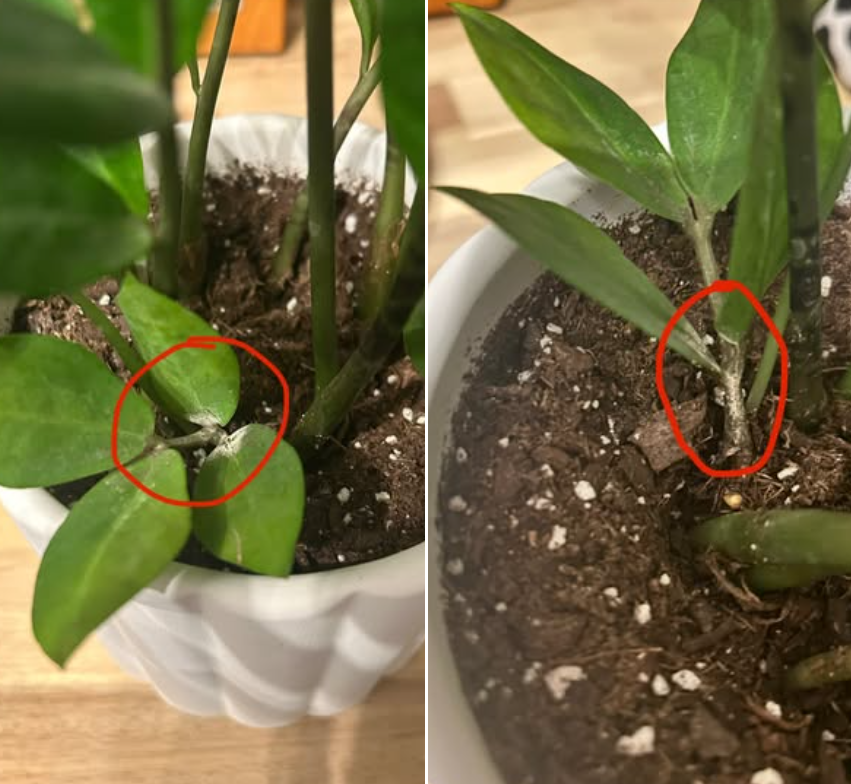
Follow a step-by-step diagnostic process to determine what is causing the white fuzz
Accurate diagnosis is key to applying the right treatment. Here’s how to identify the cause:
Cause 1: Fungal infections, like powdery mildew or mold
- Appearance: White, powdery coating that can be brushed off gently. Often occurs in humid environments.
- Location: Usually found on stems, leaves, or nearby surfaces.
- Other signs: Slimy or fuzzy patches, sometimes accompanied by a musty smell.
Cause 2: Pests such as mealybugs or scale insects producing cottony or fuzzy residues
- Appearance: Tiny, soft, white or grayish cotton-like clusters on stems or leaf joints.
- Behavior: Pests may move or be visible when you gently inspect the plant.
- Other signs: Sticky residue (honeydew), yellowing leaves, or stunted growth.
Cause 3: Environmental factors leading to mold or mildew growth
- Appearance: Similar to fungal growth, but often localized around overly moist areas.
- Conditions: Excessive watering, poor air circulation, or high humidity indoors.
- Other signs: Soil staying wet for too long, moldy smell.
How to tell which one applies to your plant
- Inspect closely with a magnifying glass if needed.
- Gently brush the fuzz aside to see if pests are underneath.
- Check for pests on stems, leaf joints, and undersides.
- Assess environmental conditions—note watering habits and airflow.
Section 3: Treatment Solutions
Once you've identified the cause, you can apply targeted remedies to eliminate the white fuzz and restore your ZZ plant’s health.
Immediate actions: cleaning, pruning, and natural remedies like neem oil or hydrogen peroxide
- Remove affected parts: Prune and dispose of heavily infested or moldy stems using sterilized pruning shears.
- Clean the plant: Gently wipe stems with a soft cloth or sponge dipped in diluted hydrogen peroxide (1 part hydrogen peroxide to 4 parts water) to kill fungal spores.
- Isolate the plant: Keep it away from other houseplants to prevent spread.
Specific treatments for fungal infections, including fungicides and improved airflow
- Use fungicides: Apply a fungicide labeled for indoor plants following the manufacturer’s instructions.
- Increase airflow: Improve ventilation around your ZZ plant by opening windows or using a fan.
- Reduce humidity: Avoid overwatering and ensure the plant is in a well-draining pot with proper soil.
Pest control options: insecticidal soap, manual removal, and preventive measures
- Manual removal: Gently scrape off pests and their residues with a soft brush or cloth.
- Insecticidal soap: Spray the affected areas with a diluted insecticidal soap suitable for houseplants. Repeat every 7-10 days as needed.
- Preventive measures: Regularly inspect your plant for early signs of pests and avoid overfeeding or overwatering.
Long-term care: adjusting watering, humidity, and light conditions
- Water wisely: Let the top inch of soil dry out between watering.
- Control humidity: Keep indoor humidity below 50% if possible.
- Provide adequate light: ZZ plants thrive in bright, indirect light—avoid overly damp or shady environments.
Monitoring recovery and signs of improvement
- Observe the plant over the following weeks for a reduction in white fuzz.
- Healthy stems will regain vigor, and new growth will appear.
- Continue regular inspections to catch any recurrence early.
Section 4: Prevention Tips
Prevention is always better than cure. Here are simple routines to keep your ZZ plant healthy and free of white fuzz:
Maintain proper watering and humidity levels
- Water only when the topsoil feels dry.
- Use well-draining soil and pots with drainage holes.
- Keep humidity levels moderate, avoiding excess moisture.
Ensure good air circulation and avoid overwatering
- Place your plant in a well-ventilated spot.
- Use fans or open windows periodically.
- Avoid crowding plants together.
Regular inspection and early pest detection
- Check stems, leaves, and soil weekly.
- Remove any debris or dead plant material promptly.
Use sterilized tools and clean the plant's environment
- Always sterilize pruning tools before use.
- Keep the area around your plant clean and free of mold or debris.
Apply preventive fungicides if necessary
- Consider using a light fungicide spray during humid months or if you notice early signs of fungal growth.
Conclusion
White fuzz on ZZ plant stems is a common issue that can be caused by fungi, pests, or environmental factors. With careful inspection, accurate diagnosis, and targeted treatment, you can eliminate the problem effectively. Keep up with good care routines—proper watering, good airflow, and regular inspections—to prevent recurrence. Don’t be discouraged; most issues are reversible. Your ZZ plant can recover, stay healthy, and continue brightening your indoor space. Start with a thorough inspection today, follow the recommended solutions, and enjoy the lush, vibrant plant you love!
Q: How long until I see improvement after treatment?
A: Typically, you can expect to see signs of recovery within 2 to 4 weeks after starting treatment, such as reduced fuzz, healthier stems, and new growth. Consistency in care is key to quick recovery.
Q: Can white fuzz be a sign of something more serious?
A: Usually, white fuzz indicates fungal growth or pests, both manageable with proper treatment. However, if the fuzz persists despite treatment or is accompanied by significant leaf loss or stem rot, it’s best to consult a plant specialist for further diagnosis.
Q: Should I prune parts of my ZZ plant with white fuzz?
A: Yes, pruning affected stems is advisable to prevent spread and promote healthy growth. Use sterilized scissors or pruning shears and dispose of the pruned material away from your other plants.
With these tips and a gentle approach, your ZZ plant will soon regain its health and beauty. Happy planting!