Quick Summary: Drooping leaves on your Monstera deliciosa can be alarming, but they often signal simple issues like watering or lighting that are easily fixed. With attentive care and proper adjustments, your plant can bounce back to vibrant health.
Introduction
Noticing your Monstera deliciosa's leaves drooping can be quite distressing—after all, those lush, glossy leaves are a sign of a happy, healthy plant. When they start to sag or wilt, it's natural to worry that something's wrong beyond repair. Rest assured, drooping leaves are often a cry for help that you can easily address with some understanding and simple care tweaks. In this guide, we’ll explore why your Monstera's leaves droop, how to accurately diagnose the cause, and step-by-step solutions to revive your plant. Whether it’s overwatering, underwatering, inadequate light, or root issues, you’ll find practical advice to get your green friend thriving again. Remember: with patience and attentiveness, your Monstera can recover, regain its strength, and continue to add wonderful jungle vibes to your space.
Section 1: Understanding the Problem
Visual Identification of Drooping Leaves
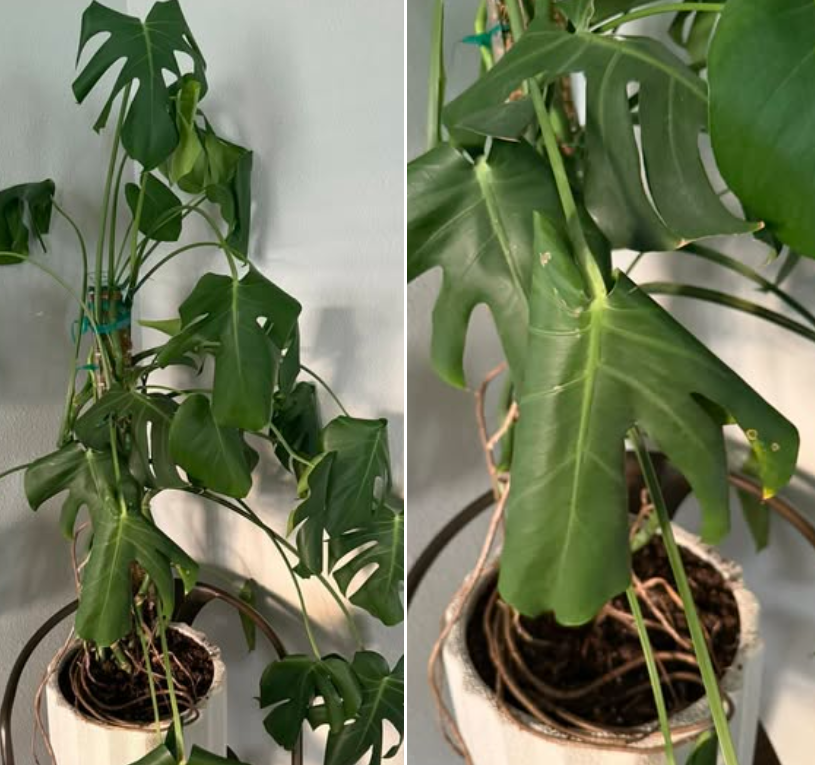
Drooping or wilting leaves look soft, saggy, and sometimes even curled at the edges. They may hang limply downward, giving your plant a sad appearance. You might notice some leaves turning yellow or browning at the tips, and overall the plant can look less vibrant.
Common Causes Overview: Overwatering, Underwatering, Improper Lighting, Root Issues
While drooping can seem sudden or alarming, it’s usually caused by one or a combination of a few common issues:
- Overwatering: Excess water drowns roots, leading to poor nutrient uptake and root rot.
- Underwatering: Insufficient water causes dehydration, making leaves wilt and droop.
- Lighting problems: Too little light causes weak, elongated stems and drooping leaves; too much direct sun can scorch the leaves rapidly.
- Root problems: Root rot or system damage from pests can impair water absorption, resulting in drooping leaves. Recognizing these symptoms early helps you act swiftly to restore balance.
Section 2: Diagnosing the Exact Cause
Systematically check your plant to identify what's causing the drooping leaves.
Cause 1: Overwatering Leading to Root Rot
- Symptoms: Mushy, brown roots when you inspect; soil stays soggy for days.
- Why it happens: Excess water fills air spaces in the soil, suffocating roots and promoting fungal growth.
- How to confirm: Gently remove the plant from its pot and examine the roots.
Cause 2: Underwatering Causing Dehydration
- Symptoms: Soil feels dry several inches below the surface; leaves become crispy or papery.
- Why it happens: The plant lacks water to maintain turgor pressure, causing leaves to wilt.
- How to confirm: Touch the soil and observe watering habits.
Cause 3: Insufficient or Sudden Sun Exposure
- Symptoms: Leaves may look bleached, pale, or sun-scorched; drooping occurs during high sun hours.
- Why it happens: Monsteras prefer bright, indirect light; direct sun can scorch leaves or cause stress.
- How to confirm: Check sunlight pattern and orientation.
How to tell which cause applies to your Monstera
Create a quick checklist:
- Soil moisture level: Dry or soggy?
- Root health: Mushy or healthy?
- Light exposure: Direct midday sun or bright indirect light?
- Watering history: Frequent or infrequent watering? Matching symptoms with observations helps you pinpoint the problem.
Section 3: Treatment Solutions
Immediate Actions (First 24-48 Hours):
-
Assess and adjust watering:
-
If soil is soggy, reduce watering immediately.
- If soil is dry, give a thorough, but not excessive, watering after allowing the top inch to dry out.
-
Remove wilted or damaged leaves:
-
Cut off leaves that are yellowed, browning, or dead to help the plant focus energy on recovery.
-
Ensure proper drainage:
-
Check that your pot has drainage holes; add a layer of gravel at the bottom if needed to improve drainage.
Long-Term Treatment:
-
Improve soil drainage:
Use a well-draining potting mix with organic matter and perlite or orchid bark. -
Establish a consistent watering routine:
Water thoroughly, then wait until the top inch is dry before watering again. -
Optimize lighting conditions:
Place your Monstera in bright, indirect sunlight—near a window with sheer curtains or a few feet away from direct sun. -
Address root issues:
If root rot is suspected, gently repot the plant into fresh soil after trimming away affected roots. Use a sterilized pruning shear for this. -
Treat pests if present:
Use neem oil or insecticidal soap to eliminate pests like spider mites that cause stress. -
Monitor recovery:
Look for signs of new growth, firm leaves, and overall upright posture within a few weeks.
Special Considerations:
-
Using natural remedies:
A gentle spray of neem oil can help with pests. Hydrogen peroxide diluted with water (1:10 ratio) can help disinfect roots if rot is present. -
Chemical options:
Consider root hormones or fungicides if root rot is severe, but only after removing affected roots.
Realistic Timeline:
- You can expect some improvement within 1-2 weeks if conditions are corrected promptly. Complete recovery might take up to a month, depending on severity.
Warning Signs Treatment Isn't Working:
- Leaves remain limp or yellow after two weeks.
- Roots continue to decay or foul smell persists.
- No new growth appears. In such cases, further inspection or professional advice may be needed.
Section 4: Prevention Tips
Keeping your Monstera healthy means staying one step ahead:
-
Maintain a consistent watering schedule:
Water only when the top inch of soil dries out. Generally, once a week works for many setups. -
Ensure optimal light:
Place near a bright, indirect light source—think east-facing window or filtered sun. -
Avoid temperature fluctuations and drafts:
Keep your plant in a room between 65-85°F (18-29°C), away from cold drafts or heating vents. -
Regularly inspect for pests and root health:
Check the underside of leaves and soil surface weekly; repot every 1-2 years or as needed. Adopting these habits helps prevent drooping and keeps your Monstera thriving.
Frequently Asked Questions
Q: How long does it take for a drooping Monstera to recover?
A: Depending on the cause and how quickly you act, you can see improvements within 1-2 weeks. Full recovery with healthy, upright leaves may take 3-4 weeks.
Q: Can overwatering permanently damage my Monstera?
A: Yes, persistent overwatering can cause root rot, which damages the plant’s ability to absorb water and nutrients. Early detection and treatment can often save your Monstera, but severe rot may be irreversible, requiring root removal and repotting.
Q: Should I prune drooping or damaged leaves to promote recovery?
A: Absolutely. Removing wilted or yellowed leaves helps the plant focus energy on healthy growth and prevents disease spread. Use sterilized shears to trim at the base of the leaf stem.
Conclusion
Key Takeaways:
- Drooping leaves are a sign your Monstera deliciosa needs attention, often due to watering or lighting issues.
- Systematic diagnosis—checking soil moisture, root health, and light exposure—is crucial.
- Immediate steps include adjusting watering, removing damaged leaves, and ensuring proper drainage.
- Long-term care involves consistent watering routines, ideal lighting, and regular inspections.
- With patience and proper adjustments, your Monstera can bounce back and display its lush, vibrant foliage once again. Don’t worry—your attentive care and the resilience of your plant will restore its tropical charm. Keep observing, adjusting, and loving your Monstera, and it will reward you with years of lush, beautiful growth.