Quick Summary: Yellow leaves on your Fiddle Leaf Fig can be concerning, but with the right diagnosis and care adjustments, you can restore your plant's health and vibrancy. This guide helps you identify common causes, offers step-by-step solutions, and provides tips to prevent future yellowing.
Introduction
Seeing yellow leaves on your Fiddle Leaf Fig (Ficus lyrata) can be truly stressful—it's natural to worry about your plant's well-being. After all, these stunning indoor trees are often central to our home decor, and we invest effort into keeping them healthy and lush. The good news is that yellowing leaves are often a sign that something in your plant's environment or care routine needs adjusting, not a sign of irreversible damage. In this article, you'll learn how to identify the cause of yellow leaves, the best treatment options—whether natural or chemical—and how to prevent this problem in the future. With some gentle changes and patience, your Fiddle Leaf Fig can bounce back, becoming a vibrant focal point in your home once again. Let's dive into understanding what your plant is trying to tell you.
Section 1: Understanding the Problem
Yellow leaves on a Fiddle Leaf Fig are a common concern among plant parents, especially since these plants are quite sensitive to their environment. Recognizing the appearance and understanding why it happens is the first step toward helping your plant recover.
Visual identification:
- Bright yellow or pale leaves that may start at the tips or edges.
- Leaves might be showing a gradient from green to yellow or be uniformly yellow.
- Severely affected leaves may become crispy or drop off.
Why it matters:
Yellowing can signal stress or health issues—ranging from watering mistakes to inadequate light—so early identification and action are key to preventing more leaf loss and ensuring your plant's overall vitality.
Common misconceptions:
- Not all yellow leaves indicate disease; often, they are a normal part of aging or a response to care adjustments.
- Pruning affected leaves isn't always the fix; addressing the underlying cause is crucial.
Section 2: Diagnosing the Exact Cause
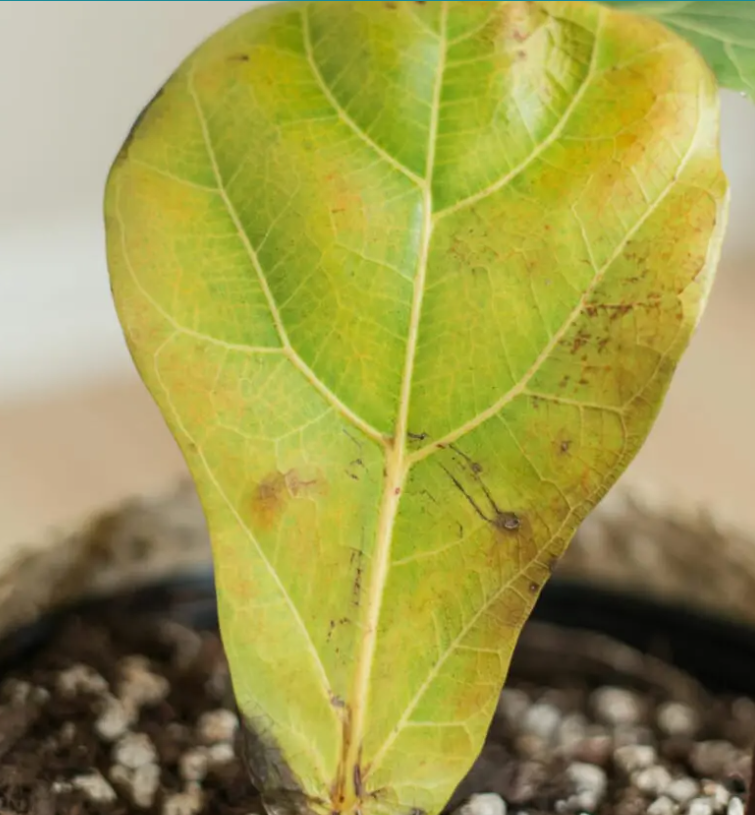
To effectively treat your Fiddle Leaf Fig, you'll need to pinpoint what’s causing those yellow leaves. Follow this simple diagnostic checklist.
Cause 1: Overwatering
- Symptoms: Leaves turn yellow, soft, and may develop root rot smell.
- How to confirm: Check soil moisture—if it feels overly wet and the pot lacks proper drainage, overwatering is likely.
- Why it happens: Excess water deprives roots of oxygen, leading to root decay and nutrient uptake issues.
Cause 2: Underwatering
- Symptoms: Yellowing leaves, especially at the edges, followed by leaf droop.
- How to confirm: Soil feels very dry several inches down.
- Why it happens: Insufficient water causes stress and dehydration, weakening the plant.
Cause 3: Improper Lighting
- Symptoms: Yellowing is more prominent at the top or on sun-exposed sides.
- How to confirm: Assess light exposure—too little light (low indirect light) or excessive direct sun can stress the plant.
- Why it happens: The Fiddle Leaf Fig needs bright, indirect light; too much direct sun can scorch leaves, and too little can lead to weak, yellowing foliage.
Quick decision checklist:
- Soil moisture: Wet or dry?
- Location: Bright indirect (ideal), direct sun, or low light?
- Recent care: Any watering changes or shifts in environment?
Section 3: Treatment Solutions
Once you've identified the cause, follow these tailored solutions to revive your Fiddle Leaf Fig.
Immediate actions (First 24-48 hours):
-
Adjust watering habits:
-
If overwatered: Allow the soil to dry out completely before watering again.
- If underwatered: Water thoroughly until excess drains, then let the top inch dry before next watering.
-
Improve drainage:
-
Remove the plant if it's sitting in water.
- Repot into well-draining soil mix (preferably one with perlite or orchid bark).
-
Relocate your plant:
-
Move to a spot with bright, indirect light.
- Keep away from direct sun, drafts, or sudden temperature changes.
Long-term treatment:
- Repot if root rot is detected:
- Gently remove the plant, cut away rotted roots with sterilized scissors.
- Repot in fresh, drainage-enhanced soil.
- Use balanced fertilizer:
- During active growth (spring and summer), apply a balanced, water-soluble houseplant fertilizer monthly.
- Consistent watering schedule:
- Check soil moisture regularly; water only when the top inch feels dry.
- Prune yellowed leaves:
- Carefully remove severely yellow or damaged leaves to redirect the plant’s energy.
- Monitor conditions:
- Keep humidity around 40-60%, avoid cold drafts or sudden temperature dips.
Natural remedies:
- For minor issues, lightly misting leaves can boost humidity.
- Use neem oil spray to check for pests if you notice additional problems.
- Hydrogen peroxide diluted in water (1:4 ratio) can help oxygenate roots if root rot is suspected.
When to seek professional help:
- If symptoms persist despite care adjustments.
-
Signs of pests or fungal infection that worsen. Recovery Timeline:
-
Slight improvements can take a few weeks.
- Full recovery of yellow leaves is possible in 1-3 months with consistent care.
Section 4: Prevention Tips
Preventing yellow leaves is easier than fixing them later. Incorporate these habits into your care routine:
- Water only when needed: Test soil moisture by sticking your finger about an inch into the soil—water when it feels dry.
- Use proper soil: A well-draining potting mix designed for ficus or houseplants prevents waterlogging.
- Maintain ideal light: Place your Fiddle Leaf Fig in bright, filtered light—near an east or west-facing window is perfect.
- Regulate humidity: Keep humidity at 40-60%—use a humidifier or pebble trays if indoor air is dry.
- Avoid temperature extremes: Keep the plant away from cold drafts, heating vents, or sudden temperature fluctuations.
- Regular inspections: Check for pests and disease signs monthly to catch issues early.
Frequently Asked Questions
Q: How long until I see improvement after fixing watering issues?
A: Usually within 2-4 weeks, but significant improvements in leaf color and overall health can take longer, depending on severity. Patience and consistent care are key.
Q: Can yellow leaves recover or should I prune them?
A: Severely yellow or dead leaves cannot recover. It's best to prune them to prevent pests or disease and to redirect energy to healthy growth. However, yellowing due to overwatering or light issues can improve if addressed early.
Q: How often should I monitor my Fiddle Leaf Fig to catch problems early?
A: Aim for a monthly inspection—check soil moisture, leaf health, and pests. Regular observation helps catch issues before they become severe.
Q: Is it okay to use chemical fertilizers or pesticides on my Fiddle Leaf Fig?
A: Yes, but opt for gentle, organic options whenever possible. Follow label instructions carefully to avoid over-fertilizing or causing stress.
Conclusion
Yellow leaves are your Fiddle Leaf Fig's way of signaling needing attention—whether it’s adjusting watering, improving light, or ensuring proper humidity. By understanding the causes and implementing targeted solutions, you can help your plant bounce back from stress and regain its lush beauty.
Key Takeaways:
- Evaluate watering habits and soil drainage.
- Provide bright, indirect light.
- Maintain consistent watering and monitor humidity.
- Prune damaged leaves and use appropriate fertilizers.
- Regularly inspect for pests or pests signs. With patience, gentle care, and a watchful eye, your Fiddle Leaf Fig can recover beautifully. Don't be discouraged—every plant health challenge is an opportunity to learn and deepen your bond with your greenery. Start today by checking your plant’s soil moisture and light, and watch your tree thrive again!