Learn effective ways to fix brown tips on your rubber plant with simple diagnostic steps, natural remedies, and prevention tips for healthy indoor foliage.
Introduction
Noticing brown tips on your rubber plant? You're not alone, and the good news is it's a common issue with straightforward solutions. Many plant parents encounter this problem at some point, often feeling worried about their plant’s health. The good news is that brown tips are usually a sign of environmental stress or watering issues, and with some simple adjustments, your rubber plant can recover beautifully. This article will help you identify the causes, diagnose the problem, and provide easy remedies and prevention tips to keep your rubber plant thriving indoors. With a little patience and care, your plant can bounce back and flourish, bringing lush, vibrant foliage into your home.
Section 1: Understanding the Problem
Brown tips on rubber plant leaves are a common aesthetic concern, but recognizing what they indicate is essential for effective treatment.
Visual identification: What do brown tips look like?
Brown tips typically appear as dry, crispy edges at the leaf margins, sometimes with a yellowish halo around the browning area. The tips may turn completely brown and brittle, and in severe cases, the browning can extend further into the leaf. It's important to distinguish between minor browning, which is usually localized, and extensive damage, which may suggest more serious issues.
Common causes overview
- Overwatering: Excess water can lead to root rot, impairing nutrient uptake and causing leaf tips to turn brown.
- Underwatering: Dry soil and insufficient moisture lead to dehydration, resulting in dry, crispy leaf edges.
- Low humidity: Indoor air, especially during winter, can be dry, causing leaf tips to lose moisture and turn brown.
- Inconsistent watering: Fluctuations in watering habits stress the plant, leading to browning.
- Fertilizer burn: Over-fertilizing can cause salt buildup in the soil, damaging roots and leaf tissues.
- Low humidity: Dry indoor conditions can lead to moisture loss at leaf edges.
Section 2: Diagnosing the Exact Cause
Accurate diagnosis is key to fixing the problem effectively. Follow these steps to determine what’s causing your rubber plant’s brown tips.
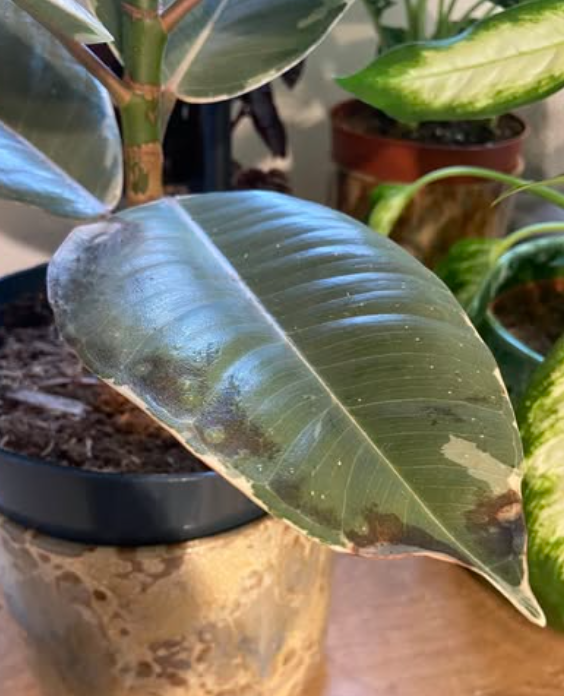
Cause 1: Low humidity or dry indoor air
Signs: Dry, crispy leaf edges that are brown, especially during winter or in air-conditioned rooms. Check the room’s humidity levels; if they’re below 40%, your plant may struggle to retain moisture.
Cause 2: Overwatering or poor drainage
Signs: Soggy soil, a foul smell, and roots that appear brown or mushy. Overwatering leads to oxygen-deprived roots, impairing nutrient absorption and causing leaf tip browning.
Cause 3: Underwatering or inconsistent watering
Signs: Dry, crispy leaf tips, soil that feels dry several inches below the surface, and wilting leaves.
How to tell which cause applies to your plant:
- Examine the soil: Is it soggy or bone dry?
- Check watering habits: Have you been watering too frequently or infrequently?
- Assess indoor environment: Is the air dry, especially in winter?
- Inspect roots (if necessary): Gently remove the plant from its pot to check root health; healthy roots are white and firm.
Section 3: Treatment Solutions
Once you've identified the cause, implement targeted remedies to restore your rubber plant’s health.
Immediate actions to take
- Adjust watering: Allow the soil to dry out slightly if overwatered, or water thoroughly if too dry.
- Improve humidity: Use a humidifier, place a water tray with pebbles nearby, or mist leaves regularly.
- Prune severely damaged tips: Use clean, sharp scissors to trim brown, crispy tips, encouraging healthy new growth.
Long-term treatment plan
- Establish consistent watering practices: Water only when the top inch of soil feels dry.
- Increase humidity: Maintain indoor humidity around 50-60% for optimal growth.
- Use balanced fertilization: Feed with a diluted, balanced houseplant fertilizer every 4-6 weeks during the growing season.
- Ensure proper lighting: Place your rubber plant in bright, indirect light to promote healthy growth.
What to expect during recovery
- New leaf growth: Your plant will start producing healthy new leaves.
- Gradual healing: Brown tips may not revert entirely but should diminish with proper care.
- Monitoring progress: Regularly check soil moisture, humidity, and overall plant health.
Section 4: Prevention Tips
To maintain a thriving rubber plant and prevent brown tips from recurring, follow these simple care routines:
Care routine adjustments
- Water consistently: Only water when the top inch of soil feels dry.
- Fertilize appropriately: Use a balanced fertilizer during the active growing season.
- Maintain stable environmental conditions: Keep temperature and humidity levels steady.
Environmental factors to monitor
- Avoid drafts and temperature fluctuations: Keep the plant away from cold drafts, heaters, and air conditioning vents.
- Use a humidifier: Especially in dry seasons, to keep humidity levels optimal.
- Placement considerations: Position your plant near a bright window but avoid direct sunlight, which can scorch leaves.
Conclusion
In summary, brown tips on your rubber plant often result from environmental stressors or watering issues, but with proper diagnosis and care, they can be corrected. Remember, your plant’s health depends on consistent watering, appropriate humidity, and good lighting. Don't worry—your rubber plant can recover with a little patience and attentive care. By applying the suggested remedies, monitoring your plant’s response, and maintaining a healthy environment, you'll soon enjoy lush, vibrant foliage that adds beauty and tranquility to your home.
FAQ
Q: How long until I see improvement after fixing the problem?
A: Typically, you can expect to see noticeable improvements within a few weeks. New, healthy leaf growth will start to appear, and the browning tips will gradually diminish as the plant recovers. Patience and consistent care are key.
Q: Will my rubber plant fully recover from brown tips?
A: While you cannot always revert existing brown tips to their original state, the overall health of your plant can significantly improve, and new growth will be healthy. Pruning damaged tips helps the plant focus energy on new, vibrant leaves.
Q: Should I prune the brown tips or leave them to develop naturally?
A: It’s best to prune brown, crispy tips to promote healthy growth and improve the plant’s appearance. Use clean, sharp scissors and cut just above the healthy tissue. This encourages new, lush growth and prevents further spread of damage.
With these insights and tips, you're well-equipped to fix rubber plant brown tips and maintain a beautiful, healthy indoor garden. Happy gardening!