Struggling with yellow leaves on your Alocasia? Discover easy diagnostic steps and effective solutions to restore its healthy, vibrant foliage.
Noticing yellow leaves on your Alocasia can be worrying, but it’s a common issue many plant parents face. This striking tropical plant is known for its bold, dramatic foliage, but when the leaves start turning yellow, it can make you feel like your plant is losing its vitality. The good news is that yellowing leaves are often a sign that your plant needs a little adjustment—understanding the cause is the first step toward reviving your Alocasia. In this comprehensive guide, we’ll explore why Alocasia leaves turn yellow, how to diagnose the root cause, and practical, simple remedies that can help your plant bounce back to lush, green health. With patience and a few adjustments, your Alocasia can regain its full splendor.
Section 1: Understanding the Problem
Yellow leaves on Alocasia are a signal that something in the plant’s environment or care routine isn’t quite right. While it’s normal for some older leaves to yellow and die back naturally, widespread or sudden yellowing often points to an underlying issue.
Visual identification of yellow leaves
- Color and condition: Are the leaves uniformly yellow or do they have distinct patches? Are they crisp and dry or soft and wilted?
- Location: Are new leaves yellowing, or is it mostly mature older leaves?
- Pattern: Is the yellowing happening gradually or suddenly?
Common causes overview
Some typical reasons for yellow leaves include overwatering, poor drainage, insufficient or excessive light, nutritional deficiencies, or environmental stresses such as drafts or low humidity. Recognizing these symptoms early can help you target your care and prevent further damage.
Section 2: Diagnosing the Exact Cause
Pinpointing why your Alocasia’s leaves are yellow involves observing its environment, watering habits, and overall health. Follow these diagnostic steps to identify the root cause.
Cause 1: Overwatering or Poor Drainage (Most Common Cause)
Alocasias love moist soil, but too much water can drown the roots, leading to root rot and yellow leaves. Check if the soil feels soggy or if the pot’s drainage is inadequate. Also, inspect the drainage holes—clogged or absent ones cause water to pool.
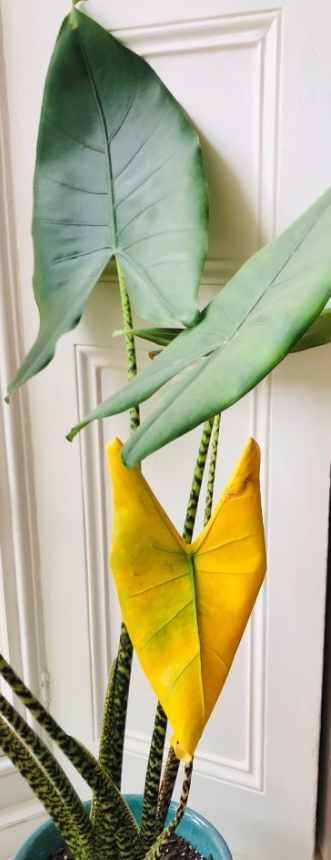
How to tell: The leaves look wilted yet the soil stays wet; the plant may have a foul smell from the roots.
Cause 2: Improper Light Conditions
Alocasia prefers bright, indirect light. Too little light can cause the plant to become leggy and leaves to yellow, while too much direct sunlight can scorch the leaves, turning them yellow or brown patches. How to tell: If your plant is near a window with harsh direct sun, or in a dark corner, adjust its position accordingly.
Cause 3: Nutrient Deficiencies or Soil Issues
Lack of essential nutrients like nitrogen, magnesium, or iron can cause yellowing. Poor soil quality or infrequent fertilization can lead to nutritional deficiencies. How to tell which one it is: If the soil looks depleted or your plant hasn’t been fertilized in a while, this might be the culprit.
How to tell which cause it is
- Overwatering signs: Soggy or waterlogged soil, foul smell, widespread yellowing.
- Light problems: Yellowing on new or topmost leaves in low light, or scorched, yellow patches after direct sun.
- Nutrient issues: Yellowing older leaves, pale new growth, or dull foliage despite proper watering and lighting.
Section 3: Treatment Solutions
Once you identify the cause, you can take targeted actions to revive your Alocasia.
Immediate actions to take
- Adjust watering: Allow the top inch of soil to dry out between waterings. Ensure your pot has drainage holes and consider repotting if drainage is poor.
- Improve drainage: If the soil is heavy, repot your plant in well-draining potting mix—ideally a blend designed for aroids or tropical plants.
- Modify light conditions: Move your Alocasia to a spot with bright, indirect light. Avoid direct afternoon sun that can scorch the leaves.
- Address nutrient deficiencies: Start a balanced, water-soluble fertilizer diluted to half strength every 4-6 weeks during the growing season.
Long-term treatment plan
- Fertilization: Regular feeding according to package instructions encourages healthy, lush foliage.
- Repotting: Every 1-2 years, refresh the soil to prevent nutrient depletion and root-bound conditions.
- Environmental adjustments: Increase humidity with a pebble tray or humidifier, and keep away from drafts or sudden temperature changes.
Monitoring recovery and when to prune
- Watch for new growth: Healthy new leaves indicate recovery.
- Prune yellow or damaged leaves: Only remove severely yellowed or dead leaves to improve the plant’s overall appearance and prevent disease.
Section 4: Prevention Tips
Prevention is always better than cure. Implement these care strategies to keep your Alocasia vibrant and healthy:
Optimizing watering and humidity levels
- Water only when the top inch of soil feels dry.
- Maintain humidity around 60-80%, especially in dry indoor environments, using humidifiers or pebble trays.
Providing proper lighting and temperature
- Place your Alocasia near a north or east-facing window with filtered light.
- Keep temperature stable between 65°F and 80°F, avoiding cold drafts and temperature fluctuations.
Regularly checking soil moisture and nutrient levels
- Use moisture meters for precise watering.
- Fertilize during the active growing season (spring and summer) and reduce feeding in winter.
Conclusion
Yellowing leaves on your Alocasia are an important signal that deserves attention. Whether caused by overwatering, improper light, or nutritional gaps, diagnosing the root cause allows you to implement targeted remedies. With timely adjustments—such as correcting watering habits, optimizing lighting, and providing proper nutrition—you can help your plant recover beautifully. Remember, patience is key. With consistent care, your Alocasia will bounce back from yellow leaves and regain its stunning, lush foliage.
Next steps
Apply these diagnosis and treatment tips today, and keep a close eye on your plant’s environment. Regular care and observation can prevent future issues, ensuring your beautiful Alocasia remains a vibrant centerpiece in your home.
FAQ
Q: How long until I see improvement after fixing watering or lighting?
A: Typically, you can expect to see new healthy growth within 3-4 weeks after correcting watering or lighting issues. Be patient and consistent with your care routine.
Q: Can my Alocasia fully recover from yellowing leaves?
A: Yes, if the cause is addressed promptly, and the plant is healthy otherwise, it can produce new, vibrant leaves and recover fully over time.
Q: Should I prune all yellow leaves or only the severely damaged ones?
A: It's best to prune only the yellow or damaged leaves that are clearly beyond recovery. Removing severely yellowed leaves can help redirect energy to new growth and improve the plant’s appearance.
If your Alocasia’s leaves continue to yellow despite your efforts, don’t get discouraged. Sometimes, a bit of patience and gentle adjustments can make all the difference. Happy gardening!