Quick Summary: Black spots on your Fiddle Leaf Fig can feel alarming, but with the right diagnosis and care, you can help your plant recover quickly. Understanding what's causing those dark marks and taking decisive action is key to restoring your plant's health.
Introduction
Noticing black spots on your Fiddle Leaf Fig (Ficus lyrata) can be genuinely distressing. As a plant parent, you want nothing more than to see your leafy friend thrive and look beautiful. These unsettling dark patches might make you worry about disease, pests, or environmental stress—that's completely normal. The good news is that many causes of black spots are manageable with prompt, informed care. In this guide, I'll walk you through understanding what these black spots are, how to identify their cause, and practical, easy solutions to get your Fiddle Leaf Fig back to healthy, vibrant condition. Whether the spots are due to fungal infections, watering issues, or physical damage, you’ll learn specific steps to fix the problem and prevent future occurrences. Remember, you're not alone in this—your plant can bounce back with a little patience and the right care.
Section 1: Understanding the Problem
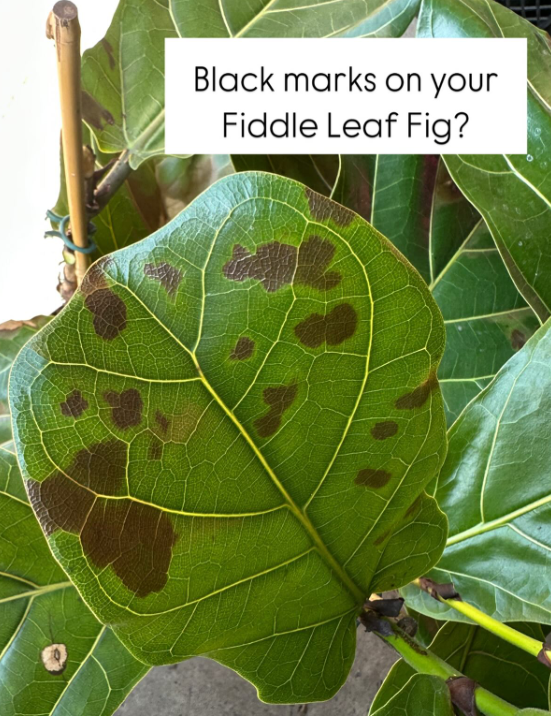
Black spots on your Fiddle Leaf Fig are often a sign that something isn't quite right, typically indicating fungal infection or stress-related issues. Recognizing what these spots look like will help you pinpoint the cause and decide on the best course of action.
Visual identification
- Appearance: Dark, irregular patches that may be sunken or fuzzy. They might look like ink blots or small black dots scattered across leaves.
- Location: Usually on older leaves first but can appear on new growth if the problem persists.
- Other signs: Sometimes, spots are surrounded by yellowing or leaf drop, indicating underlying stress.
Common causes overview
- Fungal infections: Such as leaf spot diseases, thrive in humid, damp conditions, causing water-soaked or fuzzy black patches.
- Overwatering: Excess water can lead to root rot, causing leaves to develop black spots as a symptom of poor health.
- Inadequate light: Low light levels weaken the plant, making it more vulnerable to infections.
- Physical damage: Bumping, drafts, or water sitting on leaves can create entry points for fungi.
Section 2: Diagnosing the Exact Cause
Getting to the core of the black spots' cause involves a close inspection and ruling out possibilities step-by-step.
Cause 1: Fungal infections
- Symptoms: Fuzzy or dry black spots, often with a yellow halo, and fuzzy growth if fungal spores are present.
- How to confirm: Check for surface fuzzy growth, or if spots are soft and spread quickly, fungal infection is likely.
- Why it occurs: Excess humidity or water sitting on leaves provides ideal conditions for fungi.
Cause 2: Overwatering & root rot
- Symptoms: Black spots that may appear as part of overall leaf yellowing or soft, mushy patches on affected leaves.
- How to tell: Check the roots—roots affected by rot are brown, slimy, and smell foul.
- Why it happens: Too-frequent watering or poor drainage causes roots to suffocate and decay, leading to this symptom on leaves.
Cause 3: Physical injuries & water damage
- Symptoms: Small, well-defined black spots typically on damaged areas where leaves or stems have been hurt.
- How to identify: Look for recent physical injuries or watering that causes water sitting on leaf surfaces for long periods.
- Why it occurs: Mechanical damage or water sitting on leaves promoting localized fungal growth.
Decision checklist:
- Are the spots fuzzy or dry? → Likely fungal
- Are the spots accompanied by yellowing or soft patches? → Possible overwatering
- Are there recent physical injuries? → Likely physical damage
- Check roots if possible—are they brown or slimy? → Root rot due to overwatering
Section 3: Treatment Solutions
Once you've identified the cause, you can apply targeted solutions to help your Fiddle Leaf Fig recover.
Immediate actions (First 24-48 Hours):
-
Remove affected leaves:
-
Use sterilized pruning shears. Cut just above the healthy tissue, removing all leaves with black spots to prevent spread.
-
Improve airflow:
-
Ensure your plant is in a well-ventilated space. Use a fan if necessary to increase circulation.
-
Adjust watering habits:
-
Let the soil dry out slightly before watering again. Avoid wetting leaves and water only when the top inch of soil feels dry.
-
Isolate the plant:
-
Keep it away from other houseplants to prevent fungal spores or pests spreading.
Long-term treatment:
-
For fungal infections:
Apply natural remedies like neem oil or insecticidal soap. -
Mix according to instructions; spray the affected leaves and surrounding surfaces.
- Alternatively, use a fungicide labeled for houseplants if fungus persists—follow label instructions carefully.
- Addressing overwatering and root rot:
Repot your plant: - Gently remove your Fiddle Leaf Fig from its pot.
- Rinse off the roots with lukewarm water to remove decayed tissue.
- Trim away brown, mushy roots with sterile shears.
- Repot into fresh, well-draining soil and a clean pot with drainage holes.
-
Water sparingly—allow the top inch of soil to dry out before watering again.
-
Environmental adjustments:
Ensure your plant receives bright, indirect light.
Maintain proper humidity (around 40-60%).
Use a fan or space plant for better air circulation.
During recovery:
- Keep the plant in a warm, well-ventilated spot away from drafts.
- Monitor for new black spots or other signs of distress.
- Be patient—most Fiddle Leaf Figs will start improving in a few weeks if care is consistent.
Section 4: Prevention Tips
Prevention is better than cure. Here are foolproof ways to keep those black spots at bay:
-
Maintain balanced watering routines:
Water only when the top inch of soil feels dry—preferably bottom watering or watering carefully from the base. Overwatering is a common cause of fungal issues. -
Ensure optimal light:
Bright, indirect sunlight keeps your Fiddle Leaf Fig healthy and less susceptible to infections. Aim for about 4-6 hours of filtered sun daily. -
Increase air circulation:
Proper spacing between plants and occasional use of a fan helps prevent excess humidity and fungal growth. -
Use sterile tools:
Always sterilize pruning shears and scissors before cutting or handling your plant, reducing the risk of introducing diseases. -
Avoid overhead watering:
Water at the soil level to prevent water sitting on leaves—this reduces fungal entry points. -
Manage humidity carefully:
Use a dehumidifier if your home is very humid or ensure proper ventilation to keep moisture levels in check.
Frequently Asked Questions
Q: How long until I see improvement after treatment?
A: Typically, you should notice new healthy growth and a reduction in black spots within 2 to 4 weeks, provided the care routine remains consistent.
Q: Can my Fiddle Leaf Fig fully recover from black spots?
A: Yes! With prompt and proper treatment, many plants recover completely. Keep monitoring, and don’t forget to prevent future issues.
Q: Should I prune all affected leaves or just some?
A: Remove only those leaves showing clear signs of damage or infection—leaving healthy leaves intact helps the plant recover faster. Regular pruning encourages new, healthy growth.
Q: Is it safe to use chemical fungicides?
A: Use chemical fungicides only as a last resort, following label instructions meticulously. Natural remedies like neem oil are safer and often effective for home use.
Q: How can I prevent future black spots?
A: Maintain proper watering, ensure adequate light, increase airflow, and stay vigilant with plant inspections. Regularly cleaning leaves and sterilizing tools will also greatly reduce risks.
Conclusion
Black spots on your Fiddle Leaf Fig can be concerning, but remember—they’re manageable with early diagnosis and attentive care. Here’s a quick recap:
- Identify the cause: fungal infection, overwatering, or physical damage.
- Take immediate action: prune affected leaves, improve airflow, and adjust watering.
- Apply targeted treatments: natural remedies or fungicides if needed.
- Prevent future issues: optimize watering, light, and air circulation. Don’t get discouraged—your plant’s recovery is within reach. With patience, love, and consistent care, your Fiddle Leaf Fig can flourish once again. Keep inspecting regularly, and happy plant parenting!