Introduction
Noticing brown tips on your Peace Lily can be quite concerning — after all, you want your lush, green plant to flourish indoors! But don’t worry; brown tips are a common issue among Peace Lily owners, and often, they’re simple to fix with a bit of understanding and care adjustments. This article will help you discover why your Peace Lily develops brown tips, how to diagnose the root cause, effective treatment options, and practical tips to prevent future problems. With the right care, your Peace Lily can bounce back, showing off its vibrant green leaves once again, bringing beauty and tranquility to your living space.
Understanding the Problem
Visual identification: What brown tips look like, their appearance, and extent
Brown tips on a Peace Lily appear as dry, crispy, or sometimes translucent edges on the leaves’ tips and margins. They can vary from light tan to deep brown and may be localized or spread across several leaves. Sometimes, the entire tip is affected, giving a ragged or scorched appearance. It's important to distinguish between minor tip browning — which is often superficial — and more severe cases where the browning signals underlying issues affecting overall plant health.
Common causes overview: Factors like watering issues, low humidity, over-fertilization, and inconsistent care
Several factors can cause brown tips, and often, they’re interconnected. The most common culprits include:
- Watering problems: Both underwatering and overwatering can stress the plant, leading to leaf damage.
- Low humidity: Peace Lilies thrive in humid environments; dry indoor air, especially in winter or heated rooms, can cause leaf tips to turn brown.
- Over-fertilization: Excess fertilizer salts build up in the soil, dehydrating roots and resulting in leaf tip damage.
- Environmental stress: Cold drafts, direct air conditioning, or sudden changes in temperature and light. Understanding these causes helps you diagnose and address the specific issue your Peace Lily faces.
Diagnosing the Exact Cause
Step-by-step diagnostic process to pinpoint the cause
Accurately identifying the cause of brown tips involves observing your plant’s environment and care practices. Here’s a simple diagnostic approach:
Cause 1: Underwatering or inconsistent watering
- Signs: Dry soil that pulls away from the pot edges, wilted or drooping leaves, crispy leaf tips.
- What to check: When was the last time you watered? Is the soil consistently moist but not waterlogged?
Cause 2: Low humidity levels
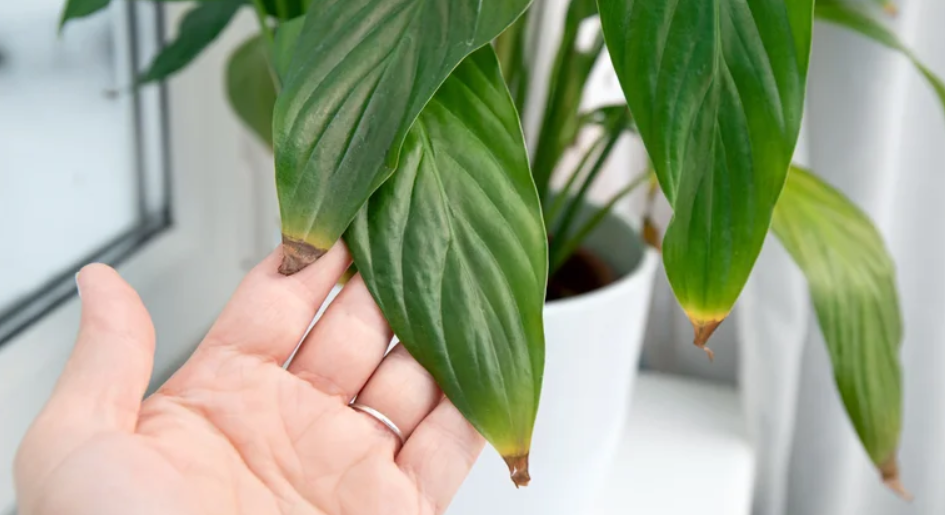
- Signs: Browning primarily at the tips with no signs of pests or diseases, especially if the air indoors feels dry.
- What to check: Is your indoor humidity below 40%? Do the leaves feel dry or brittle? Winter months and heated spaces tend to have the lowest humidity.
Cause 3: Over-fertilization
- Signs: Accumulation of fertilizer salts in the soil, causing leaf browning even when watering correctly.
- What to check: How often do you fertilize? Are you using a high-concentration fertilizer? Is the soil crusted with white or salty deposits?
How to tell which cause affects your plant
Monitor your plant’s watering routine, assess humidity levels with a hygrometer, and review your fertilization schedule. Often, a combination of these factors contributes to the browning problem.
Treatment Solutions
Addressing each cause with targeted remedies
Once the diagnosis is clear, implement these effective remedies:
Immediate actions:
- Adjust watering schedule: Water your Peace Lily only when the top inch of soil feels dry. Ensure thorough watering to moisten the entire root zone but avoid waterlogging.
- Improve humidity: Use a humidifier, place a tray with pebbles and water under the pot, or group your plants together to increase local humidity.
- Flush soil if over-fertilized: If you suspect over-fertilization, flush the soil with room-temperature water to wash away excess salts. Repeat as needed, ensuring good drainage.
Long-term care:
- Maintain consistent watering routines: Develop a schedule that keeps soil evenly moist, not soggy or dry.
- Monitor and increase humidity: Keep indoor humidity around 50-60%, especially during winter.
- Fertilize appropriately: Use a balanced, water-soluble fertilizer every 6-8 weeks during the growing season (spring and summer), and reduce feeding in winter.
Recovery expectations: How quickly you might see improvement and signs of healing
With proper care adjustments, you can expect to see signs of improvement within a few weeks. New growth should be healthy and free of brown tips, and existing brown areas may gradually fade or be pruned away to promote new, healthy leaves.
Prevention Tips
Care routine adjustments: Watering habits, fertilization schedule, pruning dead tips
- Establish a consistent watering routine: Check the soil moisture regularly and water only when needed.
- Use proper fertilization: Follow instructions on fertilizer labels, and avoid over-fertilizing.
- Prune brown tips: Trim off dead or brown tips with clean scissors, cutting just above the healthy green tissue to encourage new growth.
Environmental factors to monitor:
- Humidity: Use a hygrometer to maintain ideal humidity levels.
- Temperature: Keep your Peace Lily away from cold drafts, air conditioners, or heating vents.
- Lighting: Provide bright, indirect light to promote healthy growth and reduce stress.
Conclusion
Brown tips on your Peace Lily are common but manageable plants’ issues that can be fixed with some careful observation and care adjustments. The main causes—watering issues, low humidity, and over-fertilization—are straightforward to address once identified. With attentive care, patience, and a little bit of nurturing, your Peace Lily can recover beautifully, restoring its lush, vibrant foliage. Start implementing these tips today and watch your plant thrive once again!
Next Steps
Implement the recommended watering, humidity, and fertilization practices today. Keep an eye on your Peace Lily’s response, and stay consistent with your care routine. Over time, you’ll enjoy a healthier, greener plant that brightens your home.
FAQ
Q: How long until I see improvement after fixing watering and humidity?
A: Typically, you can expect to see signs of improvement within 2 to 4 weeks. New leaves should grow healthy and free of brown tips, and existing leaf tips may gradually improve or be pruned back.
Q: Can I prune brown tips without harming my plant?
A: Yes, you can prune brown tips to improve appearance and promote healthy growth. Use clean, sharp scissors or pruning shears to cut just above the healthy green tissue, ensuring you don’t damage the leaf.
Q: How often should I fertilize my Peace Lily to prevent tips from browning?
A: Fertilize about once every 6-8 weeks during the active growing season (spring and summer) using a balanced, diluted houseplant fertilizer. Reduce or skip fertilization in winter when the plant’s growth naturally slows.
Empower yourself with these simple care tips to help your Peace Lily recover and flourish. Your indoor oasis awaits a healthier, happier plant!