Learn practical steps to identify and fix brown tips on your philodendron. Follow our expert tips for healthy, vibrant indoor plants.
Introduction
Noticing brown tips on your philodendron can be worrying, especially if you're invested in keeping your indoor garden lush and vibrant. It's a common issue many plant parents face, but the good news is, it’s typically fixable with some understanding and a few simple adjustments. This guide will help you identify the causes of brown tips, diagnose the specific problem affecting your plant, and show you easy, effective solutions to restore your philodendron to health. With patience and care, your plant can recover beautifully—so let’s get started.
Section 1: Understanding the Problem
Visual Identification
Brown tips on philodendron leaves are often dry, crispy, and brittle-looking. They usually appear at the edges or corners of the leaf and may vary in size from small, subtle spots to larger, more prominent sections. Sometimes, the tips turn a darker brown or even black, indicating more severe distress.
Common Causes Overview
Several factors can lead to brown tips, including:
- Overwatering or underwatering: Both can cause stress and dehydration.
- Low humidity: Dry indoor air can make leaf tips turn brown.
- Mineral buildup and salt stress: Excess salts from fertilizers or water can accumulate in soil, damaging roots and leaf tips.
- Nutrient deficiencies: Lack of essential minerals affects leaf health.
- Environmental stress: Drafts, direct heat, or cold can harm your plant’s leaves. Understanding these common causes helps you tailor your care to prevent future problems.
Section 2: Diagnosing the Exact Cause
Follow these diagnostic steps to determine why your philodendron has brown tips:
Cause 1: Low Humidity
- Indicators: Dry air, especially in winter or heated rooms, can cause leaf tips to turn brown and crispy.
- How to check: Feel the air quality around your plant. If it feels dry or the leaf tips crack easily, humidity might be low.
Cause 2: Over or Underwatering
- Indicators: Overwatering can lead to soggy soil and root rot, while underwatering results in dry soil and dehydration.
- How to observe: Check the soil moisture. If it’s consistently wet and soggy, overwatering is likely. If it’s bone dry, underwatering might be the culprit.
Cause 3: Mineral Buildup & Salt Stress
- Indicators: Residue or a white crust on soil surface or leaf edges, coupled with frequent fertilization.
- How to assess: Examine the soil and leaves for salt deposits. If present, this could be stressing your plant.
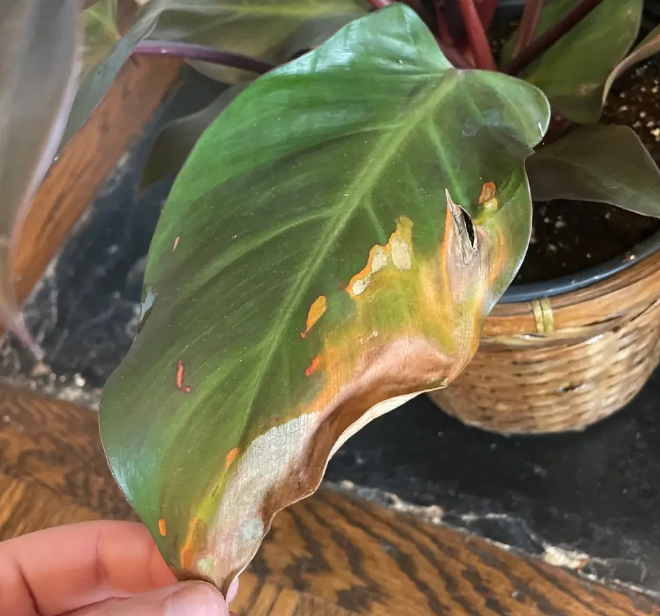
How to tell which one it is:
- Look for additional signs:
- Drooping or wilting leaves often indicate overwatering or low humidity.
- Dry, brown leaf tips with soil that feels dry point toward underwatering.
- Residue on leaves or soil suggests salt buildup. By observing your plant carefully using these clues, you can effectively diagnose the cause of brown tips.
Section 3: Treatment Solutions
Address each cause with targeted actions to help your philodendron recover:
Immediate actions to take:
- Increase humidity: Use a humidifier, place a water tray with pebbles near the plant, or group plants together to create a more humid microenvironment.
- Adjust watering schedule: Check soil moisture before watering. Water only when the top inch feels dry.
- Flush soil to remove salts: Water thoroughly until excess salts are washed out. Use distilled or filtered water to prevent future buildup.
Long-term treatment plan:
- Establish consistent watering: Develop a routine that balances moist soil without oversaturation.
- Use better water sources: Switch to filtered, distilled, or rainwater to reduce mineral content.
- Incorporate humidity boosts: Regularly mist the plant, especially during dry seasons, or keep a small humidifier nearby.
Monitoring recovery:
- Keep an eye on new leaf growth—healthy, lush leaves signal recovery.
- Watch for a reduction in dryness and brown tips over time. With these steps, your philodendron should gradually improve and regain its vibrant appearance.
Section 4: Prevention Tips
Care routine adjustments:
- Water properly: Ensure you’re watering at the right intervals, not too often or too little.
- Fertilize appropriately: Use balanced, water-soluble fertilizers sparingly—about once a month during growing season.
- Provide sufficient light: Bright, indirect light helps sustain healthy leaf growth.
Environmental factors to monitor:
- Maintain optimal humidity: Keep humidity levels around 50-60%. Use a hygrometer to track levels.
- Water quality: Always use filtered or distilled water to minimize salt buildup.
- Avoid drafts and heat sources: Keep your plant away from vents, radiators, or cold drafts that can stress it. Regularly assessing these factors will help prevent future brown tips and keep your philodendron thriving.
Conclusion
Recap of key causes and solutions
Brown tips on philodendrons usually stem from environmental stressors like low humidity, improper watering, or mineral buildup. By carefully diagnosing these causes, you can take targeted steps—such as adjusting watering habits, increasing humidity, and preventing salt buildup—to restore your plant’s health.
Encouragement
Remember, patience is key. With proper care and a bit of attention, your philodendron can bounce back from brown tips and grow into a lush, vibrant centerpiece in your home.
Next steps
- Implement the recommended care adjustments.
- Monitor your plant’s response over the coming weeks.
- Celebrate each new, healthy leaf—your green thumb is on the right track!
FAQ
Q: How long until I see improvement after adjusting care?
A: Typically, you can expect to see noticeable improvement within 2 to 4 weeks. New growth should appear healthier, and brown tips may begin to recede as your plant recovers. Patience is essential, especially if the damage was extensive.
Q: Can brown tips fully recover, or should I prune them?
A: If the brown tips are dry and crispy, it's best to prune them back with clean scissors. While the tips won't turn green again, you can prevent further browning. Otherwise, healthy new growth will soon replace damaged leaves, and your plant can recover fully with proper care.
Q: What are the best ways to maintain optimal humidity for indoor philodendrons?
A: Use a humidifier, place a tray of water and pebbles under the plant, or group plants together to create a more humid environment. Misting leaves regularly also helps, especially in dry indoor climates. Maintaining humidity around 50-60% generally supports healthy philodendron growth.
By understanding the causes and applying these practical solutions, you're well on your way to nurturing a healthy, thriving philodendron free of brown tips. Happy planting!