Struggling with leggy Calathea? You’re not alone. Many indoor plant enthusiasts notice their beloved Calathea stretching out, becoming lanky, and losing its lushness. But don’t worry—this is a common issue with straightforward fixes that can rejuvenate your plant and bring back its vibrant, compact form. In this article, we’ll explore why Calatheas develop leggy growth, how to accurately diagnose the problem, and what simple, effective solutions you can apply to restore your plant’s health. With a little patience and proper care adjustments, your Calathea will bounce back to its beautiful, full self!
Section 1: Understanding the Problem
Visual Identification: What Does Leggy Growth Look Like?
Leggy Calatheas are characterized by long, thin stems with sparse foliage, giving the plant an elongated, stretched-out appearance. Instead of the compact, rounded leaves and dense growth you expect, leggy Calatheas look like they’re reaching for the light, with leaves spaced far apart along the stems. This can make the plant look underdeveloped and leggier than normal.
Why Does Leggy Growth Occur?
The main reasons behind this phenomenon are insufficient light, improper watering, nutrient deficiencies, or excessive direct sunlight. Recognizing the underlying cause will guide you toward the right corrective action.
Section 2: Diagnosing the Exact Cause
To effectively fix leggy growth, it’s essential to identify the root cause. Here’s a simple diagnostic process:
Cause 1: Insufficient Light
Calatheas thrive in bright, indirect light. When placed in a dim corner or far from natural light sources, the plant responds by stretching toward any available light. This natural elongation is an attempt to maximize light absorption.
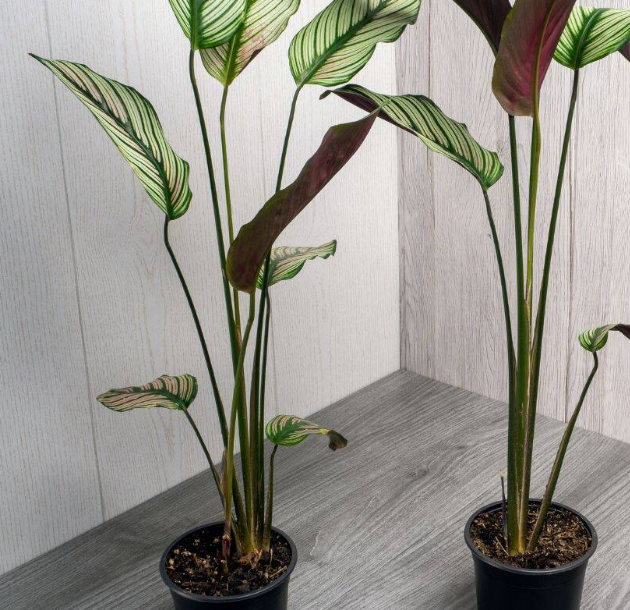
Signs: Stretched stems, sparse foliage, leaning toward a window or light source.
Cause 2: Lack of Proper Nutrients
If your Calathea has been in the same pot for a while without fertilization, it may suffer from nutrient deficiencies, resulting in weak, elongated stems and pale leaves. Signs: Gradually thinning stems, lackluster coloration.
Cause 3: Inadequate Watering or Humidity
Both overwatering and underwatering stress the plant, leading to poor growth. Calatheas prefer evenly moist soil and high humidity. Too dry conditions can cause weak stems and slow growth. Signs: Dry or yellowing leaves, root issues.
How to Tell Which Cause It Is
- Evaluate light conditions: Is your plant near a north or east-facing window? Does it receive bright, indirect sunlight?
- Review watering habits: Is the soil consistently moist but not waterlogged?
- Observe plant response: Does adjusting lighting or watering improve its appearance?
By carefully examining these factors, you can pinpoint the primary cause of your Calathea’s legginess.
Section 3: Treatment Solutions
Once you determine the cause, follow these targeted solutions to promote lush, compact growth:
Immediate Actions
- Adjust Light Exposure: Move your Calathea to a brighter spot with bright, indirect light. Avoid direct sun, which can scorch leaves, but ensure it’s receiving enough filtered light.
- Water Properly: Water when the top inch of soil feels dry. Keep the soil evenly moist but not soggy.
- Fertilize: During the active growing season (spring and summer), feed your Calathea every 4-6 weeks with a diluted, balanced houseplant fertilizer.
Long-Term Care Plan
- Positioning: Place the plant near an east- or north-facing window, or use grow lights if natural light is limited.
- Maintain Humidity: Use a humidifier, a pebble tray with water, or mist regularly to keep humidity levels high, which supports compact growth.
- Regular Pruning: Trim off any leggy stems and damaged leaves to encourage new, bushier growth.
- Consistent Watering and Feeding: Establish a routine to keep the soil moist and provide nutrients during the active growing months.
Pruning
Pruning not only improves appearance but also stimulates more compact, vigorous growth. Use clean scissors to cut just above a leaf node on leggy stems, encouraging bushiness.
Monitoring
Keep an eye on your Calathea’s response to care adjustments. Adjust light, watering, or fertilization as needed, and be patient—the plant may take a few weeks to rebalance.
Section 4: Prevention Tips
The best way to keep your Calathea healthy and prevent legginess is through consistent, attentive care:
- Provide Adequate Light: Use grow lights or place the plant near bright, indirect windows. Avoid dark corners.
- Water Properly: Water when the top inch of soil is dry, ensuring good drainage to prevent root rot.
- Increase Humidity: Maintain levels around 50-60%, especially in dry indoor environments.
- Fertilize Monthly: During the growing season, feed with a balanced fertilizer to sustain healthy growth.
- Regular Pruning and Repotting: Remove leggy or damaged stems regularly. Repot when roots become crowded to promote healthy, vigorous growth.
Conclusion
Addressing the causes of leggy Calathea growth—primarily light, watering, and nutrition—is essential to restoring its lush, compact form. With simple adjustments like improving light conditions, maintaining proper watering, and providing adequate humidity, your plant can recover beautifully. Remember: Patience is key. With attentive care and a few tweaks, your Calathea will flourish, adding vibrant greenery to your indoor space. Keep monitoring, pruning, and nurturing, and soon your plant will thrive as the gorgeous centerpiece you love.
FAQ
Q: How long does it take for a Calathea to recover from legginess?
A: Recovery time varies depending on the severity of the issue and how quickly you implement care adjustments. Typically, you can expect to see improved growth within 4 to 8 weeks after optimizing light, water, and humidity conditions. Consistency is crucial for steady progress.
Q: Can I prune my Calathea to promote bushier growth?
A: Absolutely! Pruning leggy stems and damaged leaves encourages the plant to produce new shoots and develop a denser, more compact shape. Use clean, sharp scissors or pruning shears and cut just above a leaf node for best results.
Q: What are the best light conditions for a healthy Calathea?
A: Calatheas thrive in bright, indirect light. A location near an east- or north-facing window is ideal. If natural light is limited, supplement with fluorescent or LED grow lights. Avoid direct sunlight, which can scorch leaves and cause unnecessary stress.