Struggling with sticky leaves on your Calathea? Discover effective diagnosis steps and practical solutions to restore your plant's health and beauty. Having a beautiful Calathea thriving indoors is a joy, but finding sticky residue on its leaves can be quite concerning. This common issue often leaves plant enthusiasts wondering, what’s causing this, and how can I fix it? Don't worry—you're not alone, and with some simple steps, you can help your plant bounce back and look vibrant again. In this article, we’ll explore why Calatheas develop sticky leaves, how to accurately diagnose the problem, and straightforward solutions to fix and prevent this issue.
📝 Understanding the Problem
Visual identification of sticky leaves and residue
Before jumping into solutions, it's crucial to correctly identify the problem. Sticky residue appears as a shiny, greasy film on the surface of the leaves. Sometimes, it’s accompanied by a sweet or musty smell, and can attract dust or dirt, making your Calathea look dull. The sticky layer may be clear or slightly cloudy, and often, small insects like scale or mealybugs can be visible on the undersides of leaves or stems.
Common causes overview: pest infestations, fungal issues, or environmental factors
Several factors can lead to sticky leaves on Calathea, most notably:
- Pest infestations, especially sap-sucking insects such as scale insects, mealybugs, or aphids.
- Fungal infections or mold, like sooty mold, that produce sticky honeydew as a byproduct.
- Environmental stress, including overwatering or poor air circulation, can cause the plant to exude sap or resin through its leaves. Understanding the cause is key to choosing the most effective treatment.
🚩 Diagnosing the Exact Cause
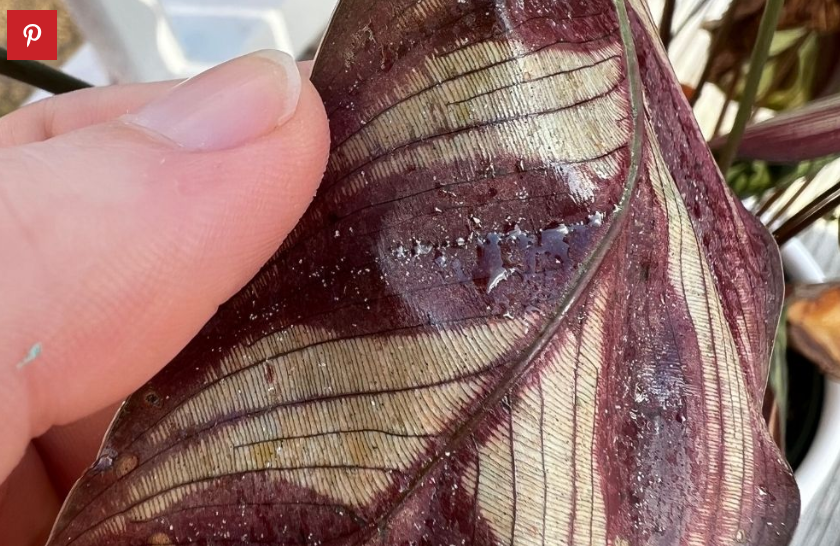
Follow a step-by-step diagnostic process to pinpoint the root cause
Cause 1: Sap-sucking pests like scale insects or mealybugs
These tiny pests latch onto leaves and stems, sucking sap, which results in sticky honeydew. Look closely at the underside of leaves; tiny bumps or cotton-like clusters are signs of infestation.
Cause 2: Fungal infections producing sticky secretions (e.g., sooty mold with honeydew)
Fungal problems, often caused by excess moisture or poor air circulation, can produce a shiny, mold-like appearance along with sticky secretions, typically accompanied by black or gray mold growth on leaves.
Cause 3: Environmental stress or overwatering leading to exudates
If your Calathea is overwatered or in a humid environment, it might exude resin or sap as a stress response, leading to sticky leaves without pests or fungal presence.
How to tell which cause is affecting your plant
- Inspect thoroughly: Look for insects or mold.
- Check leaf texture and color: Pests often cause bumps or discoloration.
- Notice other symptoms: Wilting, yellowing, or leaf drop may indicate overwatering or fungal issues. By carefully observing these signs, you can determine whether pests, fungi, or environmental factors are responsible.
🔧 Treatment Solutions
Implement targeted fixes based on the diagnosed cause
Immediate actions: cleaning leaves, removing pests
- Use a soft cloth or sponge dipped in lukewarm water to gently wipe the leaves. This removes sticky residue and dust.
- For visible pests like scale or mealybugs, manually remove them with a cotton swab dipped in alcohol solution or rinse them off with a gentle stream of water.
Natural remedies: Neem oil, insecticidal soap, wiping with alcohol solution
- Neem oil is a natural insecticide that effectively controls pests. Mix according to instructions and spray on affected areas.
- Insecticidal soap is safe and effective for soft-bodied insects—spray liberally on leaves and stems.
- Rubbing alcohol solution (70% isopropyl alcohol diluted with water) can help dissolve pest buildups when wiped carefully on leaf surfaces.
Chemical options: safe pesticides if needed
- If natural methods are insufficient, consider using a commercially available, plant-safe pesticide. Always follow label instructions carefully to avoid damaging your Calathea.
Long-term care: adjusting watering, humidity, and environment
- Avoid overwatering—let the top inch of soil dry out before watering again.
- Increase air circulation around the plant.
- Maintain moderate humidity but avoid excessive moisture buildup.
Monitoring recovery progress
- Keep an eye on the leaves for any residual pests or sticky residues.
- Repeat cleaning or treatments as needed every couple of weeks until the issue resolves.
🌿 Prevention Tips
Avoid future sticky leaf problems with proactive care
Regular inspection and pest control measures
- Check your Calathea weekly for signs of pests and remove any early infestations.
- Use neem oil or insecticidal soap preventively every month.
Maintain balanced watering, humidity, and air circulation
- Water only when the topsoil feels dry.
- Keep humidity at moderate levels, around 50-60%, but ensure good airflow.
- Avoid misting excessively, which can encourage fungal growth.
Promote healthy growth to strengthen plants against pests and fungi
- Fertilize appropriately during the growing season.
- Prune damaged or diseased leaves promptly.
- Repot your Calathea when root-bound or soil quality declines.
📌 Conclusion
Recap: identify the cause, treat effectively, and take preventive steps
Dealing with sticky leaves on your Calathea can be straightforward once you understand the underlying cause. Start with careful inspection — whether pests, fungi, or environmental stress — then choose the appropriate treatment. Maintaining consistent care routines and proactive inspection will help prevent recurrence.
Don’t worry — most sticky leaf issues are manageable with consistent care
Your Calathea is resilient, and with patience and proper attention, it can recover its lush, vibrant appearance. Remember, early detection and targeted action are your best tools.
Implement the solutions outlined and monitor your Calathea’s recovery
Stay vigilant, follow the recommended steps, and soon your Calathea will be back to displaying beautiful, sticky-free leaves—healthy and thriving indoors.
Q: Why does my Calathea's leaves become sticky even without pests?
A: Sometimes, environmental stress such as overwatering or high humidity can cause your Calathea to exude resin or sap, leading to sticky leaves. This is a stress response, not necessarily a sign of pests.
Q: How long does it take to see improvement after treatment?
A: Usually, you can notice a reduction in stickiness within a week of effective treatment. Complete recovery, including the disappearance of pests, may take 2-3 weeks with consistent care.
Q: Are certain environmental changes helpful to prevent sticky leaves?
A: Yes. Maintaining proper watering practices, ensuring good airflow, controlling humidity levels, and inspecting plants regularly can significantly reduce the risk of sticky leaf problems in Calatheas.
Final Tips
Your indoor garden thrives on your attentive care. If you notice sticky leaves on your Calathea, stay calm, follow the diagnostic steps, and implement targeted solutions. With patience, you'll see your plant regain its vitality and beauty—joyfully adding greenery to your home for years to come!