Struggling with brown tips on your Calathea? You're not alone. Many indoor plant enthusiasts notice this common issue, especially with this vibrant and beautiful plant. While it can be worrying to see your plant’s leaf tips turn brown, rest assured that it’s often fixable with a bit of understanding and proper care. In this article, we'll explore why your Calathea might be experiencing brown tips, how to identify the root causes, and simple, practical solutions to help your plant recover and flourish once again.
Understanding the Problem
Recognize What Brown Tips Look Like and Why They Occur
Brown tips on Calathea leaves are typically dry, crisp, and sharply defined at the edges, giving the plant an unhealthy appearance. This discoloration often appears gradually and can affect multiple leaves over time. It’s important to understand that brown tips are usually a sign of environmental stress or improper care rather than a serious disease.
Common Causes Overview:
- Dehydration or underwatering
- Low humidity
- Over-fertilization or salt buildup
- Inconsistent watering habits
- Exposure to drafts or direct heat sources Identifying these issues early is key to reversing browning and maintaining your Calathea’s lush, vibrant foliage.
Diagnosing the Exact Cause
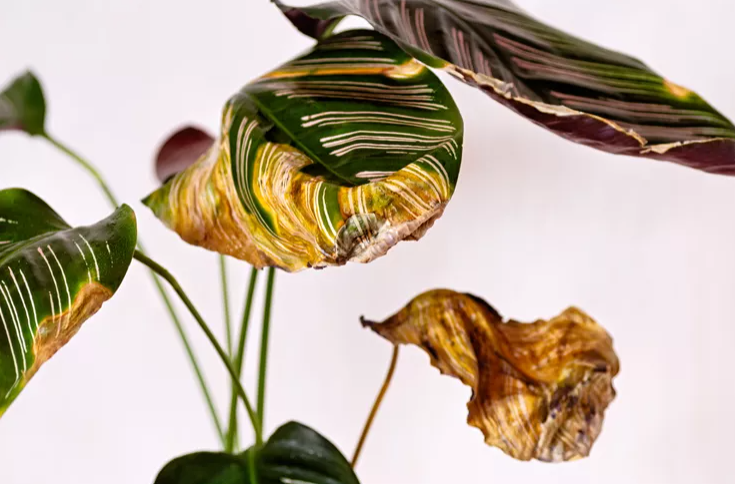
To effectively treat your plant, you need to determine the specific cause of the browning tips. Here's how to methodically diagnose the problem:
Cause 1: Low Humidity
Calatheas thrive in environments with humidity levels between 50-70%. Dry indoor air, especially during winter or in heated homes, can cause the leaf edges to dry out and brown.
Cause 2: Over-fertilization
Using too much fertilizer or applying it too frequently leads to salt accumulation in the soil, which can burn leaf edges, resulting in brown tips.
Cause 3: Inconsistent or Overwatering
Both underwatering and overwatering stress the plant. Underwatered Calatheas dry out, causing tips to brown, while overwatering can lead to root rot, affecting nutrient uptake and causing leaf edges to turn brown.
How to Tell Which Cause Is Affecting Your Plant
- Observe watering habits: Are you watering frequently or infrequently?
- Check humidity levels: Is the surrounding air dry?
- Examine fertilization routine: Are you fertilizing more than once a month?
- Look for other signs: Wilting, yellowing leaves, or soggy soil point toward overwatering or root issues. By analyzing these factors, you can pinpoint the exact cause and implement targeted remedies.
Treatment Solutions
Once you've identified the culprit, follow these tailored steps to restore your Calathea's health:
Immediate Actions
- Adjust watering: If soil feels dry, water thoroughly but ensure excess water drains away. If soil is soggy, let it dry out before watering again.
- Increase humidity: Place a humidifier nearby, or create a pebble tray with water underneath the plant. Misting can also temporarily raise humidity but should not replace other methods.
- Rinse or flush soil: If over-fertilized, gently rinse the soil with water to wash away excess salts and prevent further burns.
Long-term Care Adjustments
- Establish a consistent watering schedule: Water when the top inch of soil feels dry. Use filtered or distilled water if your tap water is high in minerals.
- Use a balanced fertilizer sparingly: Feed your Calathea once a month during the growing season with a diluted, balanced houseplant fertilizer.
- Maintain optimal environment: Keep the plant in indirect light, away from direct sun, drafts, or heating vents. Consistently monitor and adjust humidity levels.
Monitoring During Recovery
Observe your plant regularly:
- Are the leaf tips starting to regain health?
- Is new growth healthy and vibrant?
- Are environmental conditions stable? Make gradual adjustments to avoid shocking the plant and give it time to recover.
Prevention Tips
Prevention is always better than cure. Here are simple routines to keep your Calathea healthy and prevent future brown tips:
Care Routine Adjustments
- Water your Calathea consistently, never allowing the soil to stay completely dry or waterlogged.
- Use a humidifier or pebble tray to maintain humidity levels in the ideal range.
- Fertilize sparingly, preferably during the active growing season, and always dilute fertilizer properly.
Environmental Factors
- Place your Calathea in bright, indirect light—avoid direct sunlight that can scorch leaves.
- Keep the plant away from drafts, heating or cooling vents, and sudden temperature changes.
- Maintain stable humidity and temperature levels for optimal growth.
Concluding Thoughts
Brown tips on your Calathea are a common issue but one that can be managed effectively with proper care. The key lies in correctly diagnosing the cause—whether it’s dry air, over-fertilization, or watering issues—and implementing targeted fixes. With patience and consistent attention, your Calathea can bounce back, showing off its stunning, patterned foliage once more. Remember: Every problem has a solution! Don’t give up on your beloved plant. Start by adjusting your care routine today, and watch your Calathea thrive again.
FAQs
Q: How long until I see improvement after adjusting care?
A: Typically, you can expect to see noticeable improvements within a few weeks. New growth should appear healthier, and existing brown tips may gradually brown further and then stop. Patience and consistent care are essential.
Q: Will my Calathea fully recover from brown tips?
A: In most cases, yes. If the underlying cause is corrected early, the plant can recover fully, with new growth appearing healthy and vibrant. However, existing brown tips usually won’t turn green again and can be pruned if desired.
Q: Should I prune brown tips or leave them to see if they recover?
A: It’s generally best to prune brown tips using clean, sharp scissors. Removing damaged tissue improves the plant’s appearance and can prevent further dehydration or infection. Cut just above a healthy leaf node to maintain a tidy look.
Taking small, consistent steps toward better care will help your Calathea regain its lush, lively appearance. Happy gardening!