Discover why your Anthurium develops black spots and learn effective diagnosis and treatment tips to restore its health. Keep your plant vibrant and healthy!
Noticing black spots on your beloved Anthurium can be worrying, especially when you cherish it as a vibrant centerpiece in your home. These dark patches often trigger concern about your plant's health and future. But don’t worry—you’re not alone, and with some careful observation and proper care, your Anthurium can bounce back beautifully. This article will guide you through understanding what causes black spots, how to diagnose the problem accurately, and practical solutions to help your plant recover. With patience and proper care, your Anthurium can regain its lush, glossy leaves and continue brightening your space.
Section 1: Understanding the Problem
Visual identification: What do black spots look like?
Black spots on Anthurium leaves typically appear as small, round, or irregular dark patches. They can vary in size from tiny specks to larger, more noticeable blotches. Sometimes, these spots are surrounded by yellowish or brownish halos, indicating the plant is struggling to contain the issue.
Common causes overview: Fungal infections, overwatering, sunburn, or pest damage
Several factors can cause black spots on your Anthurium. The most common culprits include:
- Fungal infections: Leaf spot diseases caused by fungi like Colletotrichum or Alternaria often produce black or dark brown spots with fuzzy or powdery edges.
- Overwatering: Excess moisture can lead to root rot, which manifests as black spots on leaves due to nutrient deficiency or tissue decay.
- Sunburn or light stress: Direct, harsh sunlight can scorch leaves, resulting in black, burned-looking spots.
- Pest damage: Insects such as aphids or scale can cause leaf damage that appears as blackened areas or spots. Understanding the appearance and context of these spots is the first step toward effective treatment.
Section 2: Diagnosing the Exact Cause
Step-by-step process to determine what’s causing the black spots
To effectively treat your Anthurium, you need to identify the root cause. Follow these steps:
Cause 1: Fungal infections like leaf spot or root rot
- Check the affected leaves: Are the spots small, round, with fuzzy or powdery edges? Are they spreading rapidly?
- Inspect the roots: Gently remove the plant from its pot and examine the roots. Are they brown, mushy, or foul-smelling? Healthy roots are white or light tan and firm.
Cause 2: Overwatering leading to root issues
- Assess watering habits: Has the plant been kept consistently moist or submerged in water?
- Examine soil drainage: Is the potting mix waterlogged? Does the pot have drainage holes? Poor drainage encourages root rot, which can cause black leaf spots.
Cause 3: Sunburn or light stress
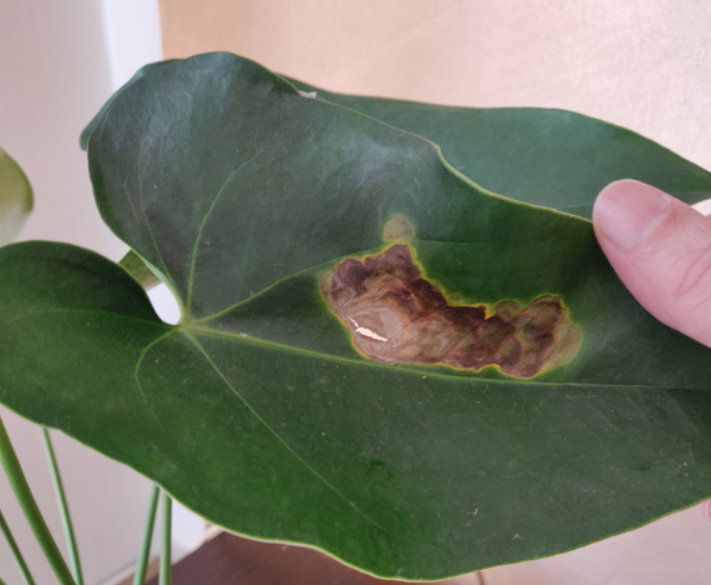
- Observe light conditions: Is your Anthurium placed in direct sunlight or near a window with intense sun exposure?
- Check leaf orientation: Are the black spots concentrated on the side facing the light? Sunburn typically causes irregular, scorched patches.
How to tell which cause applies to your plant
By observing these signs—spreading spots, root health, light exposure—you can narrow down the cause. For example:
- Black spots with fuzzy edges + mushy roots indicate fungal infection, often from overwatering.
- Burned, scorched patches suggest sunburn.
- Pests or insect presence point to pest-related damage.
Section 3: Treatment Solutions
Immediate actions: Isolate the plant, remove affected leaves
- Isolate your Anthurium from other houseplants to prevent spreading.
- Prune and remove all affected leaves with clean, sharp scissors or pruning shears. Discard the debris away from the plant area.
Fungal treatment: Use neem oil, fungicides, or hydrogen peroxide solutions
- Fungicide application: Use a commercial fungicide suitable for houseplants or a natural remedy like neem oil. Follow label instructions carefully.
- Hydrogen peroxide solution: Mix one part hydrogen peroxide (3%) with four parts water. Spray lightly on leaves to help eliminate spores.
- Consistency: Repeat treatments every 7-10 days until signs of infection diminish.
Adjust watering habits and improve drainage
- Water only when the top inch of soil feels dry.
- Ensure proper drainage: Use pots with drainage holes and a well-draining potting mix, such as one with perlite or orchid bark.
Modify lighting conditions to prevent sunburn
- Move your Anthurium to a spot with bright, indirect light.
- Avoid direct sunlight during peak hours, especially in the hot afternoon.
Recovery expectations: How your plant will heal
With prompt and proper care, your Anthurium’s leaves can recover, and new healthy growth will emerge. Keep monitoring for any recurring signs and continue with consistent care.
Section 4: Prevention Tips
Strategies to prevent black spots from reappearing in the future
- Maintain proper watering schedule: Allow the soil to dry slightly between waterings.
- Ensure optimal light levels: Bright, indirect light is ideal; avoid direct sun exposure.
- Regular inspection: Check leaves and stems weekly for early signs of pests or disease.
- Use preventive fungicides or natural remedies: Periodically spray with neem oil or cinnamon solution to ward off fungi.
- Improve airflow: Good air circulation reduces humidity and discourages fungal growth.
Conclusion
Recap of diagnosis and treatment steps for black spots on Anthurium
Black spots on your Anthurium can stem from fungal infections, overwatering, sunburn, or pests. Proper diagnosis involves examining the spots’ appearance, inspecting roots, and assessing light conditions. Once identified, targeted treatments—such as fungicides, adjusting watering routines, or relocating the plant—can effectively restore health.
Encouragement
Remember, even if your Anthurium has developed black spots, with attentive care and patience, it can recover and continue to brighten your home. Your efforts in diagnosing and treating the problem will pay off, leaving you with a thriving, beautiful plant.
Next steps
Implement the suggested remedies and prevention tips to keep your Anthurium healthy and vibrant. Regular monitoring and proper care will help prevent future issues, ensuring your plant remains a stunning focal point in your indoor garden.
FAQs
Q: How long until I see improvement after treatment?
A: Typically, you can expect to see signs of recovery within 2 to 4 weeks, especially if the infection or damage was caught early. New, healthy leaves should begin to grow, and black spots will gradually fade or stop spreading with consistent care.
Q: Can black spots be completely cured or will they leave scars?
A: Mild fungal spots and superficial damage can often be fully cured, and new growth will be free of spots. However, severe or longstanding damage may leave scars or permanent spots on older leaves. Pruning affected areas helps promote healthy new growth.
Q: Should I prune or cut away the affected leaves?
A: Yes, removing affected leaves helps prevent the spread of disease and encourages the plant to focus energy on healthy growth. Always use clean, sharp tools to avoid introducing further infection.
Taking care of your Anthurium requires patience and attentiveness, but with the right steps, you can restore its health and enjoy its stunning foliage once again. Happy gardening!