Discover why your Jade plant is suffering from root rot and learn effective diagnosis, treatment, and prevention tips to revive and protect your plant.
Introduction
Noticing your Jade plant's leaves look dull or you see unforeseen softness? Root rot could be the culprit. As a popular and resilient indoor plant, Jade plants are generally easy to care for, but they can succumb to root rot if conditions aren’t just right. If you're worried about your plant's health, don't despair—early diagnosis and prompt action can often turn things around. In this article, we'll help you understand, diagnose, treat, and prevent root rot in your Jade plant. Whether you're a beginner or an experienced plant enthusiast, you'll find practical advice to help your Jade thrive again. Remember, with attentive care, your plant can recover beautifully!
Section 1: Understanding the Problem
Visual Identification of Root Rot Symptoms in Jade Plants
Root rot is a sneaky issue because its first signs are often hidden underground. However, as it progresses, you'll notice:
- Dull, yellowing, or wilting leaves that may fall off easily.
- Soft or mushy stems near the base.
- Unpleasant smell emanating from the soil—often sour or rotten.
- Discolored or decayed roots if you gently remove the plant from its pot.
Common Causes of Root Rot in Indoor Jade Plants
Understanding why root rot occurs is key to preventing it. The most common causes include:
- Overwatering: Too much water consistently saturates the soil, depriving roots of oxygen and encouraging fungal growth.
- Poor Drainage: Using pots without drainage holes or with compacted soil traps moisture.
- Incorrect Soil: Heavy, water-retentive soils hinder proper drainage.
- Root Damage: Physical injury to roots or infection can open the door for fungal pathogens.
- Low Temperatures and High Humidity: These conditions slow evaporation and promote fungal growth. Knowing these causes helps you spot early signs and adjust your care routine accordingly.
Section 2: Diagnosing the Exact Cause
Diagnosing whether root rot is caused by overwatering, poor drainage, or another issue is essential for effective treatment. Here's a step-by-step guide:
Cause 1: Excessive Watering Leading to Saturated Soil
- Check your watering schedule—are you watering too frequently?
- Feel the soil; if it’s still damp several days after watering, overwatering is likely.
Cause 2: Poor Drainage or Compacted Soil Trapping Moisture
- Observe the pot—does water drain out quickly?
- Remove the plant carefully to examine roots; if roots are black, brown, or slimy, drainage may be an issue.
Cause 3: Root Damage or Fungal Infection
- Have you recently repotted or moved the plant?
- Damaged roots or signs of fungal infection (white or black mold) indicate this cause.
How to Tell Which Cause Is Affecting Your Jade
- Overwatering + good drainage: plants often recover quickly once watering is adjusted.
- Poor drainage + compacted soil: roots will be overly wet despite watering infrequent.
- Infected roots + damage: look for rotted, slimy roots during inspection. Tip: Gently remove the plant from its pot to inspect the roots. Healthy roots are firm, white, or light tan, while rotted roots are dark, mushy, or slimy.
Section 3: Treatment Solutions
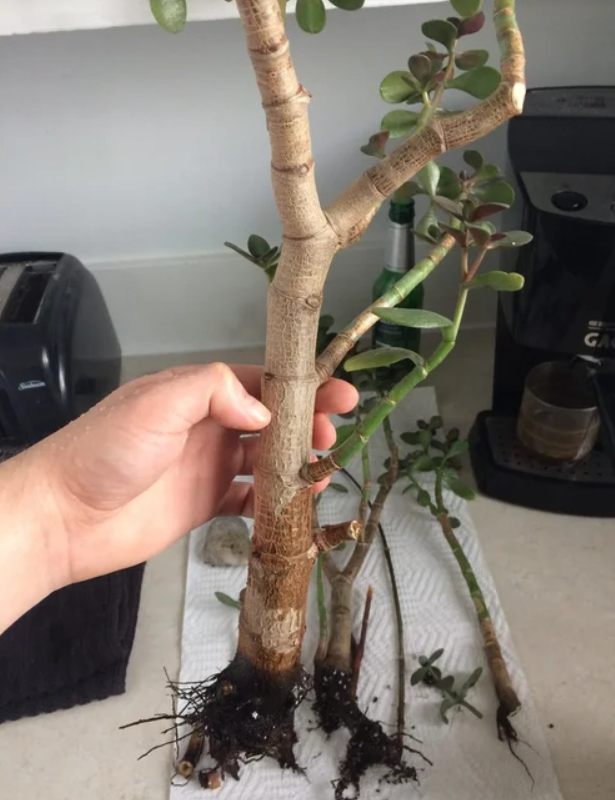
Immediate Actions: Removing Affected Roots and Adjusting Watering Habits
- Remove the plant from its pot carefully, avoiding further root damage.
- Wash the roots gently with lukewarm water to eliminate soil and fungal spores.
- Trim away any blackened, soft, or rotten roots using sterilized scissors.
- Disinfect tools with alcohol to prevent spreading infection.
- Apply a fungicide designed for houseplants to the remaining roots if fungal infection was detected.
Long-term Recovery: Repotting, Soil Improvements, Using Fungicides if Necessary
- Choose a well-draining pot and soil mixture—preferably a cactus or succulent mix.
- Repot the plant into a clean pot that has drainage holes.
- Use fresh, sterile soil to prevent re-infection.
- Limit watering; water only when the top inch of soil is dry.
- For persistent fungal issues, consider applying an organic fungicide or cinnamon powder as a natural remedy.
Monitoring During Recovery to Promote Healthy Regrowth
- Keep the plant in a warm, bright location but avoid direct sunlight initially.
- Check soil moisture regularly—avoid letting the soil stay wet.
- Watch for new, healthy leaf growth as a sign of recovery.
- Be patient—reviving a Jade plant with root rot can take several weeks.
Section 4: Prevention Tips
Prevention is the best cure. Here are practical tips to avoid root rot in your Jade plant:
Optimal Watering Schedule and Soil Drainage Practices
- Water sparingly: typically once every 2-3 weeks, allowing soil to dry completely between watering.
- Use containers with drainage holes to prevent water from pooling.
Using Well-Draining Soil and Pots with Drainage Holes
- Choose soil specifically formulated for succulents or cacti.
- Ensure pots have sufficient drainage and avoid using heavy, non-porous containers.
Regular Inspection and Maintenance to Catch Issues Early
- Check your plant weekly for signs of overwatering or root issues.
- Remove dead or yellowing leaves promptly to maintain health.
- Repot every 2-3 years or when the soil becomes compacted or depleted.
Conclusion
Recap the Key Points
- Identifying symptoms like soft stems and soggy soil is the first step.
- Diagnose whether root rot is caused by overwatering, poor drainage, or infection.
- Promptly trim affected roots, improve soil conditions, and adjust watering routines.
- Use well-draining soil and pots to prevent future problems.
- Regular inspection and maintenance help catch issues early, ensuring your Jade plant stays healthy.
Encouragement
Remember, with attentive care and a little patience, your Jade plant can recover from root rot and continue to bring greenery and positive energy into your home.
Next Steps
Implement these treatment strategies and prevention tips today. Your Jade plant’s health and beauty depend on your attentive care—so keep watching, adjusting, and loving your plant!
FAQ
Q: How long does it take for a Jade plant to recover from root rot?
A: Recovery time varies depending on the severity of the rot and how early you catch it. Mild cases may recover within a few weeks with proper care, while more advanced rot could take several months. Patience and consistent treatment are key.
Q: Can I save my Jade plant if I catch root rot early?
A: Yes! Early detection and prompt action—removing affected roots, adjusting watering, and improving soil—significantly increase the chances of saving your plant.
Q: Should I prune all the affected roots and leaves?
A: Yes. Carefully prune away all rotted or mushy roots and any yellowing or damaged leaves. Always sterilize your tools before pruning to prevent spreading infection.
By understanding the causes and following the treatment and prevention guidelines, you can ensure your Jade plant remains a healthy, vibrant addition to your indoor gardening collection. Happy planting!