Discover why your Peace Lily's leaves are pale and how to restore its health with easy diagnosis, effective treatments, and prevention strategies.
Introduction
Noticing your Peace Lily's leaves turning pale can be quite worrying. As a beloved indoor plant, your Peace Lily is known for its lush, deep green foliage and elegant white blooms. When its vibrant leaves start fading to a pale or yellowish hue, it might trigger concern about its health and future. But don't worry—this is a common issue that many indoor gardeners face, especially beginners. The good news is that with attentive diagnosis and simple adjustments, you can often revive your plant's natural beauty. This article will explore why is my Peace Lily having pale leaves, help you identify the underlying causes, provide practical care tips, and share prevention strategies to keep your plant thriving in the long run. Rest assured, with the right approach, your Peace Lily can regain its lush, green vitality!
Section 1: Understanding the Problem
Identify the Symptoms and Why Pale Leaves Occur
Before jumping into solutions, it's essential to understand what "pale leaves" indicate about your Peace Lily's health. Visual Identification of Pale or Yellowing Leaves
- Leaves appear dull, lack their usual vibrant green
- Fading or yellowing spots, especially on older leaves
- Wilting or drooping despite adequate watering
- Reddish or brown tips may also accompany pale growth If your Peace Lily displays these signs, it’s time to investigate potential causes.
Common Causes Overview
There are several common reasons why Peace Lily leaves turn pale, including:
- Insufficient or improper lighting
- Watering issues (overwatering or underwatering)
- Nutrient deficiencies, especially nitrogen or iron
- Pest infestations or diseases
- Environmental stress, such as drafts or temperature fluctuations Understanding these factors will help you diagnose your plant accurately and implement effective remedies.
Section 2: Diagnosing the Exact Cause
Follow a Step-by-Step Process to Pinpoint the Problem
Diagnosing the precise cause of pale leaves involves observing your plant carefully and ruling out various issues.
Cause 1: Overwatering Leading to Root Issues and Nutrient Deficiency
- If the soil feels soggy or waterlogged, it indicates overwatering.
- Roots may become suffocated, decaying, and unable to absorb nutrients properly.
- This results in poorly nourished leaves that turn pale or yellow. How to check: Gently lift the plant and inspect the roots—healthy roots are white or light tan, while rotted roots are brown and smell rotten.
Cause 2: Insufficient Light or Improper Lighting Conditions
- Peace Lilies prefer bright, indirect light.
- Too little light can cause pale or dull foliage.
- Direct sunlight may scorch leaves, leading to discoloration. How to tell: If your plant is in a dark corner or away from windows, lack of light may be the culprit.
Cause 3: Nutrient Deficiencies, Especially Nitrogen or Iron
- A lack of essential nutrients impairs chlorophyll production.
- Nitrogen deficiency causes overall yellowness, while iron deficiency affects young leaves more prominently.
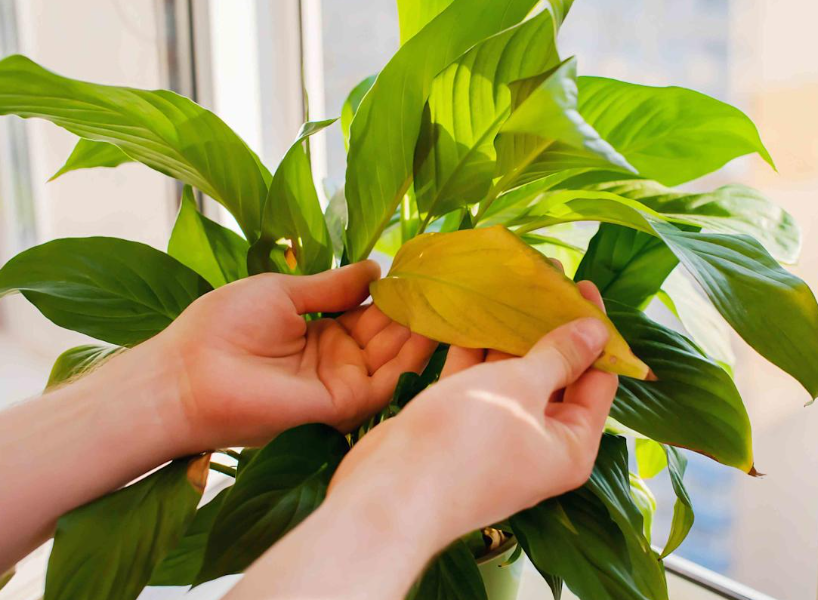
How to tell: Pale leaves with no visible pests or overwatering hints point toward nutritional gaps.
Section 3: Treatment Solutions
Implement Targeted Remedies Based on the Diagnosed Cause
Once you've identified the cause, take appropriate steps to restore your Peace Lily's health.
Immediate Actions
- Adjust Watering Habits:
- Check soil moisture regularly; water only when the top inch of soil feels dry.
- Ensure the pot has drainage holes to prevent water accumulation.
- Check and Improve Lighting:
- Move the plant closer to bright, indirect sunlight.
- If natural light is limited, consider using grow lights.
Long-term Care
- Fertilize Properly:
- Use a balanced, water-soluble houseplant fertilizer every 6–8 weeks in growing season.
- For deficiencies, apply a fertilizer formulated for leafy greens or add micronutrient supplements.
- Improve Soil Quality:
- Repot your Peace Lily into well-draining, nutrient-rich soil.
- Incorporate organic matter like compost to enhance nutrient availability.
- Ensure Proper Drainage:
- Avoid waterlogging by elevating the pot and using gravel or perlite at the bottom.
Monitoring Recovery
- Look for signs of new, healthy green growth over a few weeks.
- Remove any severely yellow or brown leaves to direct energy to healthy foliage.
- If root rot was suspected, consider repotting after cleaning roots and applying a fungicide.
Section 4: Prevention Tips
Maintain Optimal Conditions to Prevent Future Pale Leaves
Prevention is better than cure. Here are essential tips to keep your Peace Lily lush and vibrant:
Establish a Consistent Watering Schedule and Humidity Control
- Water only when the topsoil feels dry.
- Maintain indoor humidity around 50–60%—mist the leaves or use a humidifier in dry environments.
Provide Adequate Indirect Light
- Place your plant near east or north-facing windows.
- Use sheer curtains to diffuse direct sunlight, preventing leaf scorch.
Regular Fertilization
- Feed your Peace Lily with a balanced liquid fertilizer every 6–8 weeks.
- Adjust feeding frequency during active growing seasons.
Routine Inspection for Pests and Diseases
- Check leaves and soil routinely for pests like aphids, spider mites, or mealybugs.
- Address any infestations promptly with organic insecticidal soap.
Conclusion
Recap and Final Tips
Understanding why is my Peace Lily having pale leaves is the first step toward restoring its health. Recognizing symptoms, diagnosing the cause—be it overwatering, inadequate light, or nutrient deficiency—and applying tailored solutions will set you on a path to a healthier plant. With patience and attentive care, your Peace Lily can regain its vibrant green color, showcasing its beautiful foliage once again.
Encourage Action and Observation
Follow the steps outlined, monitor your plant's response, and make gradual care adjustments. A healthy, happy Peace Lily is just a matter of understanding its needs and providing consistent, loving care. Your indoor jungle will flourish, bringing tranquility and beauty to your home.
FAQ
Q: How long will it take for the leaves to turn green again?
A: Recovery time varies depending on the cause and severity. Typically, you may start seeing improvement within 2 to 4 weeks after correcting watering, lighting, or nutrient issues. For full recovery, especially if leaves have yellowed significantly, it may take up to a few months of consistent care.
Q: Can my Peace Lily recover fully from pale leaves?
A: Yes, with proper diagnosis and care, most Peace Lilies can fully regain their healthy, green foliage. The key is addressing the root cause and maintaining optimal growing conditions.
Q: Should I prune the affected leaves or leave them to regenerate?
A: It's best to prune severely pale or yellow leaves to help your plant focus its energy on healthy growth. Use clean, sharp scissors and cut close to the base of the leaf stem.
By paying careful attention to your Peace Lily's environment and care routine, you can ensure its leaves stay lush and vibrant, bringing ongoing beauty and tranquility to your home. Happy gardening!