Discover why your Philodendron has sticky leaves, how to identify the root cause, and effective solutions to restore its health with expert tips.
Introduction
Noticing sticky leaves on your Philodendron can be quite unsettling—it's natural to worry about your plant’s health. You might wonder, "Why is my Philodendron having sticky leaves?" While this issue may seem alarming at first, don't panic. Many common causes can be easily addressed with proper care. This guide will walk you through understanding why your Philodendron's leaves turn sticky, help you diagnose the exact cause, and provide clear solutions to revive your plant. With a little patience and some simple steps, your beloved houseplant can recover beautifully, thriving once more.
Section 1: Understanding the Problem
Visual Identification of Sticky Leaves
Sticky leaves on a Philodendron usually appear as a shiny, often translucent or glossy coating on the surface. When you brush your hand over the leaves, you might notice residue that feels tacky or greasy. Sometimes, this sticky layer may collect dust and dirt, making the leaves appear dull or dirty despite their shiny surface. You may also observe small insects or insect remnants around the sticky areas, such as tiny clusters or specks resembling dust. The affected leaves might also become distorted, yellowed, or show signs of pest damage.
Common Causes Overview
The primary reasons for sticky leaves in Philodendrons typically fall into these categories:
- Pest infestations like scale insects, mealybugs, or aphids.
- Sap secretion from insects sucking on plant juices.
- Fungal infections or environmental stressors such as overwatering and poor humidity. Understanding these causes helps you determine the right course of action to restore your plant’s health.
Section 2: Diagnosing the Exact Cause
Follow a Step-by-Step Process to Identify the Cause
Accurate diagnosis is essential. Here's how to figure out what's causing the sticky leaves in your Philodendron.
Cause 1: Pest Infestation (e.g., Scale Insects, Mealybugs, Aphids)
Pests such as scale insects adhere tightly to leaf surfaces and stems, secreting a sticky substance called honeydew. These pests are often visible as small, oval, or cottony spots.
Cause 2: Sap-Sucking Insects and Their Secretions
Insects like aphids or mealybugs feed on plant sap, excreting honeydew—a sticky, sugary residue that coats the leaves.
Cause 3: Fungal Infections or Environmental Factors
Fungal issues are less common but can cause similar symptoms, especially when combined with excessive humidity or overwatering, leading to mold-like growths or slippery surfaces.
How to Tell Which Cause Applies to Your Plant
- Check for pests: Use a magnifying glass to inspect the undersides of leaves and stems. Look for tiny moving insects, cottony patches, or oval-shaped bumps.
- Look for insect residues: Honeydew may attract mold or black sooty mold, which appears as black or dark-colored soot on the plant.
- Assess environmental conditions: Note watering habits and humidity levels. Overly moist soil and stagnant air can promote fungal growth.
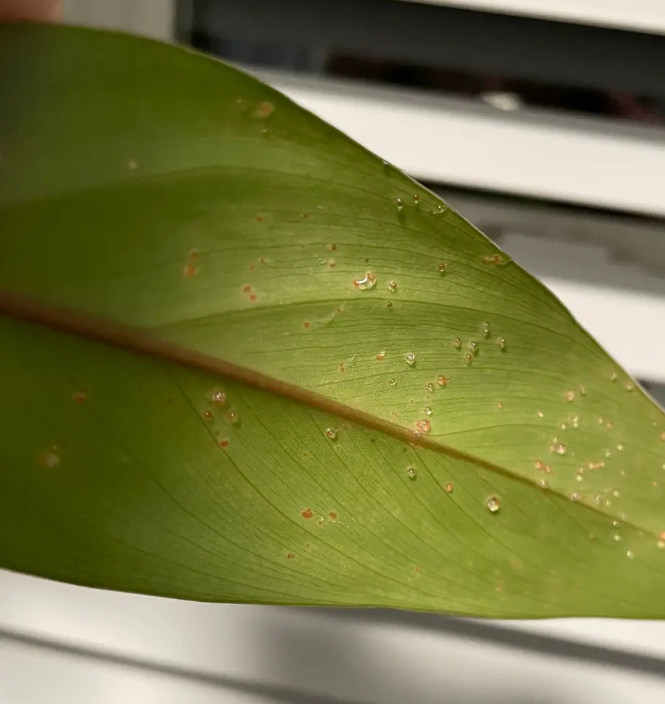
Identifying the main cause helps you choose the most effective treatment method.
Section 3: Treatment Solutions
Apply Targeted Fixes to Eliminate Sticky Residue and Restore Your Philodendron
Once you've diagnosed the cause, it's time to act.
Immediate Actions: Manually Remove Pests, Wash Leaves, Isolate the Plant
- Use a soft damp cloth or a gentle spray of water to wipe the leaves, removing honeydew, dust, and some pests.
- Isolate the plant to prevent pests from spreading to other houseplants.
- Use a soft toothbrush or cotton swab dipped in alcohol to dislodge stubborn pests.
Chemical Remedies: Insecticidal Soap, Neem Oil, Natural Remedies
- Insecticidal soap: Spray on affected areas, ensuring coverage on undersides of leaves.
- Neem oil: A natural pesticide that effectively controls pests; dilute according to instructions and apply every week.
- Natural remedies: Homemade solutions with dish soap and water can also help, but test on a small leaf first to avoid damage.
Long-term Care: Proper Watering, Pruning, Humidity Control
- Water correctly: Allow the top inch of soil to dry out between watering to prevent overwatering.
- Prune affected leaves: Remove heavily infested or damaged leaves to prevent pest spread.
- Maintain humidity: Keep humidity around 60-70%, but avoid excess moisture that fosters fungal growth.
Monitoring During Recovery
- Regularly inspect your plant every week.
- Continue treatments until pests are fully eliminated.
- Look for new sticky residue or pests to ensure complete recovery.
Section 4: Prevention Tips
Keep Your Philodendron Healthy and Pest-Free with Proactive Care
Prevention is always better than cure. Here are some strategies to keep your plant free of sticky leaves:
Regular Inspection and Early Pest Detection
- Check your plant weekly for signs of pests or sticky residue.
- Early removal prevents infestations from worsening.
Optimal Watering Practices and Environmental Conditions
- Water only when the top soil feels dry.
- Maintain appropriate humidity and avoid overwatering.
Natural Pest Deterrents and Periodic Pest Treatments
- Use neem oil or insecticidal soap monthly as a preventive measure.
- Introduce beneficial insects or natural repellents if feasible.
Improving Airflow and Avoiding Over-Fertilization
- Place your Philodendron in a well-ventilated spot to reduce humidity buildup.
- Follow recommended fertilization schedules; over-fertilization can lead to excess sap production.
Conclusion
Summary
Dealing with sticky leaves on your Philodendron involves identifying the root cause—be it pests, environmental stress, or fungal issues—and applying targeted treatments. Consistent, vigilant care can prevent reoccurrence, ensuring your plant remains healthy and vibrant.
Encouragement
Don’t be discouraged—most sticky leaf problems are manageable. With patience and proper maintenance, your Philodendron can bounce back and continue to beautify your indoor space.
Next Steps
Start by closely inspecting your plant for pests or signs of distress. Pick the appropriate treatment method, and monitor regularly. Your efforts will pay off—soon, your plant will look lush, healthy, and stickiness-free!
Q: Why does my Philodendron have sticky leaves?
A: Sticky leaves are usually caused by pest infestations like scale insects or mealybugs secreting honeydew, or fungal issues related to overwatering or high humidity. Proper identification is key to effective treatment.
Q: How long until I see improvement after treatment?
A: Typically, you should notice a reduction in sticky residue within a week of treatment. Full recovery, including pest elimination and healthy growth, may take several weeks depending on the severity.
Q: Can my Philodendron fully recover from sticky leaves?
A: Yes, with prompt and consistent care, most Philodendrons can recover completely from pest infestations or environmental stressors causing sticky leaves.
Q: Should I prune or prune away damaged parts?
A: If affected leaves show significant pest activity or damage, prune them to prevent spread and encourage new healthy growth. Always sterilize pruning tools before use.
By understanding the underlying causes and following these expert tips, you can restore your Philodendron's health and keep it thriving in your home. Happy gardening!