Learn practical steps to diagnose and fix drooping leaves in your Anthurium, with tips to promote healthy, vibrant foliage and prevent future problems.
Introduction
Noticing your Anthurium’s leaves drooping can be worrying, especially if you love having lush, vibrant indoor plants. Drooping leaves are often a sign that something isn’t quite right, but the good news is that most issues are fixable with some simple adjustments. Whether your plant is overwatered, underwatered, or experiencing environmental stress, understanding the cause is key to bringing it back to life. This article will help you understand why your Anthurium leaves droop, guide you through diagnosing the exact cause, and provide straightforward solutions to revive your beloved plant. With patience and attentive care, your Anthurium can bounce back to healthy, vibrant foliage.
Section 1: Understanding the Problem
Visual identification of drooping leaves in Anthurium
Drooping leaves in Anthurium typically look like limp, sagging foliage that may appear wilted or floppy. The leaves might lose their usual firm appearance, sometimes curling slightly at the edges or showing signs of discoloration. You might notice the leaves hanging downward, especially in the mornings or during stressful conditions.
Common causes overview
Several factors can cause drooping leaves, and pinpointing the exact reason is crucial for effective treatment. Common causes include:
- Overwatering: Waterlogged soil suffocates roots, leading to root rot and weakened plant health.
- Underwatering: Lack of water causes dehydration, making leaves droopy and dry.
- Improper light: Too much direct sunlight can scorch leaves, while too little light hampers growth.
- Drafts or temperature stress: Sudden temperature drops or drafts can stress the plant, causing droopiness.
- Stress from repotting or pests: Recently repotted plants or pest infestations can also manifest as drooping leaves.
Section 2: Diagnosing the Exact Cause
Follow a diagnostic process
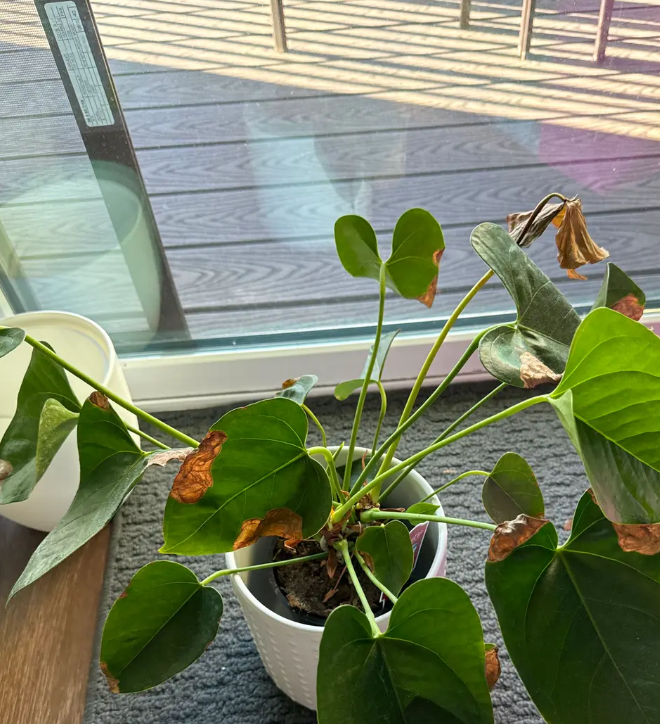
To determine why your Anthurium’s leaves droop, observe the plant closely and consider these factors:
Cause 1: Overwatering leading to root rot and waterlogged soil
- Signs: Soil feels soggy, roots may appear brown and mushy when checked.
- Impact: Roots cannot absorb oxygen, causing the plant to weaken and leaves to droop.
Cause 2: Underwatering causing dehydration and stress
- Signs: Soil feels dry for extended periods, leaves are limp and dry.
- Impact: Lack of moisture causes cells to lose turgor, resulting in drooping.
Cause 3: Improper lighting or drafts affecting plant health
- Signs: Leaves may look scorched or faded in direct sun, or appear pale and weak in low light.
- Impact: Insufficient or excessive light stresses the plant, leading to droopiness.
How to tell which cause applies to your plant
- Check the soil moisture: is it too wet or too dry?
- Inspect the environment: Is the plant in direct sunlight or near a drafty window?
- Examine roots if possible: healthy roots are white or light tan; rotten roots are brown and mushy.
Section 3: Treatment Solutions
Immediate actions
- Adjust watering schedule: Allow the soil to dry out slightly before watering again if overwatered. If underwatered, water thoroughly until excess drains out.
- Reposition the plant: Move your Anthurium to a spot with bright, indirect light away from drafts or direct sun.
Long-term treatment
- Repot if necessary: If root rot is suspected, carefully remove the plant, trim away rotten roots, and repot in well-draining soil.
- Modify light conditions: Ensure your Anthurium receives bright, indirect light—avoid direct sunlight that can scorch leaves.
- Maintain proper humidity: Anthuriums thrive in higher humidity; mist regularly or place a humidifier nearby.
Monitoring recovery
- Look for signs of improvement such as firm, upright leaves and new growth.
- Prune any severely damaged or yellowing leaves to encourage healthy new growth.
- Continue observing soil moisture and environmental conditions regularly.
Section 4: Prevention Tips
Maintain optimal conditions to prevent drooping leaves in the future
- Consistent watering routines: Water when the top inch of soil feels dry, usually once a week.
- Proper humidity: Aim for 60-80% humidity for optimal Anthurium health.
- Adequate light exposure: Place your plant in bright, indirect light—avoid direct sun, especially during peak hours.
- Avoid drafts and temperature fluctuations: Keep your plant away from vents, air conditioners, or drafty windows.
- Regular inspection: Check for pests such as mealybugs or spider mites, which can stress the plant and cause drooping.
Conclusion
Drooping leaves are a common issue with clear causes and effective solutions. By carefully diagnosing your Anthurium’s environment and watering habits, you can address the root problem and help your plant recover. Remember, patience and consistent care are your best allies. With some simple adjustments—whether it’s watering less, providing better light, or repotting—you can restore your Anthurium’s vibrant, healthy foliage. Stay attentive, monitor your plant regularly, and enjoy the rewarding process of nurturing your indoor garden.
FAQ
Q: How long until I see improvement after adjusting care?
A: Typically, you can expect to see signs of recovery within a week or two after making appropriate care adjustments. New, firm leaves are a good indicator that your plant is bouncing back. However, full recovery may take longer depending on the extent of stress or damage.
Q: Can drooping leaves cause permanent damage if ignored?
A: Yes, if the underlying cause persists, drooping leaves can lead to permanent damage or death of affected foliage. Early diagnosis and prompt correction are essential to prevent lasting harm and promote healthy growth.
Q: Should I prune the drooping leaves or leave them for the plant’s recovery?
A: It’s generally best to prune severely drooping or yellowing leaves. Removing damaged foliage helps the plant focus its energy on new, healthy growth and can improve overall appearance and health.
Remember: Your Anthurium’s health is within your control. By understanding the causes of drooping leaves and applying the right solutions, you can enjoy a lush, thriving indoor plant for years to come. Happy gardening!