Have you ever wanted to grow more beautiful Calatheas but didn't know how to propagate them? You're not alone! Propagating Calathea can seem daunting at first, especially for indoor plant enthusiasts eager to expand their lush collections. But rest assured, with the right technique and a little patience, you can successfully propagate Calathea in water and enjoy vibrant, healthy new plants. This comprehensive guide will walk you through everything you need to know—from understanding why water propagation works to troubleshooting common issues and caring for your new Calathea cuttings. Whether you're a beginner or an intermediate plant parent, you'll find practical tips here to help you succeed. Let's dive in!
Section 1: Understanding Propagation and Why Water Method Works
Visual Identification of Healthy Cuttings
Before you begin, it's essential to choose a healthy parent plant and select the right cutting. Look for mature, vibrant leaves with no signs of disease or pests. Healthy stems should be firm and green, with at least one node—this is the crucial part where roots will emerge.
Advantages of Water Propagation over Soil
Water propagation offers several benefits, especially for Calathea:
- Ease of Monitoring: You can see the roots develop in real-time, allowing you to assess the progress and intervene early if issues arise.
- Less Soil Stress: Reduces the risk of root rot caused by overwatering or poor soil drainage.
- Low Maintenance: Simply change the water regularly to keep it fresh and oxygenated.
- Ideal for Sensitive Plants: Calathea prefers high humidity and consistent moisture, making water propagation a fitting method.
Section 2: How to Propagate Calathea in Water – Step-by-Step
Step 1: Selecting a Healthy Parent Plant and Cutting
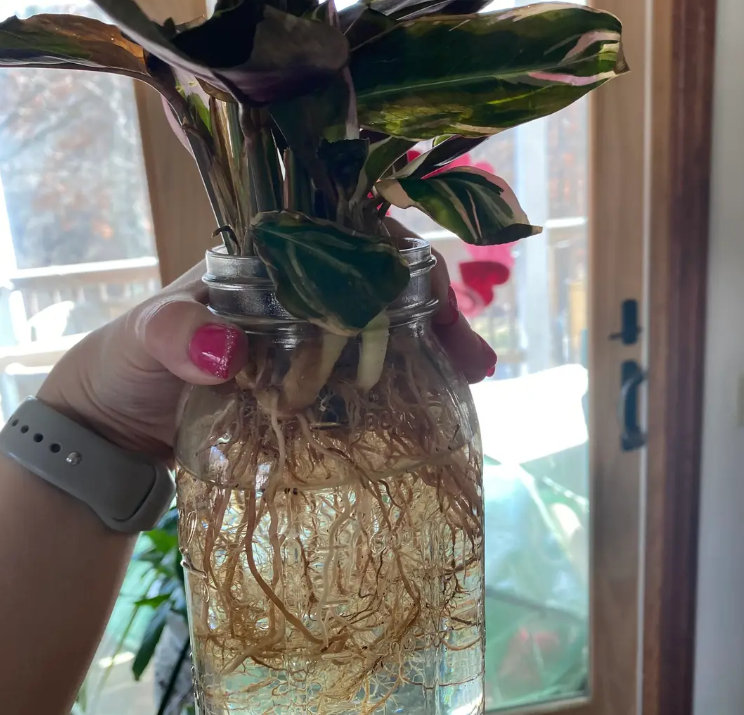
Choose a mature Calathea with vibrant leaves. Using sterile, sharp scissors or pruning shears, cut a stem just below a node—this is where roots are most likely to sprout. Aim for a cutting about 4-6 inches long, with at least one or two leaves for photosynthesis.
Step 2: Proper Cutting Techniques
- Identify the Node: The small bump or joint on the stem where leaves or roots grow.
- Make a Clean Cut: Use sterilized tools to prevent disease.
- Remove Lower Leaves: Strip leaves near the cut to prevent them from rotting in water, but leave at least one healthy leaf at the top for photosynthesis.
Step 3: Preparing the Water and Container
- Choose a Clean Jar or Vase: Clear glass containers allow you to monitor root development.
- Use Filtered or Distilled Water: This prevents mineral buildup and algae growth.
- Fill the Container: About 2-3 inches of water, enough to cover the node but not submerge the entire stem.
Step 4: Placement, Care, and Monitoring During Propagation
- Find a Bright, Indirect Light Spot: Calathea thrives in moderate, indirect light—avoid direct sunlight which can scorch leaves.
- Keep Water Fresh: Change the water every 2-3 days to prevent stagnation and algae.
- Maintain Humidity: Calathea prefers humid environments; mist around the plant or place a humidity tray nearby.
- Watch for Roots: Usually, roots will develop within 2-4 weeks. Be patient!
Section 3: Troubleshooting Common Problems During Propagation
Root Rot or Rotsing Cuttings — Causes and Solutions
- Cause: Overwatering or water stagnation can lead to fungal infections.
- Solution: Change water frequently, ensure proper drainage in the container, and remove any rotting parts immediately.
Failure to Develop Roots — Tips to Promote Rooting
- Ensure the Node is Intact: Only cut below a healthy node.
- Provide Adequate Light and Humidity: Both stimulate root growth.
- Use Rooting Hormone (Optional): Dip the cut end in a hormone powder to encourage rooting.
Algae Build-up or Cloudiness in Water
- Cause: Excess light and nutrients stimulate algae.
- Solution: Cover the container partially or fully with dark material, and change water regularly.
Too Slow or No Rooting — What Could Be Wrong?
- Check the Cutting: It may be unhealthy or improperly cut.
- Review Conditions: Insufficient light, low humidity, or temperature extremes can slow rooting.
- Be Patient: Some Calathea cuttings take longer; ensure optimal conditions.
Section 4: Transitioning and Caring for New Calathea Plants
When and How to Transplant Rooted Cuttings
- Timing: Once roots are 1-2 inches long and well-developed.
- Method: Gently plant the rooted cutting into moist, well-draining soil in a pot.
- Post-Transplant Care: Water lightly, maintain high humidity, and place in bright, indirect light.
Adjusting Watering and Humidity
- Watering: Keep the soil consistently moist but not soggy.
- Humidity: Calathea loves humid environments; use humidifiers or pebble trays to boost moisture.
Fertilization and Light Preferences
- Fertilizer: Use a balanced, diluted houseplant fertilizer every month during the growing season.
- Light: Bright, indirect light is ideal—avoid direct sun which can cause leaf scorch.
Section 5: Prevention Tips for Healthy Propagation and Growth
Sanitizing Tools and Water to Prevent Disease
- Always sterilize scissors and tools before use.
- Use clean containers and fresh water for each propagation attempt.
Monitoring Environmental Factors
- Maintain warm temperatures (65-80°F) and high humidity.
- Avoid drafts and sudden temperature fluctuations.
Avoiding Overwatering or Underwatering
- Check soil moisture regularly after planting.
- Adjust watering according to environmental humidity and seasonality.
Conclusion
Recap of the Propagation Process, Troubleshooting Tips, and Care Essentials In summary, learning how to propagate Calathea in water is a rewarding process that allows you to expand your indoor garden with minimal fuss. Start by selecting a healthy cutting, provide the right conditions for root development, and be patient. Keep an eye out for common issues like algae growth or root rot, and address them promptly. Remember, patience is key—your efforts will reward you with lush, vibrant Calathea foliage! With each successful propagation, you'll not only grow more beautiful plants but also deepen your connection with these charming, tropical beauties. Next steps? Grab your tools, find a healthy Calathea, and start your propagation journey today. Watch as your indoor garden flourishes and brings even more life and color into your home!
FAQ
Q: How long does it take for Calathea to root in water?
A: Typically, Calathea cuttings will develop roots within 2 to 4 weeks. However, rooting times can vary depending on environmental conditions such as light, temperature, and humidity. Be patient and keep providing optimal care.
Q: Can I propagate other Calathea varieties this way?
A: Yes! The water propagation method works well for various Calathea species, including Calathea orbifolia, Calathea makoyana, and Calathea rufibarba. Just ensure you're selecting healthy stems with nodes.
Q: What should I do if my water becomes cloudy or moldy?
A: Replace the water immediately and clean the container thoroughly. To prevent future issues, keep the water in a spot with less direct sunlight and change it every 2-3 days. Consider covering the top of the container to limit algae growth.