Struggling with Calathea leaf drop? You're not alone. Many indoor plant enthusiasts face this common issue, especially with the beautiful but delicate Calathea. Leaf drop can be concerning, but with a little understanding and proper care, your plant can bounce back healthier than ever. In this guide, we'll explore why Calathea leaves drop, how to diagnose the cause, and most importantly, how to fix it and prevent future problems. Rest assured—your Calathea can recover with patience and the right approach!
Section 1: Understanding the Problem
Visual identification of leaf drop
Calathea leaf drop often manifests as falling leaves, yellowing, or browning at the edges. Sometimes, you may notice whole leaves curling or drooping, giving your plant a less vibrant appearance. These symptoms are your plant's way of signaling distress and may be accompanied by other issues like discoloration, spots, or stunted growth.
Common causes overview
Leaf drop in Calathea can stem from several factors, including:
- Watering issues (overwatering or underwatering)
- Environmental stressors such as too much direct sunlight or low humidity
- Pests like spider mites or mealybugs
- Fungal or bacterial diseases Recognizing the signs and understanding these common causes is the first step toward restoring your Calathea's health.
Section 2: Diagnosing the Exact Cause
Accurately diagnosing the cause of leaf drop enables targeted and effective treatment. Follow these steps:
Cause 1: Overexposure to direct sunlight or too low humidity
Calatheas thrive in indirect light. If placed in direct sunlight, their leaves can scorch and drop prematurely. Similarly, inadequate humidity can cause leaf edges to brown and leaves to fall.
Cause 2: Inconsistent watering — overwatering or underwatering
Both overwatering and underwatering stress the plant:
- Overwatering leads to root rot, resulting in poor nutrient absorption and leaf drop.
- Underwatering causes dehydration, making leaves wilt and fall.
Cause 3: Pest infestation or disease
Inspect your plant for pests like tiny webs (spider mites) or fuzzy spots (mealybugs). Fungal diseases may cause leaf spots, mold, or rotting.
How to tell which cause applies to your plant
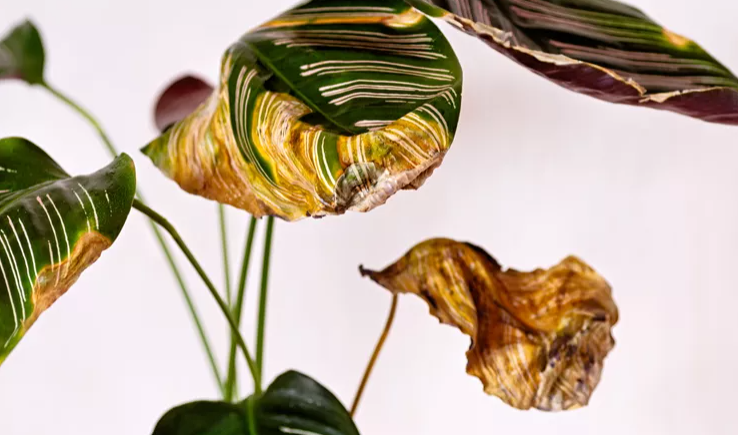
- Check the leaves: Are they yellowing with soft texture? Overwatering might be the cause.
- Examine the environment: Is the light too intense or too dim? Is the humidity level suitable (ideally 50-60%)?
- Inspect for pests: Look under leaves and in the soil for signs of pests.
- Evaluate watering habits: Reflect on how often you've watered and soil moisture levels. By systematically observing these signs, you can identify the root cause of your Calathea's leaf drop.
Section 3: Treatment Solutions
Once you've pinpointed the cause, implementing targeted remedies is essential.
Immediate actions
- Adjust light exposure: Move your Calathea away from direct sunlight, ideally to a spot with bright, indirect light.
- Improve humidity: Use a humidifier or place a tray with pebbles and water beneath the pot to increase environmental moisture.
- Refine watering habits: Check soil moisture regularly; water only when the top inch feels dry.
Natural remedies
- Increase humidity naturally: Regularly mist the leaves or group plants together.
- Address pests organically: Use insecticidal soap or neem oil to treat pests. Apply in the early morning or late evening to avoid leaf burn.
Chemical treatments
- For fungal infections: Apply a suitable fungicide following product instructions.
- For pests: Follow the treatment plan on insecticidal soap or neem oil labels.
Pruning or removing damaged leaves
Carefully prune fallen or damaged leaves with clean, sharp scissors to encourage new growth. Remove dead or diseased leaves to prevent pests and disease spread.
Long-term care plan
Maintain consistent watering (keeping soil moist but not soggy), provide adequate indirect light, and manage humidity levels. Regularly check for pests and adapt your care routines as needed.
Monitoring for improvement and signs of recovery
Keep an eye on your Calathea over the next few weeks. Healthy leaves should begin appearing, and new growth will indicate recovery. Patience is key!
Section 4: Prevention Tips
Prevention is always better than cure. Here are some simple strategies to keep your Calathea healthy and avoid leaf drop in the future:
- Maintain a consistent watering schedule: Water when the top inch of soil feels dry, and avoid letting the plant sit in water.
- Ensure proper humidity: Use a humidifier or mist regularly, especially during dry seasons.
- Position away from direct sunlight and drafts: Place your Calathea in a location with bright, filtered light.
- Regularly inspect for pests and diseases: Check the undersides of leaves and soil surface for early signs.
- Use suitable potting mix: Well-draining soil rich in organic matter helps prevent overwatering and root rot.
- Repot when necessary: If roots are crowded or soil has degraded, transplant into fresh soil and a slightly larger pot. By adopting these practices, you can significantly reduce the risk of leaf drop and promote lush, vibrant foliage.
Conclusion
Remember, leaf drop in Calathea is often a sign of environmental imbalance or stress rather than a fatal problem. With proper diagnosis and timely intervention, your plant can recover beautifully. Be patient, adjust your care routine as needed, and your Calathea will once again thrive with vibrant, healthy leaves. Start today by inspecting your plant, diagnosing the cause, and implementing the appropriate solutions. Your green friend is resilient and just waiting for the right care to shine again!
FAQ
Q: How long until I see improvement after fixing watering or humidity?
A: Typically, you can expect to see signs of recovery within 2-4 weeks after making adjustments. New leaves should start developing, and existing leaves may regain health if the cause was addressed early.
Q: Can my Calathea recover fully after leaf drop?
A: Yes. Calatheas are resilient plants. While some older leaves may fall permanently, new growth will eventually replace them. Consistent care helps ensure full recovery.
Q: Should I prune or cut off fallen or damaged leaves?
A: Absolutely. Pruning dead or damaged leaves encourages healthy growth and prevents potential pest or disease issues. Use clean, sharp scissors and prune close to the stem without damaging healthy tissue.
Your Calathea's vibrant foliage is within reach! With attentive care, understanding, and a bit of patience, your plant can thrive once more. Happy gardening!