Are you noticing those yellow leaves on your beloved String of Pearls and feeling worried? Don’t worry—you're not alone, and more importantly, this issue is often easily solvable with the right understanding and care. As a plant enthusiast myself, I know how concerning it can be to see your plant’s vibrant leaves turn yellow. But with a little detective work and some practical steps, you can help your String of Pearls bounce back to health. This article will guide you through identifying the causes of yellowing, diagnosing the specific problem, and implementing effective solutions to restore your plant’s beauty and vitality. Remember, most issues are fixable with some adjustments—so let’s dive in and give your plant the attention it needs!
Section 1: Understanding the Problem
Recognize What Yellow Leaves Look Like and Why They Occur
Yellow leaves on your String of Pearls can appear in different forms—some are wilted, translucent, or have brown or crispy tips. These signs indicate that something isn’t quite right in the plant’s environment or care routine.
Common Causes Overview:
- Overwatering: Frequent watering or poor drainage leads to root rot and suffocation of roots, causing leaves to turn yellow.
- Underwatering: Conversely, neglecting water needs causes dehydration, resulting in yellow, shriveled leaves.
- Nutrient Deficiencies: Lack of essential nutrients like nitrogen or magnesium can lead to yellowing.
- Improper Lighting: Too much direct sunlight can scorch leaves, while too little light can weaken the plant, causing color changes.
- Pest Issues: Pests such as mealybugs or spider mites can stress the plant, leading to yellowing leaves.
Section 2: Diagnosing the Exact Cause
Getting to the root of the problem involves careful observation and some diagnostic questions.
Cause 1: Overwatering or Poor Drainage
Signs: Leaves turn yellow, stems feel soft or mushy, and the soil remains swampy. How to spot: Check the soil moisture—if it’s wet for extended periods, overwatering is likely.
Cause 2: Insufficient Light or Too Much Direct Sunlight
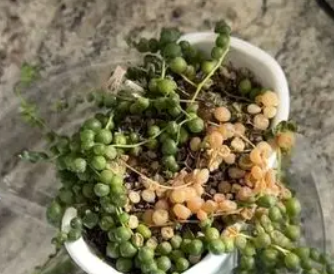
Signs: Pale or washed-out leaves, or brown burnt tips. How to tell: Observe the plant’s position. If it’s in direct harsh sunlight, the leaves could be sunburned. If it’s in a dim corner, it may lack enough light to sustain healthy color.
Cause 3: Nutrient Deficiencies or Incorrect Fertilization
Signs: Yellowing appears without other signs of over- or underwatering, often with stunted growth. Diagnostic questions: When was the last fertilization? Are you using a succulent-friendly fertilizer?
How to tell which cause applies to your plant?
- Observe soil moisture and drainage: Is the soil consistently wet or dry?
- Assess light conditions: Is your plant exposed to bright indirect sunlight?
- Review fertilization routine: Are you feeding your plant appropriately?
Section 3: Treatment Solutions
Once you’ve identified the cause, you can take targeted actions.
Immediate actions:
- Adjust watering: Allow the soil to dry out if overwatered. Reduce watering frequency.
- Repot if necessary: If roots are rotting or soil doesn’t drain well, carefully repot into well-draining cactus or succulent mix.
- Prune damaged leaves: Cut off yellow or dead leaves with clean scissors to encourage new growth and improve aesthetics.
Long-term care:
- Optimize light conditions: Place your String of Pearls in a bright spot with filtered or indirect sunlight—avoid direct afternoon sun that can scorch leaves.
- Fertilize appropriately: Use a balanced succulent fertilizer every 4-6 weeks during the growing season, reducing or stopping in winter.
- Establish regular watering routines: Water thoroughly only when the top 1-2 inches of soil are dry. Ensure your pot has drainage holes.
Monitoring recovery:
- Watch for new healthy leaves and the return of vibrant green color.
- If yellowing persists despite proper care, consider checking for pests or consulting a plant specialist.
Section 4: Prevention Tips
Prevention is always better than cure. Here are essential tips to keep your String of Pearls healthy and vibrant:
- Establish consistent watering schedules: Water only when the soil is dry, typically every 2-3 weeks.
- Use proper drainage: Choose pots with drainage holes and well-draining soil to prevent waterlogging.
- Place in ideal lighting: Bright, indirect light is optimal—placed near a north or east-facing window.
- Fertilize periodically: Use a succulent-friendly fertilizer in the growing season, usually spring and summer.
- Inspect for pests regularly: Check leaves and stems for pests, and clean leaves gently with a damp cloth.
Conclusion
In summary, learning how to fix String of Pearls yellow leaves involves understanding the underlying causes—be it watering issues, lighting, or nutritional deficiencies—and applying targeted solutions. Remember, patience and careful observation are your best tools. Most problems are reversible, and with the right adjustments, your plant can thrive once again. Don’t worry if you see some yellowing now—think of it as the plant’s way of signaling a need for help. Implement these practical tips, monitor your String of Pearls’s progress, and enjoy witnessing its joyful recovery. Happy caring!
FAQ
Q: How long until I see improvement after fixing watering habits?
A: Typically, you can expect to see signs of recovery within 2 to 4 weeks. As you adjust your watering routine, new healthy leaves may emerge, and existing yellow leaves might gradually fade or be pruned away. Consistency is key—stick to the revised schedule and be patient.
Q: Can a severely yellowing String of Pearls recover fully?
A: Yes, especially if the yellowing is due to overwatering or improper lighting. Severely affected leaves may not recover, but the plant can reshoot new, healthy growth if its roots are healthy. If roots are rotten, you may need to prune back damaged roots and repot for best results.
Q: Should I prune the yellow leaves or leave them alone?
A: It’s best to prune yellow or dead leaves. Removing these helps redirect the plant’s energy toward healthy growth and prevents potential fungal issues. Use clean, sharp scissors or pruning shears to make clean cuts just above a node or leaf stem.
Taking care of your String of Pearls can be simple and rewarding. By paying close attention and taking proactive steps, you’ll enjoy a lush, thriving plant that adds beauty to your indoor space. Happy gardening!