Discover why your Alocasia's leaves are sticky and learn practical steps to diagnose, treat, and prevent this common indoor plant issue effectively.
Noticing sticky leaves on your Alocasia can be worrying—you're not alone, and this common problem often has straightforward solutions! As passionate plant parents, we want our indoor plants to thrive and look vibrant. When leaves become sticky, it can seem like a sign of trouble, but with some careful examination and simple care adjustments, you can quickly get your Alocasia back to its healthy, glossy glory. This guide will walk you through understanding why your Alocasia has sticky leaves, how to diagnose the exact cause, and what treatments and preventative measures you can take to keep your plant happy and healthy.
Section 1: Understanding the Problem
Sticky leaves are a typical symptom showing that something isn’t quite right with your plant. Recognizing what the sticky coating looks like and understanding the possible reasons behind it is key to effective troubleshooting.
Visual identification of sticky leaves
The sticky substance on your Alocasia's leaves may appear as a translucent, greasy film, or sometimes a shiny, oily layer. Usually, it feels slick or slimy to the touch, and you might notice droplets or a sticky residue that attracts dust and dirt.
Common causes overview
Several factors can cause your Alocasia to develop sticky leaves:
- Pest excretions: Such as honeydew from sucking insects like scale or aphids.
- Plant sap ooze: When the plant gets injured or under stress.
- Fungal or bacterial fungal residues: That produce sticky secretions as part of their infection process. Understanding whether the stickiness comes from pests, plant injury, or disease helps determine the best course of action.
Section 2: Diagnosing the Exact Cause
Accurate diagnosis is crucial. Follow these steps to identify what’s causing the sticky leaves on your Alocasia, so you can apply targeted treatment.
Cause 1: Sap exuding from plant injury or stress
If your plant has some physical damage—such as torn leaves or stem injuries—sap may ooze out and leave a sticky residue. This typically occurs after pruning, repotting, or if the plant has been bumped.
Cause 2: Presence of sap-sucking pests like scale insects or aphids
Check closely for tiny insects or their shells on the undersides of leaves and stems. Scale insects, in particular, look like small, brown bumps attached firmly to the plant. They excrete honeydew, which appears as sticky residue.
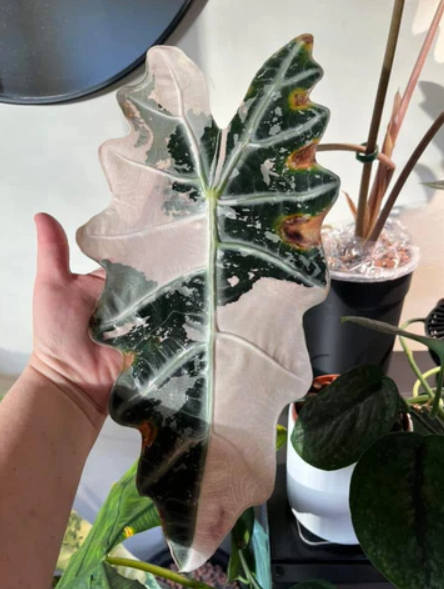
Cause 3: Fungal or bacterial infections producing sticky secretions
Some fungal or bacterial pathogens cause the plant to produce a sticky, sometimes moldy-looking residue as part of their lifecycle. Look for other signs like leaf spots, discoloration, or fuzzy growths.
How to tell which cause is responsible
- Inspect leaves thoroughly—turn over the leaves and look under the surface.
- Examine nearby stems and leaf joints for insects or shell-like pests.
- Observe the texture and appearance of the residue—if it’s honeydew-like, pests are likely involved; if it’s more liquid and clear, plant stress or fungal infections could be the cause.
- Look for additional symptoms, such as wilting, yellowing, or blackened spots, which indicate disease.
Section 3: Treatment Solutions
Once you have identified the cause, you can implement specific remedies to eliminate the problem and promote healthy growth.
Immediate actions
- Gently wipe the leaves with a soft, damp cloth or sponge to remove the sticky residue.
- Isolate the affected plant from other houseplants to prevent pest spread.
- Prune away heavily infested or damaged parts to reduce sources of infection or pest habitat.
Natural remedies
- Insecticidal soap or neem oil: Spray these on the affected leaves to control pests like scale insects or aphids.
- Maintain proper watering and humidity: Overly dry or overly moist conditions can stress your Alocasia, causing sap exudation and susceptibility to pests.
Chemical remedies
- Targeted pesticide application: If pests are severe, use a suitable horticultural pesticide, following label instructions carefully.
- Fungicides: For fungal infections, use an appropriate fungicide to halt the spread and reduce sticky residues.
Plant recovery
- Prune damaged parts and remove any fallen debris to prevent further infection.
- Improve environmental conditions such as light, airflow, and watering practices.
- Monitor regularly to catch issues early and prevent recurrence.
What to expect during recovery
After treatment, you should notice the sticky residue diminishing within days. Regular inspection and proper plant care will support recovery. If the problem persists, consult a local plant specialist or extension service for advanced diagnosis.
Section 4: Prevention Tips
Preventing sticky leaves in your Alocasia involves good cultural practices and consistent care.
Maintain proper watering and humidity
- Water only when the top inch of soil feels dry.
- Keep humidity at around 60-70%, especially in dry indoor environments, using a humidifier or pebble tray.
Regularly inspect leaves
- Check for signs of pests or fungal growth at least once a week.
- Remove any dust or debris to keep leaves healthy and less attractive to pests.
Use preventive treatments
- Apply neem oil or insecticidal soap every few weeks as a preventative measure.
- Promote healthy growth with balanced fertilization, avoiding overfeeding that can weaken the plant.
Ensure optimal lighting and airflow
- Place your Alocasia in bright, indirect light.
- Improve airflow around your plant with good placement and spacing.
Avoid overfeeding or excessive fertilizing
- Follow fertilization guidelines carefully, as too much fertilizer can encourage pest proliferation and fungal issues.
Conclusion
We've now covered how to identify why your Alocasia has sticky leaves, the most common causes, and how to treat and prevent these issues effectively. Remember, most problems are manageable with prompt, proper care. Your Alocasia can recover and thrive again with attentive diagnostics and straightforward treatments. Start diagnosing today, treat accordingly, and implement these preventive measures to keep your plant healthy and beautiful!
FAQ
Q: How long will it take for my Alocasia to recover after treatment?
A: Recovery time varies depending on the cause and severity of the problem, but typically, you can expect visible improvements within one to two weeks after proper treatment. Consistent care and monitoring will accelerate recovery.
Q: Can sticky leaves be a sign of something more serious?
A: Yes, persistent sticky residue accompanied by other symptoms like leaf discoloration, wilting, or mold might indicate a serious fungal or bacterial infection. In such cases, more intensive treatment and possibly professional help are recommended.
Q: Should I repot or prune my Alocasia if it has sticky leaves?
A: Yes, pruning damaged or heavily infested parts helps remove sources of infection or pests. Repotting may be necessary if the soil is contaminated or if pests have established roots in the media. Do so carefully, sterilizing tools to prevent spreading issues.
By staying observant and proactive, you can enjoy a healthy, vibrant Alocasia that not only adds beauty to your space but also rewards your attentive care with lush, glossy leaves. Happy planting!