Introduction
Noticing sticky leaves on your Rubber Plant can be unsettling—often it suggests something isn’t quite right. As a plant enthusiast, it’s natural to worry about your plant’s health, especially when its leaves start to feel slick or grimy. But don’t fret! Many plant parents face this issue at some point, and with a little knowledge, you can diagnose and treat it effectively. This article will walk you through understanding why your Rubber Plant has sticky leaves, how to identify the root cause, and most importantly, how to fix the problem. With patience and the right steps, your Rubber Plant can recover and continue to be a gorgeous, thriving addition to your indoor space.
Understanding the Problem
Visual identification: what do sticky leaves look like?
Sticky leaves on a Rubber Plant typically appear as a shiny, often greasy film coating the leaf surface. It may feel slick or slimy to the touch, and sometimes a film of grime or dust can be seen over the glossy leaves. In some cases, you might notice a whitish or yellowish residue, especially on the undersides or along leaf veins.
Common causes overview
Several factors can lead to sticky leaves on your Rubber Plant, including:
- Pest infestations: Sapsucking insects like scale insects, mealybugs, or aphids produce sticky exudates called honeydew.
- Sap-sucking insects or mites: These tiny pests feed on the plant’s sap, secreting sticky substances as a byproduct.
- Fungal or bacterial issues: Certain infections can cause the plant to exude sticky fluids, often accompanied by other symptoms like spots or mold.
- Environmental factors: Excessive humidity or over-fertilization may also contribute indirectly to sticky or mold-like residue buildup. Understanding what causes the stickiness helps in choosing the right treatment approach and prevents future problems.
Diagnosing the Exact Cause
Follow a step-by-step process to pinpoint the problem
Accurate diagnosis is key to effective treatment. Here are steps to identify the underlying issue:
Cause 1: Pest Infestation (e.g., scale insects, mealybugs)
Inspection tips:
- Look closely at the leaves and stems for small, oval-shaped bugs or cottony, white, or waxy clusters.
- Check the undersides of leaves, where pests often hide.
- Use a magnifying glass to identify tiny insects like scale or mealybugs.
Cause 2: Sapsucking Insects or Mites
Signs include:
- Fine webbing or tiny moving specks.
- Mites sometimes cause a stippled or speckled appearance of leaves, along with sticky residue.
Cause 3: Fungal or Bacterial infections producing sticky exudates
Indicators:
- Discolored spots or moldy patches on leaves.
- Sticky substance accompanied by a foul smell or fuzzy growths.
How to tell which one it is
- Inspect thoroughly: Look for visible pests or white fuzz (mealybugs), black or brown scale patches, or webbing.
- Check for white or grayish fuzz: Indicates fungal or bacterial issues.
- Examine underside of leaves and stems: Most pests hide here.
- Look for tiny insects or egg clusters: Characteristic of pests. Once you identify whether pests, infection, or environment is causing the sticky leaves, you can move to targeted treatment methods.
Treatment Solutions
Implement specific fixes based on diagnosed cause
Immediate actions
- Isolate the affected plant: Prevent pests from spreading to other houseplants.
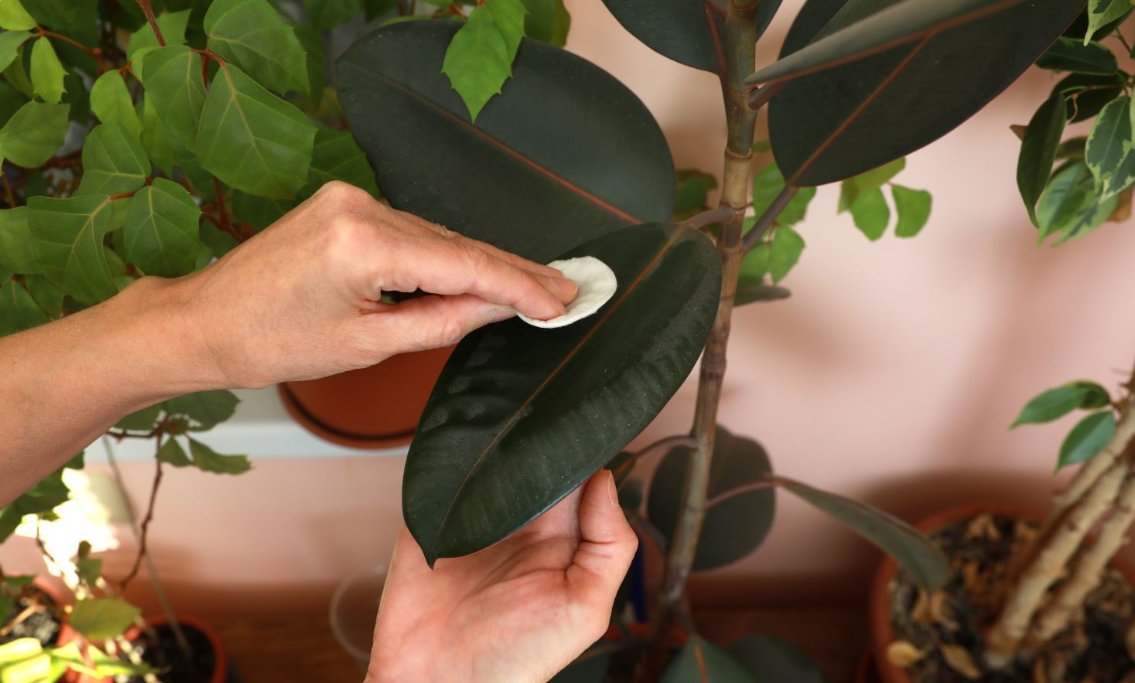
- Wipe leaves with a damp cloth: Remove the sticky residue physically.
- Remove visible pests: Use tweezers or a soft brush to detach large pests or egg clusters.
Long-term treatment plans
- Pest infestations (scale insects, mealybugs, mites):
- Spray the plant with insecticidal soap or neem oil, following label instructions.
- Repeat treatment every 7-10 days until the pests are gone.
- Wipe leaves regularly to remove residual honeydew.
- Fungal or bacterial issues:
- Use a natural fungicide or a diluted hydrogen peroxide solution to spray affected areas.
- Improve air circulation around your plant to prevent mold growth.
- Remove heavily infected leaves if necessary.
- Environmental management:
- Ensure proper watering practices—avoid overwatering, which can promote fungal growth.
- Maintain optimal humidity levels (around 40-60%).
- Regularly clean and dust the leaves to keep pests away and improve photosynthesis.
Monitoring progress
Check your Rubber Plant weekly to assess the effectiveness of treatments. Make sure to thoroughly cover all affected areas and repeat treatments as needed.
Prevention Tips
Keep your Rubber Plant pest-free and healthy
To minimize future sticky leaves issues, incorporate these care practices into your routine:
Care routine adjustments
- Regular inspections: Examine your plant’s leaves, stems, and undersides weekly.
- Proper watering: Water only when the top inch of soil feels dry, avoiding excess moisture that attracts pests.
- Cleaning leaves: Wipe or mist the leaves periodically to remove dust and potential pests.
Environmental factors
- Maintain optimal humidity: Too high humidity can promote mold; too low may stress the plant. Use a humidifier if necessary.
- Avoid over-fertilizing: Excess nutrients encourage pest outbreaks; feed your Rubber Plant with balanced fertilizer sparingly.
- Control temperature and light: Keep your plant in stable conditions—indirect bright light and temperatures between 65-80°F (18-27°C). By adopting these preventive measures, you’ll create an unfavorable environment for pests and infections, keeping your Rubber Plant healthy and vibrant.
Conclusion
Summary
Sticky leaves on your Rubber Plant are a common problem, often caused by pests, fungal infections, or environmental factors. With proper diagnosis, targeted treatment, and good cultural practices, you can effectively fix the issue and restore your plant’s health.
Encouragement
Remember, most problems with Rubber Plants are reversible. Patience and consistency are your best allies in nurturing a resilient, beautiful plant.
Next steps
Start by gently inspecting your Rubber Plant today. Follow the diagnostic steps outlined, apply the appropriate treatment, and adjust your care routine to prevent future sticky leaves. Your plant will thank you with lush, glossy leaves!
Q: How long until I see improvement after treatment?
A: Usually, you should notice a reduction in stickiness within a week after treatment, especially if pests are the cause. Complete recovery and the return of healthy, shiny leaves may take several weeks with consistent care.
Q: Will my Rubber Plant recover fully if I treat it promptly?
A: Yes. Early detection and prompt treatment significantly increase the chances of full recovery. Ensuring proper watering, pest control, and environmental conditions will help your plant regain its vigor.
Q: Is pruning necessary if the leaves are severely sticky or damaged?
A: Pruning can be beneficial if leaves are heavily damaged, diseased, or infested beyond repair. Removing affected leaves encourages new growth and reduces pest or fungal reservoirs. However, focus on treating the plant first before extensive pruning.
Your Rubber Plant can thrive again with the right care. Stay observant, act promptly, and enjoy nurturing your indoor jungle!