Discover why your Peace Lily has white fuzz and learn effective diagnosis and treatment to restore your plant's health and prevent future issues.
Introduction
Noticing white fuzz on your Peace Lily? You're not alone, and it’s a common issue many plant parents face. This fuzzy, often powdery layer can be distressing, especially if you're new to indoor gardening or caring for this beloved flowering plant. But don’t worry—most cases of white fuzz are manageable and can be treated effectively with the right knowledge. This article will help you understand what the white fuzz is, diagnose its cause, and provide proven solutions to save your plant. With the right care and a little patience, your Peace Lily can recover and flourish again. Let’s explore what’s behind that mysterious white coating and how to bring your plant back to health.
Section 1: Understanding the Problem
First, it’s essential to identify the white fuzz correctly and understand its significance. The appearance of white fuzz on your Peace Lily typically indicates an underlying issue that needs attention.
Visual Identification of White Fuzz
White fuzz on a Peace Lily often appears as:
- Fuzzy, cotton-like growths on the leaves, stems, or soil surface.
- Powdery patches that look like a white or pale coating.
- Sometimes, you might see bits of tiny white insects or residue on the plant surface.
Common Causes Overview
The white fuzz usually points to one of a few common problems:
- Pest infestations, particularly mealybugs or scale insects, which appear as small white, cottony dots.
- Fungal infections, such as powdery mildew, which presents as a white, powdery layer on leaves.
- Environmental factors, including dust accumulation or excessive humidity, leading to fungal overgrowth or debris buildup. Understanding the root cause is crucial because the treatment varies depending on whether the issue is pest-related, fungal, or environmental.
Section 2: Diagnosing the Exact Cause
Now that you recognize the white fuzz, the next step is to diagnose the precise cause.
Step-by-Step Guide to Identifying the Problem
Cause 1: Mealybugs
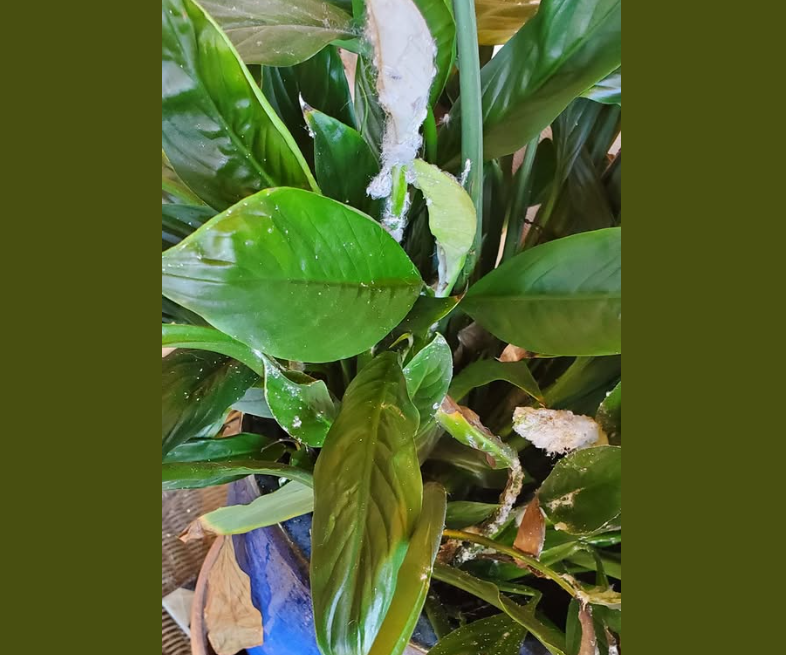
- Appearance: Small, white, cottony insects clustered on leaf joints, stems, or soil surface.
- Signs: Sticky residue (honeydew), yellowing or wilting leaves, and visible insects.
Cause 2: Powdery Mildew
- Appearance: A white, powdery substance covering the upper or lower surfaces of leaves.
- Signs: Powdery patches that can spread quickly, especially in humid conditions.
Cause 3: Environmental Stress or Dust
- Appearance: White dust or residue that can be wiped away clean.
- Signs: No insects or fungal patches; just a dusty coating resulting from environmental factors.
How to Tell Which It Is
- Inspect closely: Use a magnifying glass if needed.
- Check for movement: If tiny white insects crawl away when disturbed, it’s likely mealybugs.
- Assess the environment: High humidity, poor airflow, or dusty surroundings suggest environmental causes.
- Feel the texture: Powdery mildew feels like soft powder, whereas pest residues might be sticky or cottony. By carefully inspecting, you’ll be able to zero in on the cause and choose the most effective treatment.
Section 3: Treatment Solutions
Once you've identified the cause, follow these tailored steps to eliminate the white fuzz and restore your Peace Lily’s health.
Immediate Actions
- Gently wipe or spray: Use a damp cloth or soft brush to remove powdery mildew or dust from leaves.
- Isolate the plant: Prevent spread to other indoor plants by keeping your Peace Lily separate until fully treated.
- Remove affected parts: Prune away heavily infested or diseased leaves to reduce pest populations or fungal spores.
Natural Remedies
- Neem Oil Solution: Mix neem oil with water and a few drops of dish soap; spray on affected areas. Neem oil is both insecticidal and antifungal.
- Insecticidal Soap: Spray an insecticidal soap formulated for houseplants to combat mealybugs and scale insects.
- Hydrogen Peroxide Solution: Dilute one part hydrogen peroxide with four parts water; spray on leaves to kill fungal spores and pests.
Chemical Options
- Fungicides: Use a broad-spectrum fungicide labeled safe for indoor plants to treat powdery mildew.
- Pest Control Products: Apply horticultural oils or specific insecticides according to label instructions for persistent pests.
- Safety Tips: Always test on a small part of the plant first, and avoid over-application to prevent damage.
Long-Term Care
- Regular Inspection: Check your Peace Lily weekly for early signs of pests or fungal issues.
- Maintain Proper Humidity: Keep humidity levels around 50-60% to prevent fungal growth but avoid overly damp conditions.
- Avoid Overwatering: Excess moisture can promote fungal infections and pest attraction.
Recovery Expectations
With prompt action, you should see improvements within 1-2 weeks—pests will diminish, powdery patches will fade, and your plant will regain its vibrant health. Consistent care and vigilance are the keys to long-term success.
Section 4: Prevention Tips
Prevention is always better than cure. Follow these tips to keep your Peace Lily free from white fuzz in the future.
Care Routine Adjustments
- Proper watering: Water only when the top inch of soil feels dry, to prevent excess moisture.
- Keep leaves clean: Wipe leaves periodically to remove dust and reduce fungal spores.
- Avoid dust buildup: Regularly dust your plant and its surroundings.
Environmental Factors
- Maintain optimal humidity: Use a humidifier or pebble trays if your home is dry.
- Ensure good airflow: Place your Peace Lily where it gets gentle circulation to reduce stagnant moisture.
- Control pests early: Regularly inspect the plant’s joints, undersides of leaves, and soil surface for signs of pests or fungal spores.
Regular Inspections and Early Intervention
The earlier you spot signs of trouble, the easier it is to treat and prevent widespread issues. Quick response to initial white fuzz or pests can save your plant from more serious damage.
Conclusion
In this guide, we’ve covered why your Peace Lily might be having white fuzz—ranging from pests like mealybugs, fungal infections like powdery mildew, to environmental factors like dust and humidity. We also explored how to diagnose the cause accurately, and most importantly, how to treat the problem effectively with natural and chemical solutions. Remember, most issues are manageable with attentive care and timely intervention. Your Peace Lily is resilient, and with a little patience and regular maintenance, it can recover beautiful, healthy foliage.
Next Steps:
- Implement the recommended treatments promptly.
- Keep a regular inspection routine.
- Follow prevention tips to ward off future problems. Your plant’s health is in your hands, and each step you take brings your Peace Lily closer to thriving again!
FAQ
Q: How long until I see improvement after treatment?
A: Typically, you can expect to see noticeable progress within 1 to 2 weeks. Pests like mealybugs will gradually diminish, and fungal patches will fade with consistent care. Keep monitoring your plant closely and reapply treatments if necessary.
Q: Can my Peace Lily fully recover from white fuzz?
A: Yes, most Peace Lilies recover fully if the cause is identified early and treated properly. Complete recovery might take a few weeks, especially if the plant was heavily infested or severely affected, but with patience, it can regain its healthy, lush appearance.
Q: Should I prune parts covered with white fuzz?
A: Yes, pruning heavily infested or damaged leaves can help prevent further spread of pests or fungi. Use clean, sharp scissors and dispose of pruned material away from your other plants to avoid re-infestation.
Take care of your Peace Lily with confidence—by understanding the causes of white fuzz and acting promptly, you can ensure your plant remains a beautiful, vibrant feature of your indoor space!