Quick Summary: Yellowing leaves on your Snake Plant can be distressing, but with the right diagnosis and care adjustments, your plant can bounce back. From watering habits to lighting conditions, this guide helps you identify the cause and provides step-by-step solutions to restore health and vibrancy.
Introduction
Noticing yellow leaves on your Snake Plant (Sansevieria) can be genuinely worrying—after all, you've likely put a lot of love and effort into caring for this resilient houseplant. It’s natural to feel concerned when something seems off, but don't fret! Yellowing leaves are often a sign that your plant needs a little tweak in its care routine rather than a complete overhaul or losing hope. In this article, we’ll explore why your Snake Plant's leaves might be turning yellow. You'll learn how to accurately diagnose the problem, and I'll guide you through simple, effective solutions to help your plant recover and thrive again. The good news? With a few adjustments, your Snake Plant can regain its vibrant, upright appearance in no time. Let’s dive in!
Section 1: Understanding the Problem
Yellow leaves can indicate several underlying issues, but recognizing specific symptoms is key to fixing the problem swiftly.
Visual identification: How to spot yellow leaves
- Are the yellowing leaves widespread across the plant or just confined to some specific leaves?
- Do the leaves turn yellow at the tips or edges first, or do they turn uniformly yellow?
- Are the yellow leaves soft and mushy or firm?
- Is the yellowing accompanied by other symptoms like drooping, brown spots, or mold? Pay attention to which part of the plant exhibits yellowing to determine the cause.
Common causes overview
- Overwatering — the most common culprit, leading to root rot.
- Underwatering — dehydration causes leaves to pale and yellow.
- Poor light conditions — too little or too much direct sunlight.
- Environmental stress — drafts, low humidity, or sudden temperature changes. Recognizing these signs early can save your plant from more serious damage. Now, let's get into diagnosing the exact cause.
Section 2: Diagnosing the Exact Cause
To effectively treat your Snake Plant, pinpointing the root cause is essential. Here’s how to differentiate among potential issues.
Cause 1: Overwatering – The most common culprit
Symptoms:
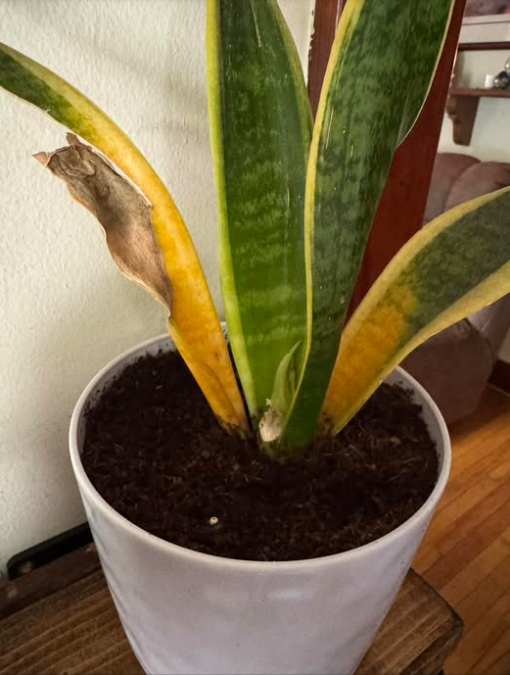
- Soft, mushy, or translucent leaves.
- Yellowing that starts at the base and spreads upward.
-
Soil that feels constantly wet or muddy. How to confirm:
-
Check if the soil is soggy below the surface.
- Smell the soil for a musty, foul odor indicating root rot.
- Gently remove the plant from its pot; if roots are brown, black, or slimy, overwatering is likely. Why it happens: Snake Plants prefer to dry out completely between waterings. Excess water can suffocate roots, causing decay and yellowing leaves.
Cause 2: Light issues
Symptoms:
- Pale, yellow leaves from lack of light.
-
Alternatively, sunburned, yellowing leaves if exposed to intense direct sunlight. How to confirm:
-
Evaluate where your plant is located.
- Is it in a bright but indirect light spot? Or near a sunny window with direct sun? Why it happens: Insufficient light leads to weak, yellowing foliage, while too much direct sun can scorch leaves.
Cause 3: Poor drainage or root rot (if overwatering suspected)
Symptoms:
- Soggy soil consistently.
-
Roots that are black, slimy, or foul-smelling upon inspection. How to tell:
-
Gently unpot the plant and examine roots.
- Healthy roots are white or light tan and firm. Why it happens: Waterlogged soil prevents roots from oxygen exchange, fostering bacterial and fungal growth that causes rot.
Decision checklist:
- Are the soil moist or dry? (Overwatered/Underwatered)
- Are the roots healthy? (Inspect roots)
- Is the plant exposed to direct sun or low light? (Light condition)
- Are leaves turning yellow from base to tip? (Overwatering or root issue) Use these clues to identify the root cause before moving to treatment.
Section 3: Treatment Solutions
Depending on your diagnosis, here are tailored treatments to revive your Snake Plant.
Immediate actions (First 24-48 Hours):
-
For overwatering / root rot:
-
Gently remove the plant from its pot.
- Inspect and trim away brown, mushy roots with sterilized scissors.
- Replace the old soil with fresh, well-draining cactus or succulent mix.
- Ensure the pot has drainage holes; do not water again until the soil is completely dry.
-
For underwatering:
-
Water lightly, ensuring excess drains out.
- Allow the top 1-2 inches of soil to dry out before watering again.
-
For light issues:
-
Move the plant to a location with bright, indirect light.
- Avoid direct afternoon sun that can scorch leaves.
- Remove any yellow, damaged leaves to clean up the plant’s appearance and promote healthy new growth.
Long-term treatment plan:
- Establish a consistent watering schedule: Water only when the top inch of soil is dry—about once every 2-3 weeks.
- Improve soil drainage: Use a well-draining potting mix or add perlite or sand for better aeration.
- Optimize lighting: Place your Snake Plant where it receives bright, indirect sunlight (at least 4-6 hours a day).
- Consider repotting: If root rot is severe, repotting into fresh soil and a new container helps prevent recurrence.
Natural remedies:
- Neem oil or hydrogen peroxide solution (1 part hydrogen peroxide to 4 parts water) can help disinfect roots if rot is early.
- Keep humidity low; Snake Plants prefer dry conditions.
Reaction timeline:
- Initial improvements can be visible in 2-4 weeks.
- Recovery of a severely damaged plant might take 2-3 months and patience.
- If no improvement after 6-8 weeks, consider consulting a plant specialist or propagating healthy offsets.
Section 4: Prevention Tips
Stopping yellowing before it begins is easier than fixing it afterward.
- Water only when the soil is dry: For Snake Plants, watering every 2-3 weeks is typically sufficient. Always check soil moisture first.
- Use well-draining soil: This prevents water from sitting around roots.
- Ensure proper drainage: Use pots with drainage holes; never let your plant sit in water.
- Provide adequate light: Bright, indirect sunlight helps keep leaves healthy.
- Avoid temperature extremes: Keep away from cold drafts or heaters, which stress the plant.
- Fertilize sparingly: During spring and summer, feed with a diluted cactus or succulent fertilizer once a month. Do not fertilize during dormancy. By adopting these habits, you'll help your Snake Plant stay strong and resilient.
Frequently Asked Questions
Q: How long until I see improvement after fixing watering habits?
A: Usually, you’ll notice healthier, greener leaves within 2-4 weeks. Significant recovery, like new growth, can take 1-3 months based on severity.
Q: Can yellow leaves turn green again if treated early?
A: Often yes! If the yellowing is caught early and the plant's roots are healthy, new leaves or new growth should appear vibrant again. Yellow leaves that have turned brown or mushy won't turn green again but can be pruned.
Q: Should I prune all the yellow leaves or only damaged parts?
A: Remove only the truly damaged or yellowing leaves at the base with clean scissors. Healthy leaves should be left intact to support growth.
Q: Is it okay to repot my Snake Plant during its recovery?
A: Yes, repotting into fresh, well-draining soil can boost recovery, especially if root rot was involved. Do this gently to avoid stressing the plant further.
Conclusion
Key Takeaways:
- Yellow leaves on your Snake Plant often signal overwatering, light issues, or stress.
- Accurate diagnosis involves inspecting the soil, roots, and environment.
- Immediate actions include adjusting watering, light, and pruning damaged leaves.
- Long-term success depends on consistent watering, proper drainage, and optimal light.
- With patience and attentive care, your Snake Plant can recover and continue to beautify your space. Remember, plants are resilient, and with a little troubleshooting, you’ll soon see your Snake Plant vibrant and healthy once again. Start today by checking your watering habits and light exposure—your leafy friend will thank you!