```markdown
Why Is My Snake Plant Having Brown Tips? Causes & Easy Fixes
Quick Summary: Brown tips on your Snake Plant (also known as Sansevieria) are common and usually signal minor stress. With simple adjustments to your care routine, you can restore its lush, green appearance and keep it happy and healthy.
Introduction
Noticing brown tips on your Snake Plant can be disappointing and maybe even a little worrisome. As a plant parent, you want to do everything right, and sudden browning can feel like a setback. But the good news is, this issue is quite common and very fixable with some understanding and simple steps. Often, these brown tips occur due to environmental factors or watering habits that can easily be adjusted.
In this article, we’ll explore the most common causes behind brown tips on Snake Plants, how to diagnose exactly what's going on, effective treatment strategies, and proactive prevention tips. Whether your plant’s tips are just starting to brown or are severely crispy, rest assured, your Snake Plant can recover and thrive again. Let’s walk through how to bring back its beautiful, healthy foliage!
Understanding the Problem
Brown tips on Snake Plant leaves appear as the outer edges or tips turn brown, dry, and sometimes crispy. They may start small but can spread along the edges if left unaddressed. This browning often indicates mild to moderate stress, mostly environmental rather than severe health issues.
Recognizing these symptoms early helps prevent further damage and supports a smoother recovery. It’s important to understand that some leaf tip browning may be natural with older leaves, but widespread or severe browning points to underlying problems that need attention.
Visual identification of brown tips and leaf damage
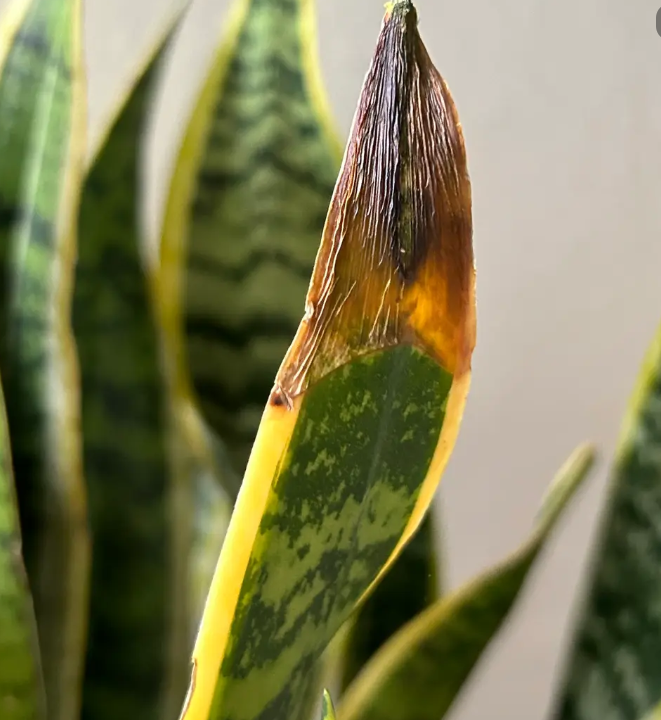
- Brown, dry, or crispy edges on the leaf tips
- Browning begins at the outermost edges, spreading inward if ignored
- Leaves may appear dull or less vibrant
- Occasionally, yellowing around the browning areas
Common causes overview: overwatering, underwatering, low humidity, fluoride buildup, and inconsistent watering
Understanding why this happens helps you choose the right fixes. The most typical causes include:
- Overwatering or poor drainage, leading to root stress
- Underwatering or low humidity, causing leaves to dry out
- Mineral or fluoride buildup from tap water containing chemicals
- Inconsistent watering—too much or too little, especially without drainage
- Environmental stresses such as drafts or dry indoor air
Diagnosing the Exact Cause
To effectively treat your Snake Plant, you’ll want to pinpoint what’s causing the browning tips. Follow these steps:
Cause 1: Overwatering or poor drainage – soil stays too wet, leading to root stress
- Symptoms: Roots may be waterlogged or rotting, often resulting in soft, mushy leaves or an unpleasant smell from the soil.
- How to confirm: Gently remove the plant from its pot to inspect roots—healthy roots are white and firm; rotting roots are dark and slimy.
- Why it happens: Snake Plants prefer dry soil; too frequent watering or compacted soil prevents excess water from draining.
Cause 2: Underwatering or low humidity – leaves dry out and develop crispy tips
- Symptoms: Long-lasting dryness, brown tips appearing suddenly, especially during dry seasons.
- How to confirm: Check soil moisture with your finger or a moisture meter. If the soil is bone dry, underwatering is likely.
- Why it happens: Snake Plants are drought-tolerant but still need occasional watering. Low indoor humidity (below 30%) can speed up leaf drying.
Cause 3: Mineral or fluoride buildup – from tap water high in salts or chemicals
- Symptoms: Browning tips that may look more salt-like or crusty at the edges.
- How to confirm: Use distilled, rain, or filtered water for watering. If browning worsens with tap water, buildup may be the cause.
- Why it happens: Tap water often contains fluoride, chloride, and other salts that accumulate in the soil over time.
How to tell which cause applies to your plant
- Examine watering habits: Do you water too often or infrequently?
- Check soil moisture: Is the soil constantly wet or bone dry?
- Observe leaf appearance: Are tips just dry or are there signs of root rot or salt crusts?
- Review water source: Use distilled or filtered water to reduce mineral buildup.
Create a simple checklist to diagnose:
- [ ] Soil consistently wet or soggy? → Overwatering
- [ ] Soil very dry? → Underwatering
- [ ] Tips crispy and crusty? → Possible fluoride or salt buildup
- [ ] Leaves drooping or soft? → Possible root rot from overwatering
Treatment Solutions
Once you've identified the cause, you can take targeted actions to nurse your Snake Plant back to health.
Immediate Actions (First 24-48 Hours):
- Adjust watering: Let the soil dry out completely if overwatered; water less frequently.
- Check drainage: Ensure the pot has drainage holes; if blocked, repot with fresh, well-draining soil.
-
Flush soil (if mineral buildup suspected):
-
Water generously with distilled or rainwater until excess salts are washed out.
- Repeat this process every few months.
- Prune damaged tips: Use sterilized scissors to cut away crispy, brown tips, encouraging new, healthy growth.
Long-Term Treatment:
- Water with distilled or rainwater: This prevents mineral buildup and helps keep leaf tips green.
- Maintain consistent watering schedule: Generally, every 2-4 weeks depending on season and indoor conditions.
- Increase humidity if air is dry: Place a nearby humidifier or water tray, or mist leaves occasionally.
- Monitor soil dryness: Only water when the top inch of soil feels dry.
- Treat root rot if present: If roots are rotted, prune away damaged roots and repot in fresh soil.
Chemical remedies
- For mineral buildup, repot your plant in clean, well-draining soil.
- If nutrient deficiencies are suspected, a balanced, diluted cactus or houseplant fertilizer administered monthly can help.
Monitoring
- Expect improvement over 2-4 weeks with proper care.
- If brown tips persist or worsen after adjustments, reassess watering practices and environmental factors.
- For severe damage, consider removing affected leaves completely to promote new growth.
Prevention Tips
Keeping your Snake Plant healthy minimizes future browning issues:
- Adjust watering routines: Water only when the soil is dry; typically every 2-4 weeks.
- Use proper soil: A well-draining cactus or succulent mix prevents water retention.
- Water with filtered or distilled water: Reduces mineral and chemical buildup.
- Maintain moderate indoor humidity: 40-60% humidity is ideal; avoid drafts and dry heating vents.
- Provide bright, indirect light: Snake Plants thrive in bright, indirect sunlight but tolerate low light.
- Regularly inspect plants: Early detection of stress allows for quick correction before damage occurs.
Frequently Asked Questions
Q: How long until I see improvement after adjusting care?
A: Typically, you can expect to see healthier leaf tips within 2-4 weeks of proper watering and environmental adjustments. Complete recovery may take longer if extensive damage occurred.
Q: Is it safe to prune brown tips or should I leave them?
A: It’s best to prune brown, crispy tips to promote healthy new growth. Use sterilized scissors and cut just above the healthy green tissue.
Q: Can brown tips be a sign of a serious health issue?
A: Usually, browning tips indicate environmental stress or minor issues rather than serious health problems. However, if browning is widespread, accompanied by soft, mushy leaves, or foul smell, it may be a sign of root rot requiring urgent attention.
Conclusion
Key Takeaways:
- Brown tips on your Snake Plant are often caused by overwatering, underwatering, mineral buildup, or low humidity.
- Early diagnosis through careful observation guides effective treatment—pruning, adjusting watering, and improving environment.
- Prevent future issues by maintaining consistent care routines, using appropriate soil, and providing stable humidity and lighting.
- Patience and gentle adjustments will help your Snake Plant recover and flourish again.
Remember, caring for your Snake Plant is a journey—each adjustment brings you closer to healthier, vibrant foliage. With a bit of attention, your beloved plant will thrive and bring green joy to your space once more!
Happy plant parenting! If you keep these tips in mind, you'll be well on your way to a lush, happy Snake Plant. Don’t forget—every healthy leaf was once a tiny sprout that needed just a little care and patience.