Quick Summary: Is your Monstera deliciosa stretching out and growing tall with sparse leaves? Don't worry—this common issue can be fixed. By understanding the causes like insufficient light or improper care, you can take simple steps to restore your plant’s lush, full appearance.
Introduction
Noticing your Monstera deliciosa growing tall and spindly? You're not alone—many plant lovers find themselves concerned when their once-compact, leafy houseplant starts to become leggy, with long stems and sparse foliage. It can be worrying, especially when you want your green companion to thrive and bring beauty to your home.
The good news is, leggy growth is a sign that your plant is trying to reach for light or responds to certain cultural conditions—but it’s entirely fixable! With some quick adjustments to its environment and routine, your Monstera can bounce back into a healthy, bushy shape.
In this article, we’ll explore why Monstera can become leggy, how to diagnose the root cause, and practical, gentle fixes to help your plant look lush and vibrant again. Whether it’s better lighting, pruning, or other care tweaks, you’ll have clear steps to restore your beloved plant’s natural charm.
Section 1: Understanding the Problem
Leggy growth in Monstera deliciosa shows up as stems that are long, thin, and often lack the density of leaves you’d like to see. These stems tend to lean or stretch toward nearby light sources, making the plant look sparse or sparse on top. This condition isn't just unsightly; it can also weaken the plant’s overall health if left unaddressed.
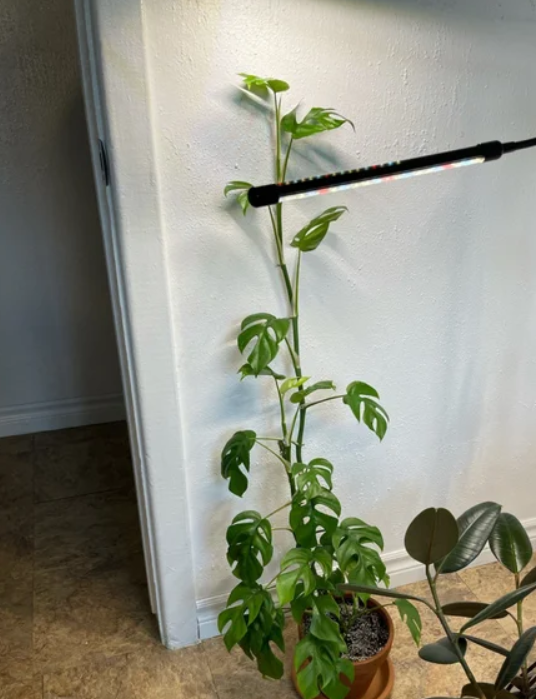
Visual identification of leggy Monstera
- Tall, thin stems with few leaves along their length
- Sparse foliage centralized at the top or towards one side
- Stems leaning or stretching toward windows or lights
- Overall lack of a bushy or full appearance
Common causes overview
- Insufficient light: Monstera needs bright, indirect light to grow full and bushy. When light is too weak, the plant stretches to reach it.
- Over-fertilization: Excessive fertilizer can weaken stems, causing them to elongate.
- Improper pruning: Without regular trimming or staking, stems tend to grow long and leggy.
- Lack of support or training: Monstera naturally climbs, so failure to provide a support system can result in spindly growth. Understanding what’s causing your Monstera to stretch is the first step toward fixing it. Let’s explore how to diagnose the exact issue.
Section 2: Diagnosing the Exact Cause
Want to determine whether your Monstera’s leggy growth stems from too little light or other factors? Here’s a simple step-by-step:
Cause 1: Insufficient Light
- Symptoms: Elongated stems, sparse leaves, leaning toward windows.
- How to confirm: Check where your plant is placed. Is it in a bright but indirect light spot? Monstera prefers bright, filtered sunlight. If it’s behind a curtain or in a dim corner, it’s probably not getting enough.
- Why it happens: Plants stretch toward light to maximize photosynthesis. When light is weak or indirect, they elongate to catch as much as possible.
Cause 2: Excessive or Poor-Quality Fertilizer
- Symptoms: Weak, leggy growth with thin stems, sometimes pale leaves.
- How to confirm: Review your fertilization schedule. Are you fertilizing too often or using an unbalanced fertilizer? Over-fertilization can cause rapid, weak stem growth.
- Why it happens: Overfeeding encourages fast but weak growth, leading to spindly stems that aren’t sturdy.
Cause 3: Lack of Pruning or Trellising
- Symptoms: Long, unbranched stems with no bushiness.
- How to confirm: Have you been pruning or training your Monstera? If not, stems can grow unchecked, stretching out in search of space.
- Why it happens: Without regular trimming or support, stems elongate to fill available space.
How to tell which cause applies
- Observe your lighting: Is your plant in a bright spot? If not, adjusting its location is a good first step.
- Check your fertilization schedule: Are you fertilizing during the growing season? Use a balanced, dilute fertilizer.
- Assess pruning habits: Have you trimmed overly long stems? If not, partial pruning can promote bushier growth.
- Monitor your plant's response after each adjustment to identify what improves the situation.
Section 3: Treatment Solutions
Once you’ve diagnosed the cause, applying targeted care will help your Monstera regain a lush, full look.
Immediate actions (First 24–48 Hours):
1. Move your Monstera to a brighter spot with filtered sunlight.
- Find a location near an east- or west-facing window.
- If natural light is limited, consider installing grow lights.
-
Keep the plant away from direct midday sun to prevent leaf burn. 2. Adjust your fertilizing schedule.
-
If you’ve been over-fertilizing, hold off for 4–6 weeks.
-
Use a balanced, diluted houseplant fertilizer during the active growing season every 4–6 weeks. 3. Prune overly long stems.
-
Using clean pruning shears, trim back some of the elongated stems to encourage bushier growth.
- Cut just above a node (where a leaf joins the stem) to promote new shoots.
Long-term treatment plan:
1. Regular pruning and training
- Continue trimming leggy stems to shape your Monstera.
-
Use stakes or a trellis to support climbing and encourage compact growth. 2. Rotate your plant monthly
-
Turn the pot 90 degrees every week or two.
-
Ensures all sides receive equal light, preventing uneven stretching. 3. Install supplemental grow lights if natural light remains insufficient.
-
Use LED grow lights designed for houseplants.
- Set on a timer to mimic natural day length, about 12-14 hours daily.
During recovery:
- Maintain consistent watering—allow soil to slightly dry between watering.
- Support new growth with staking if necessary.
- Be patient: it can take a few months to see a full turnaround, but regular care will pay off.
Section 4: Prevention Tips
Avoid leggy Monstera growth in the future by creating an environment conducive to healthy, bushy development:
- Provide bright, indirect sunlight daily. Aim for at least 4–6 hours of filtered light.
- Use a balanced, diluted fertilizer during spring and summer. For example, a 20-20-20 or similar every 4–6 weeks.
- Prune regularly to promote dense, bushy growth. Remove any long, sparse stems and encourage lateral branching.
- Rotate your plant monthly. This prevents stems from stretching unevenly toward one side.
- Supplement with grow lights in low-light spaces. Especially helpful in winter or shaded apartments. These practices reinforce healthy growth habits and keep your Monstera looking its best.
Frequently Asked Questions
Q: How long until I see improvement after fixing light and pruning?
A: You may notice new compact growth within 4–8 weeks. Patience is key—try to maintain consistent care during this period.
Q: Can I prune my Monstera to encourage bushier growth?
A: Absolutely! Regular pruning stimulates new shoots and prevents legginess. Prune just above nodes to encourage lateral growth.
Q: Is it safe to use grow lights indoors for my Monstera?
A: Yes, indoor LED grow lights are safe and effective. They mimic natural sunlight, helping your plant develop fuller, healthier foliage.
Q: What if my Monstera is already too leggy?
A: You can prune back long stems, allowing new shoots to grow from the base. Over time, this encourages a more compact, lush appearance.
Q: Should I repot my Monstera during this process?
A: Only if the current soil is degraded or root-bound. Otherwise, focus on pruning, lighting, and care adjustments.
Conclusion
Key Takeaways:
- Leggy Monstera deliciosa growth often results from insufficient light, over-fertilization, or a lack of pruning.
- Restoring fullness involves moving your plant to brighter, indirect light, pruning long stems, and maintaining consistent care.
- Regular pruning, rotating your plant, and supplementing with grow lights when needed will encourage lush, bushy growth.
- Be patient—healthy plants bounce back with simple, gentle adjustments. Remember, your Monstera is resilient and responds well to attentive care. With a few changes and consistent love, you’ll see it become fuller, healthier, and more vibrant than ever!