Noticing your Jade Plant's leaves are drooping can be worrying, but this is a common issue many plant lovers face. Whether you’re a beginner or an experienced indoor gardener, drooping leaves on your Jade Plant can stem from various causes, and knowing how to diagnose and fix the problem is key to reviving your beloved plant. Rest assured, with a little understanding and proper care, you can help your Jade Plant bounce back to health. In this article, we’ll explore the main reasons behind drooping leaves, guide you through diagnosing the exact issue, and provide simple, effective solutions to restore your plant’s vitality.
Section 1: Understanding the Problem
Visual identification of drooping leaves on Jade Plants
Drooping leaves on a Jade Plant are characterized by leaves that bend downward, appear limp, or hang loosely instead of standing upright. The leaves may also feel soft or mushy if the problem is severe. Sometimes, you might notice the leaves starting to turn yellow or brown, indicating stress or damage.
Common causes overview
Drooping leaves can be caused by various issues, most commonly:
- Overwatering: Excess water suffocates roots, leading to root rot.
- Underwatering: Insufficient water causes dehydration, making leaves wilt.
- Improper light: Too little light weakens the plant, resulting in drooping foliage.
- Root problems: Damage or disease affecting the roots can impair nutrient and water uptake. Understanding these causes helps you to pinpoint the problem and take targeted action.
Section 2: Diagnosing the Exact Cause
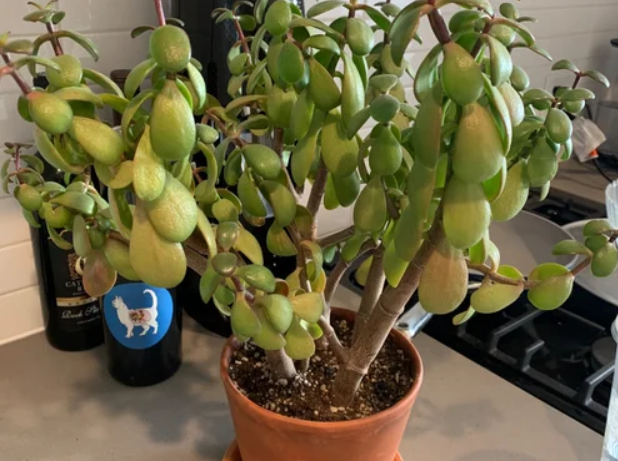
Follow these steps to determine what’s causing your Jade Plant’s drooping leaves
Cause 1: Overwatering leading to root rot and soft, mushy leaves
- Check the soil moisture: If the soil feels constantly wet and the leaves are soft or squishy, overwatering is likely.
- Examine the roots: Gently remove the plant from its pot. Healthy roots are white and firm; rotten roots are dark and slimy.
Cause 2: Underwatering causing leaves to wilt and dry out
- Inspect the soil: If it’s very dry several inches down and the leaves are dry, brittle, and drooping, your plant may need more water.
- Observe leaf texture: Wilted, crispy leaves are signs of dehydration.
Cause 3: Insufficient light resulting in weakened, drooping foliage
- Assess light exposure: A Jade Plant needs bright, indirect sunlight. If it’s placed in a low-light area, the leaves may become pale and weak, causing drooping.
- Look for leggy growth or stretched stems, another sign of inadequate light.
How to tell which specific cause applies to your plant
Depending on soil moisture, root health, and light levels, you can identify the primary issue. For example:
- Wet soil + soft leaves → overwatering
- Dry soil + crispy leaves → underwatering
- Low light + pale, weak leaves → insufficient light Once diagnosed, you can proceed to apply the appropriate fixes.
Section 3: Treatment Solutions
Implement targeted fixes based on the diagnosed cause to help your Jade Plant recover
Immediate actions
- Overwatering: Remove excess water, improve drainage by adding gravel or sand to the soil, and allow the soil to dry out completely before watering again.
- Underwatering: Water your Jade Plant thoroughly, ensuring water reaches the roots. Check soil moisture regularly and maintain consistent watering.
- Poor lighting: Move the plant to a brighter location with plenty of indirect sunlight, ideally near a south-facing window.
Long-term care
- Establish a regular watering schedule—generally, watering once every 2-3 weeks, allowing the soil to dry out between waterings.
- Use well-draining succulent or cactus mix to prevent waterlogging.
- Ensure the pot has drainage holes to avoid excess water retention.
- Maintain optimal environmental conditions: bright light, moderate humidity, and appropriate temperature (65-80°F).
What to expect during recovery
- You may see the leaves start to firm up and stand upright within a few days to a couple of weeks.
- New, healthy growth indicates recovery.
- Be patient and cautious with watering to avoid reverting to the same issues.
Section 4: Prevention Tips
Care routine adjustments: Regular watering and soil checks
- Always check soil moisture before watering using your finger or a moisture meter.
- Avoid watering on a fixed schedule; instead, base it on pot size, season, and indoor conditions.
Environmental factors: Adequate light, proper pot size, and humidity control
- Ensure your Jade Plant gets ample bright, indirect sunlight daily.
- Use appropriately sized pots—too large can hold excess water, too small can restrict root growth.
- Maintain good air circulation and avoid overly humid environments, which can promote root rot.
Conclusion
Recap of key causes and solutions for drooping Jade Plant leaves Drooping leaves on your Jade Plant are typically signs of underlying issues such as overwatering, underwatering, or insufficient light. By carefully diagnosing the problem—checking soil moisture, root health, and light conditions—and then applying targeted solutions, you can effectively revive your plant. Remember, most drooping issues are fixable with the right care, so don’t lose hope. Consistent, attentive care will strengthen your Jade Plant over time. Next steps: Assess your plant’s condition, implement the appropriate fixes outlined here, and keep a close eye on its progress. With patience and the right approach, your Jade Plant will soon thrive again, bringing beauty and serenity to your indoor space.
FAQ
Q: How long until I see my Jade Plant recover after fixing watering issues?
A: Recovery time varies. After correcting watering problems, you might notice improvement within a few days to a week, with new, firm leaf growth appearing over 2-4 weeks. Be patient and consistent with your care routine.
Q: Can drooping leaves be permanent, or will they straighten back up?
A: In many cases, drooping leaves can straighten back up if the underlying issue is addressed promptly. However, severely damaged or dead leaves may not recover and should be pruned to encourage healthy growth.
Q: Should I prune or remove severely drooping or damaged leaves?
A: Yes. Removing wilted, yellow, or mushy leaves helps the plant focus energy on healthy growth and prevents potential disease spread. Use clean, sharp scissors or pruning shears for a tidy cut.
With these insights, you're now equipped to diagnose and fix drooping leaves on your Jade Plant confidently. Remember, caring for plants is a rewarding process—patience and attentiveness are your best tools!