Learn how to diagnose and fix brown tips on your ZZ Plant with our friendly, comprehensive guide—get your plant looking healthy and vibrant again!
Noticing brown tips on your ZZ Plant can be worrying, especially when you've been nurturing it with care. But don't worry—you're not alone. Many plant parents encounter this common issue and find effective ways to restore their plant’s lush appearance. In this guide, we'll explore why brown tips occur, how to accurately diagnose the cause, and simple, practical solutions to help your ZZ Plant flourish again. The good news is that with some attentive care and small changes to your routine, you can improve your plant's health and prevent future browning. Let’s walk through the essentials together!
Section 1: Understanding the Problem
Visual identification of brown tips on leaves and stems
Brown tips on your ZZ Plant typically appear as dry, crispy, or discolored edges on the leaf tips. You might notice:
- Dark brown or tan spots at the very tips or edges.
- Dry, brittle texture when touching the leaves.
- Sometimes, the entire tip appears scorched or shriveled. These symptoms are mainly cosmetic but often indicate underlying issues in your plant's care or environment.
Common causes overview including overwatering, underwatering, low humidity, and water quality
Several factors can lead to brown tips:
- Overwatering or poor drainage causing salt buildup and root stress.
- Underwatering, leading to dehydration of leaf tips.
- Low humidity and dry air, especially in heated indoor spaces.
- Water quality, such as using hard tap water rich in minerals or chemicals.
- Excessive fertilization, which can cause salt accumulation in the soil. Understanding which of these influences apply to your plant is the first step toward fixing the issue.
Section 2: Diagnosing the Exact Cause
Follow a step-by-step process to determine what’s causing the brown tips
Accurately diagnosing will help you apply the right solution. Here's how:
Cause 1: Low Humidity and Dry Air
Symptoms: Brown tips tend to be dry and brittle, especially during winter or in air-conditioned rooms. How to check: Feel the air around your plant; if it’s dry (less than 40% humidity), your ZZ Plant might be lacking moisture in the air.
Cause 2: Overwatering or Poor Drainage
Symptoms: If the soil feels constantly moist or soggy and there's evidence of waterlogging, overwatering is likely. How to check: Gently lift the pot or feel the top inch of soil; if it’s soggy or retains water, this could be the culprit.
Cause 3: Excess Fertilizer or Water Quality Issues
Symptoms: Tip browning is accompanied by a white crust on the soil surface or salt crystals on the pot's edge. How to check: Review your fertilization schedule. Are you feeding too often or with high-concentration fertilizers? Also, test your water quality—hard water contains minerals that can accumulate.
How to tell which cause applies to your plant
- Check soil moisture regularly with your finger or a moisture meter.
- Observe your environment for temperature and humidity levels.
- Review your watering and fertilization routines. Matching these observations with symptoms will help you identify the root cause.
Section 3: Treatment Solutions
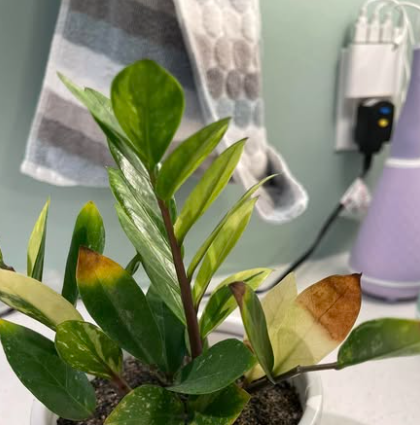
Implement targeted fixes based on the diagnosis to revitalize your ZZ Plant
Immediate actions:
- Adjust watering habits: Let the soil dry out between waterings. Ensure your pot has drainage holes to prevent water accumulation.
- Improve humidity: Increase moisture in the air by placing a humidifier nearby or setting a pebble tray with water underneath the pot.
- Flush soil if overfertilized: If salts or fertilizer buildup is suspected, flush the soil with distilled or filtered water to clear excess salts. Wait a week before fertilizing again.
Long-term care:
- Establish a proper watering schedule:Water only when the top 1-2 inches of soil are dry.
- Use filtered or distilled water: Avoid tap water with high mineral content.
- Maintain optimal environment: Keep the temperature between 65-85°F (18-29°C) with indirect bright light. Use a humidifier or spray water on leaves if necessary.
- Use suitable soil: Well-draining soil formulated for succulents or ZZ Plants prevents water retention.
Monitoring recovery:
- Watch for new leaf growth and return of healthy, green tips.
- Prune: Snip off completely brown, crispy tips using sterilized scissors to improve appearance and prevent potential disease.
Section 4: Prevention Tips
Adopt simple care routines to prevent future brown tips
- Consistent watering: Water only when the top inch of soil is dry, and avoid letting the plant sit in water.
- Optimize the environment: Keep indoor temperatures stable, provide bright but indirect light, and maintain moderate humidity.
- Use the right soil: Choose a well-draining planter mix suitable for ZZ Plants to minimize water retention and salt buildup.
- Avoid over-fertilization: Feed your ZZ Plant every 2-3 months with diluted, balanced fertilizer, and always follow the instructions. By establishing these routines, you can maintain a healthy plant that’s resistant to browning tips and other common issues.
Conclusion
Recap of diagnosing causes, applying fixes, and implementing preventive care for a healthy ZZ Plant
Brown tips on your ZZ Plant are common but manageable. Start by carefully observing your plant and environment to pinpoint the cause—be it low humidity, overwatering, or fertilizer buildup. Once diagnosed, implement targeted solutions like adjusting watering habits, increasing humidity, or flushing the soil. With consistent care and preventive practices, your ZZ Plant can recover from brown tips and thrive beautifully. Remember, this issue is fixable, and your attentive care makes all the difference.
Encouragement
Brown tips are just a sign that your plant needs some adjustments—nothing more! Patience and proper care will reward you with a vibrant, healthy ZZ Plant that’s a stunning centerpiece in your home.
Next steps
Take a moment today to review your watering routine, check humidity levels, and ensure your plant’s environment is ideal. Watch how your ZZ Plant responds and enjoy the process of nurturing a resilient, beautiful plant.
FAQ
Q: How long until I see improvement after fixing watering or humidity issues?
A: Usually, you can notice signs of recovery within a few weeks—new leaf tips or improved coloration. However, existing brown tips won’t turn green again; pruning is recommended to help your plant look tidy and encourage new healthy growth.
Q: Can brown tips on my ZZ Plant fully recover if I prune affected parts?
A: Yes, pruning the brown, crispy tips is beneficial. While the brown tissue won't regenerate, removing damaged parts promotes healthy new growth and prevents potential pest or disease issues.
Q: Is it safe to use natural remedies like neem oil or alcohol to treat brown tips?
A: Generally, natural remedies are safe when used properly. Neem oil can help prevent pests and fungi, but avoid applying it excessively. Isopropyl alcohol is not recommended for plant leaves; always opt for gentle, plant-safe treatments and consult reputable sources before applying any remedy.
With these insights and steps, you are now equipped to combat brown tips on your ZZ Plant confidently. Your attentive care will keep your plant healthy, vibrant, and a joy to behold!