Quick Summary: Brown tips on your Fiddle Leaf Fig can be distressing, but they're often caused by common, fixable issues like low humidity, watering problems, or over-fertilizing. With some simple adjustments to your care routine, you can help your plant recover and regain its lush, healthy beauty.
Introduction
Noticing brown tips on your Fiddle Leaf Fig can be concerning—these striking plants are beloved for their large, glossy leaves, and when those tips turn brown, it’s easy to feel worried. Relax—you're not alone, and the good news is that browning tips are often a sign of minor issues that are entirely fixable. Whether it's the result of dry air, inconsistent watering, or over-fertilization, understanding what's causing the problem is the key to restoring your plant’s health.
In this guide, I'll walk you through how to identify the root cause of brown tips, practical steps to treat and reverse the damage, and some easy prevention tips to keep your Fiddle Leaf Fig vibrant and beautiful. Remember, with attentive care and a little patience, your plant can bounce back and thrive once again.
Section 1: Understanding the Problem
Brown tips on Fiddle Leaf Fig leaves are quite common and usually don't mean your plant is dying—yet. They’re often a symptom of environmental stress or care issues, and recognizing the cause can help you address it properly.
Visual identification:
- Brown tips or edges: Dry, crispy, or brittle appearance at the leaf margins.
- Location: Usually at the top or outer parts of leaves.
- Other signs: Leaves may also look dull or slightly curled if the issue is severe.
Common causes overview:
- Watering issues: Both overwatering and underwatering can lead to leaf tip browning.
- Low humidity: Dry indoor air, especially in winter, causes leaf edges to dry out.
- Over-fertilization: Excess salts from fertilizer build-up can burn leaf tips.
- Environmental stress: Drafts, direct sunlight, or sudden temperature changes. Understanding these causes helps you target your care actions more effectively.
Section 2: Diagnosing the Exact Cause
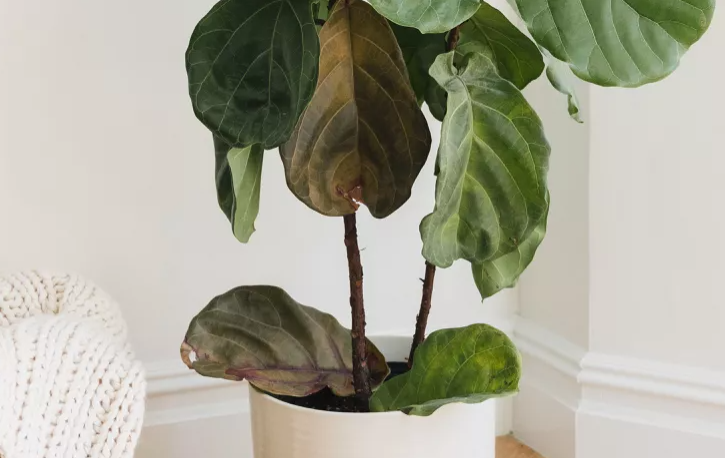
To restore your Fiddle Leaf Fig and eliminate those brown tips, you need to identify the underlying issue. Here's a handy step-by-step diagnostic guide:
Cause 1: Low Humidity or Dry Air
Symptoms: Crispy, dried edges or tips, especially in winter or heated spaces.
How to confirm:
- Check your home’s humidity; ideally, it should be between 40-60%. Use a hygrometer if possible.
- Feel the dryness around your plant; if the air feels dry, this is likely culprit.
Cause 2: Over or Underwatering
Symptoms: Tip browning alongside leaf yellowing or wilting.
How to confirm:
- Check soil moisture about an inch below the surface.
- If dry for long periods, your plant is underwatered.
- If soggy or waterlogged, overwatering is the issue.
Cause 3: Excess Fertilizer
Symptoms: Salt crusts on soil surface, burnt leaf edges, or tips.
How to confirm:
- Review your fertilization schedule. If you've used fertilizer recently or applied too much, salt build-up could be burning tips.
- Flush the soil with water to remove excess salts.
How to determine the main cause:
- Assess humidity levels: Use a hygrometer.
- Review watering routine: Is soil dry or soggy?
- Consider fertilization history: Have you recently fertilized? Once you've identified the cause, you’re ready for targeted treatment.
Section 3: Treatment Solutions
Once you've pinpointed why your Fiddle Leaf Fig has brown tips, these are step-by-step remedies to help it recover.
Immediate actions (First 24-48 Hours):
1. Increase Air Humidity:
- Place a humidifier nearby or
- Put the plant on a pebble tray filled with water (make sure the pot isn’t sitting directly in water).
-
Group plants together to create a micro-humid environment.
2. Adjust Watering Routine: -
For underwatered plants: water thoroughly until excess drains from the bottom, then let soil dry slightly before next watering.
-
For overwatered plants: allow soil to dry out completely before watering again.
3. Flush Excess Fertilizer (if over-fertilized): -
Water the plant with plenty of plain water to wash away mineral salts.
- Use distilled, rain, or filtered water if possible to prevent salt buildup.
Long-term treatment:
- Consistent watering schedule: Water only when the top inch of soil feels dry. Typically, once a week is enough, but adjust based on your environment.
- Water quality: Use room temperature water that’s free of chemicals.
- Fertilize minimally: Feed your Fiddle Leaf Fig with a balanced, diluted fertilizer once a month during the growing season (spring and summer). Avoid fertilizing in winter.
- Maintain humidity: Keep indoor humidity between 40-60% using a humidifier or plants clustered together.
Recovery expectations:
- New growth should replace damaged tissue over time.
- Brown tips might not turn green again but can be trimmed away for a tidy look.
- Be patient—most issues resolve within a few weeks with proper care.
Section 4: Prevention Tips
Prevent future browning of your Fiddle Leaf Fig’s leaf tips with simple, everyday care:
Care routine adjustments:
- Water only when dry: Check soil moisture regularly, and water deeply but infrequently.
- Avoid over-fertilization: Feed sparingly during the growing season, and never fertilize dry soil.
- Use room temperature water: Cold or hot water stresses roots.
Environmental factors:
- Boost humidity: Use a humidifier, especially during winter.
- Place in optimal light: Bright, indirect sunlight is ideal—direct sun can scorch leaves, but too little light can stress the plant.
- Protect from drafts: Keep away from cold windows, heaters, or AC vents. By maintaining consistent, attentive care, you’ll greatly reduce the chances of browning tips recurring.
Frequently Asked Questions
Q1: How long until I see improvement after fixing the issue?
A: Typically, you should notice healthier new growth within 2–4 weeks. Existing brown tips won't turn green but can be trimmed for appearance.
Q2: Will my Fiddle Leaf Fig fully recover from brown tips?
A: If the underlying cause is addressed early, new healthy leaves will emerge. Brown tips often won't repair but will cease spreading once conditions improve.
Q3: Should I prune the brown tips or damaged leaves?
A: Yes, carefully trim brown tips with clean scissors or pruning shears just above healthy tissue. Removing damaged parts helps the plant focus energy on new growth.
Q4: Can I use natural remedies like neem oil or hydrogen peroxide?
A: For environmental issues like low humidity or watering, focus on care adjustments. Neem oil and hydrogen peroxide are more suited for pest problems or fungal issues, not brown tips caused by stress.
Conclusion
Key Takeaways:
- Brown tips on your Fiddle Leaf Fig are usually caused by environmental stress, watering habits, or over-fertilization.
- Diagnosing the cause involves assessing humidity, watering routine, and fertilization.
- Immediate improvements include increasing humidity, adjusting watering, and flushing excess salts.
- Prevent future problems with consistent care—check soil moisture, maintain humidity, and provide appropriate light.
- With patience and attentive care, your Fiddle Leaf Fig can bounce back, displaying its beautiful, lush leaves once again. Remember, plants are resilient, and small adjustments today can bring about vibrant health tomorrow. Keep caring and observing, and soon your Fiddle Leaf Fig will thank you with gorgeous new growth!