Quick Summary: If your Snake Plant is showing yellow leaves, don’t panic—this common issue often stems from watering problems, light deficiencies, or age. With simple diagnosis and care adjustments, your plant can bounce back beautifully. This guide will help you identify causes and walk you through effective, easy solutions to restore your plant’s health.
Introduction
Noticing yellow leaves on your Snake Plant (Sansevieria) can be worrying—especially because you love your plant and want to see it thrive. It’s natural to feel concerned when your green friend isn’t looking its best, but the good news is that yellowing leaves are usually a sign that something’s out of balance, not a death sentence. Often, the fix is straightforward. In this article, we’ll explore the common reasons behind yellow leaves in Snake Plants, how to diagnose what’s happening, and what simple steps you can take to treat and prevent this problem. Rest assured, with a little attention and care, your Snake Plant can recover and continue to add beauty to your space. Let’s dive into the details and help your plant regain its vibrant, healthy look!
Understanding the Problem: Yellow Leaves on Snake Plant
Yellowing leaves can signal different issues, from environmental stress to natural aging. Recognizing the specifics helps you target the right remedy.
Visual Identification
-
Where are the yellow leaves?
Are they older, lower leaves or newer, top-growth? Older leaves often yellow naturally, but widespread yellowing can indicate other issues. -
What do the leaves look like?
Are they just pale yellow or are the tips and edges turning brown or crispy?
Common Causes Overview
- Overwatering: The most typical culprit, leading to soft, waterlogged soil and root rot.
- Poor Drainage: Soil that retains too much water causes roots to suffocate and decay.
- Inadequate Light: Low light causes leaves to lose their vibrancy and turn yellow.
- Natural Aging: Older leaves naturally yellow and die back, especially if the plant is otherwise healthy.
- Pests and Nutrients: Scale, mealybugs, or deficiencies in nitrogen can weaken leaves. Understanding these signs sets the stage for accurate diagnosis and effective treatment.
Diagnosing the Exact Cause of Yellow Leaves
Follow these steps to pinpoint why your Snake Plant’s leaves are turning yellow:
Cause 1: Overwatering or Poor Drainage
- Symptoms: Leaves feel soft or mushy; soil remains soggy despite watering; roots may have a foul smell (indicating root rot).
- How to Confirm: Gently lift the plant or check soil moisture with your finger or a moisture meter; examine roots if possible—rotted roots look brown and slimy.
Cause 2: Insufficient Light
- Symptoms: Leaves become pale, lose their dark green hue, or turn yellow in low-light spots.
- How to Confirm: Is the plant placed away from bright, indirect light? Does moving it to a brighter location improve color over a few weeks?
Cause 3: Natural Aging
- Symptoms: Older, lower leaves turn yellow and may eventually die off; new, healthy leaves grow from the center.
- How to Confirm: Is the yellowing isolated to older leaves? Is the rest of the plant vibrant and healthy?
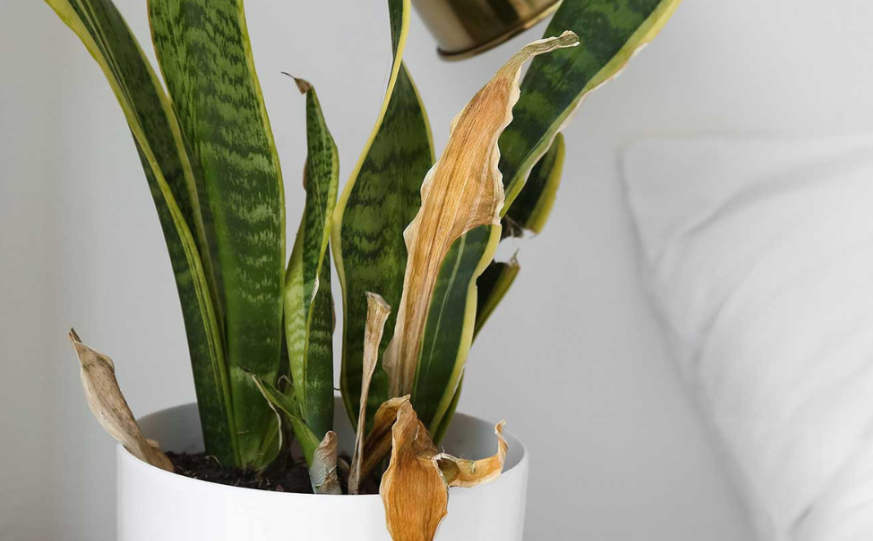
How to tell which one it is:
- Check soil moisture to see if overwatering is the issue.
- Inspect lighting conditions and consider whether your plant might benefit from more bright, indirect light.
- Observe whether the yellowing is happening mostly on older leaves—a normal aging sign—or all over the plant, which points to other problems.
Treatment Solutions for Yellow Leaves
Once you identify the cause, follow these tailored remedies:
Immediate Actions (First 24-48 Hours):
-
Adjust Watering:
-
Stop watering for a few days. Let the soil dry out completely before watering again.
-
Improve Drainage:
-
If soil is waterlogged, repot your Snake Plant into fresh, well-draining soil. Use a cactus or succulent mix if possible.
-
Increase Light Exposure:
-
Move your plant to a spot with bright, indirect sunlight, such as near an east- or west-facing window.
Long-Term Treatment Plan:
-
Establish a Consistent Watering Schedule:
Water only when the top inch of soil feels dry. During colder months, reduce watering frequency. -
Use Proper Soil and Potting Techniques:
Select a container with drainage holes; use a soil mix formulated for succulents or cacti. -
Fertilize Sparingly:
During the growing season (spring and summer), feed with a balanced, diluted houseplant fertilizer once a month. Avoid overfeeding to prevent stress.
What to Expect During Recovery:
- You’ll notice new, vibrant-green leaves emerging as your plant heals.
- Severely yellow or browning leaves can be pruned safely at the base to improve aesthetics and encourage healthy growth.
- Recovery time varies—from a couple of weeks for minor issues to a few months for more severe root damage. Note: If root rot has set in, you may need to trim affected roots and treat with a fungicide or natural remedies like hydrogen peroxide solution (one part hydrogen peroxide to nine parts water) to disinfect.
Prevention Tips to Keep Your Snake Plant Healthy
Proactive care is key to avoiding yellow leaves:
-
Adjust watering habits:
Only water when the soil has completely dried out—about every 2-6 weeks, depending on your environment. Bottom watering (placing water in the tray) ensures roots are not sitting in excess water. -
Optimize lighting:
Place your Snake Plant in bright, indirect light; it tolerates low light but prefers some exposure to keep leaves vibrant. -
Maintain proper soil and fertilization routines:
Use a fast-draining soil mix designed for succulents. Feed with a diluted fertilizer during the active growing season, but sparingly. -
Regular inspection:
Check for pests and root health periodically. Early detection prevents bigger issues. -
Avoid sudden temperature changes:
Keep away from cold drafts or direct heat sources, which can stress the plant.
Frequently Asked Questions
Q: How long until I see improvement after fixing watering issues?
A: Typically, you’ll notice changes within 2-4 weeks. New, healthy leaves will start to grow, and existing yellow leaves can be trimmed to encourage better overall health.
Q: Can yellow leaves turn green again on a Snake Plant?
A: Once a leaf has fully turned yellow and tissues have died, it usually won’t return to green. However, new growth from healthy roots will be green, and the plant can recover fully.
Q: Should I prune yellow leaves, and when is the best time to do it?
A: Yes, pruning yellow or damaged leaves helps improve your plant’s appearance and encourages healthy growth. Do so at the base with clean, sharp scissors or pruning shears, ideally during the active growing season.
Conclusion
Key Takeaways:
- Yellow leaves on your Snake Plant often signal water, light, or age issues—most are easily fixable.
- Proper diagnosis—checking soil moisture, light, and leaf age—is crucial.
- Adjust watering habits, improve lighting, and ensure well-draining soil for quick recovery.
- Regular care and inspection prevent future problems, keeping your plant thriving. Remember, caring for plants is a learning journey—each step you take makes you a better plant parent. Don’t be discouraged by initial setbacks. With patience and proper care, your Snake Plant will bounce back into lush, vibrant health. Start today by assessing your plant’s watering and lighting conditions, and enjoy the journey of nurturing a happy, healthy green companion!